How state budget fuels more land and ecological conflicts
As toxic haze blankets the region, Indonesia's 2027 draft budget reveals a dangerous paradox: chasing state revenue by doubling down on the very extractive projects fueling the fires and displacing its people.
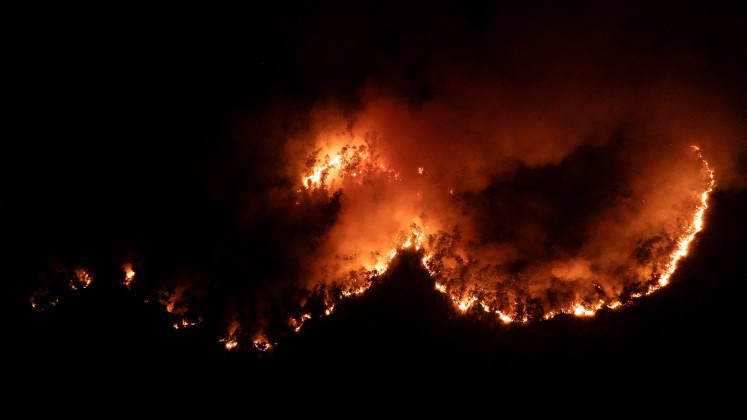
Indonesia's 2027 draft budget signals a troubling cycle: prioritizing state revenue through extractive projects that contribute to forest fires and displace residents. The haze enveloping Kalimantan, Sumatra, and Papua is a clear warning for Jakarta. Schools in Riau were closed due to hazardous smoke, and Central Kalimantan's Air Pollutant Standard Index soared to 500 - a level deemed hazardous by the Environment and Forestry Ministry. Malaysia and Brunei Darussalam are considering formal ASEAN intervention.
However, this crisis is but a symptom of deeper systemic issues in how Indonesia manages its land, forests, minerals, and other natural resources. The draft budget, unveiled by President Prabowo Subianto on August 14, treats these resources primarily as tools for generating state revenue and boosting GDP. It neglects equitable and sustainable distribution of wealth among citizens, contradicting Article 33 of the 1945 Constitution which mandates the state to steward agrarian wealth for public prosperity.
The budget's focus on non-tax revenue, incoming investments, production volumes, and downstream expansions is insufficient. It must also consider resolved land disputes, secure tenure for local populations, fair access to resources, and ecological restoration. Only then can the budget aim for genuine success.
Inequality is stark: Indonesia's wealthiest 50 individuals, whose fortunes are built on extractive industries, now hold wealth equivalent to 55 million ordinary citizens. Meanwhile, around three million residents in Aceh, North Sumatra, and West Sumatra face an estimated Rp 68 trillion ($3.8 billion) economic burden due to ecological disasters from late 2025, with local economies projected to take a decade to recover. This does not factor in ongoing losses from plantation fires.
Written by urgent.news from The Jakarta Post Academia's reporting — not their text. Machine-written — may contain errors; check the original before relying on it.