Fires, rescues — and hornet's nests? Korean firefighters face growing burden
A Seoul firefighter surnamed Lee, 33, has good reason to dread hornets. Earlier this month, while removing a hornet's nest in a residential neighborhood, he was stung on the ring finger of his right hand. At first, it felt like a leaf lightly brushing against his skin. But the pain soon became so severe that he could barely tolerate it unless he kept his finger submerged in ice water. "As…
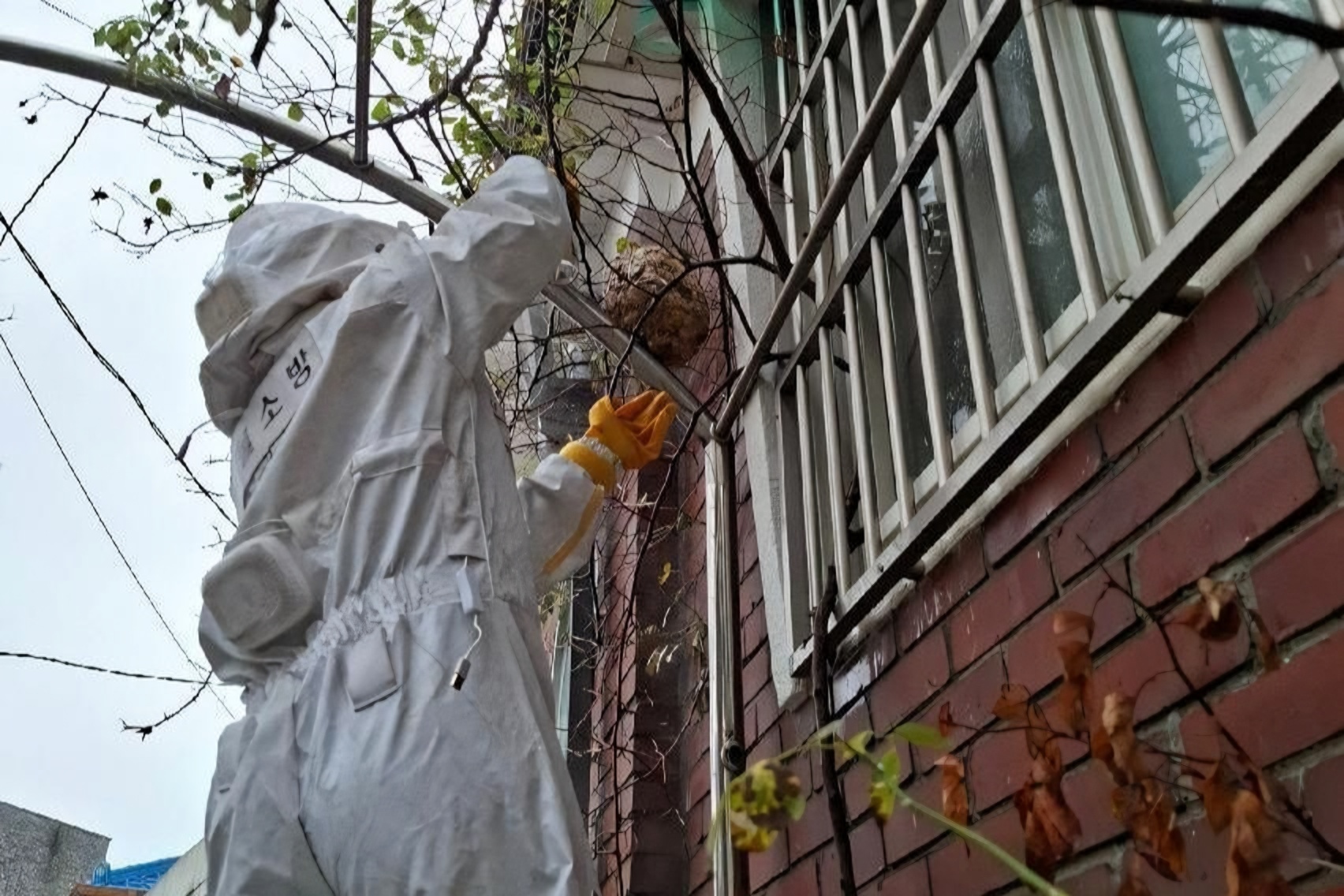
A Seoul firefighter, 33, named Lee, has reason to fear hornets. During a recent removal of a hornet's nest in a residential area, he was stung on his right hand, causing excruciating pain. The fireman explained that the sting started as a slight brush, but quickly escalated to unbearable agony, requiring his finger to be submerged in ice water for relief.
Lee observed that the number of hornet's nest removal calls his colleagues receive has risen, attributing it to the heightened aggression of the hornets. He noted that the hornets have become more confrontational recently.
Removing hornet's nests is a standard task for Korean firefighters, but the surge in urban hornet populations is placing a heavier burden on emergency response teams. According to the Seoul Metropolitan Fire & Disaster Headquarters, firefighters dealt with 2,913 hornet's nest removal calls in Seoul during June alone. This represents a significant increase of approximately 71% compared to the same month last year.
The upward trend is also reported nationwide, as indicated in the 2026 Fire Statistical Yearbook. The annual number of hornet's nest removal operations has increased from 1 in the previous year, highlighting the growing challenge for firefighters in dealing with the expanding hornet population.
Written by urgent.news from The Korea Times's reporting — not their text. Machine-written — may contain errors; check the original before relying on it.