Analysis: PPHN Prabowo's green light for Soeharto's ghost
It is almost a done deal. After a decade of false starts under President Joko "Jokowi" Widodo, the push to revive a binding state roadmap, the Pokok-Pokok Haluan Negara (Principles of State Policy, or PPHN), finally has what it lacked: political consensus and a president willing to back it.
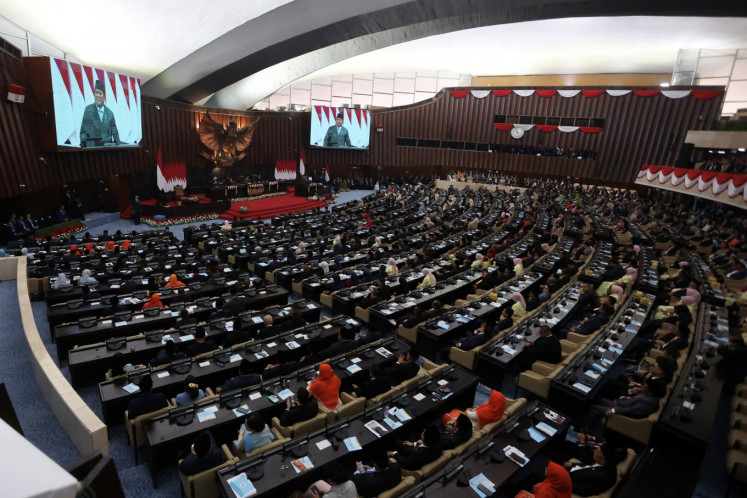
The long-awaited state roadmap, the Principles of State Policy (PPHN), is poised for a breakthrough after years of delay under President Joko Widodo. After multiple unsuccessful attempts, Prabowo Subianto, the incumbent president, has endorsed the idea of PPHN as a national development blueprint. However, for the roadmap to become legally binding, lawmakers must amend the Constitution, a task that requires significant support from at least one-third of the People’s Consultative Assembly (MPR) members.
A constitutionalized PPHN would shift accountability from voters to the MPR, effectively making it a new form of Garis-Garis Besar Haluan Negara (GBHN). GBHN, Indonesia's previous national policy blueprint, was abandoned in 2000 during the Reform Era, as the idea of MPR dictating a single national plan was rejected. Under the New Order, the MPR issued GBHN and the president served as its mandataris, or mandate carrier.
Critics argue that since Soeharto controlled the MPR, he ultimately controlled both the blueprint and the office responsible for implementing it, which led to Soeharto's re-election five times.
Supporters of PPHN argue that the current MPR no longer elects the president, making the comparison to GBHN unfair. They contend that a body without the power to choose the president cannot logically issue a binding mandate to the president. Critics, however, maintain that restoring the mandate would eventually lead to the revival of direct presidential elections.
In fact, the current House of Representatives is already discussing ways to phase out direct regional elections (pilkada) and replace them with indirect elections through local legislatures, a move that was previously successful when Prabowo's coalition abolished direct pilkada in 2014, only to have it reversed following public protests.
Written by urgent.news from The Jakarta Post's reporting — not their text. Machine-written — may contain errors; check the original before relying on it.
Also reported by 1 other outlet
- Analysis: PPHN Prabowo's green light for Soeharto's ghost thejakartapost.com