Xi’s crusade against corruption has gone well beyond economic crime
The South China Morning Post has launched a major data project diving into President Xi Jinping’s signature anti-graft campaign. In the fourth part of an accompanying series, Yuanyue Dang and William Zheng delve into the broader reach of the campaign. While economic crimes are often seen as the target of President Xi Jinping’s crusade against corruption, the campaign has become much wider.…
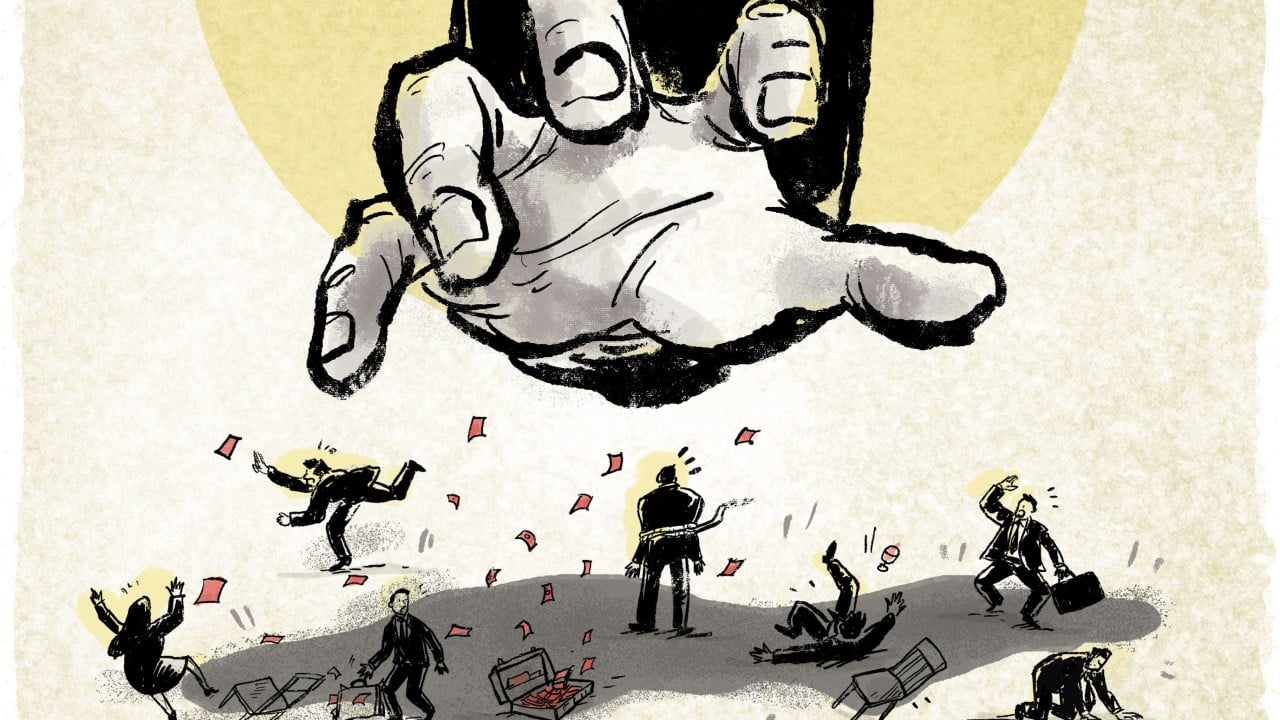
The South China Morning Post (SCMP) has published an in-depth analysis of President Xi Jinping's anti-corruption campaign, which has expanded beyond targeting economic crimes. This fourth part of a series investigates the broader scope of the campaign, examining how officials misuse their power, adhere to party line, and their private conduct.
According to the analysis, 423 cadres, mainly senior officials reporting directly to the Central Committee of the ruling Communist Party, were reviewed. The findings indicate that 93.4% of these officials were accused of using their positions to benefit others, 88.7% were accused of accepting bribes, and 67.1% were accused of accepting cash or gifts.
The campaign, launched in 2013, initially focused on economic crimes, but its scope has broadened over time. While bribery remains the legal basis for cases to enter the court system, political loyalty, discipline, policy implementation, and cadre management have become integral to defining and punishing corruption in China. The SCMP analysis categorized the cases into three periods, aligning with the party congress cycles, and observed a shift in the nature of the allegations.
From 2013 to 2017, 18.9% of cases included allegations of political security or political risk, such as seeking political patronage, forming cliques, and damaging the political environment. In the subsequent five years, this increased to 64.5%, but then decreased slightly to 59.3% in the most recent period (2023-2025). The language used in these allegations aligns with the Regulations on CPC Disciplinary Action, which underwent major revisions in 2015.
The analysis concludes that Beijing's perspective on corruption has evolved from viewing it solely as an economic crime to recognizing it as a political sin. As a result, public announcements emphasize the political nature of an official's wrongdoing before addressing economic aspects, while the latter often serve as the foundation for criminal indictments.
Written by urgent.news from South China Morning Post's reporting — not their text. Machine-written — may contain errors; check the original before relying on it.