The “Beetle” trap: Europe’s automotive industry risks repeating the mistakes of its Russian counterpart
European carmakers are in “mortal danger .” China is rapidly capturing the EU market with cheap, technologically advanced electric and hybrid vehicles, forcing giants such as Volkswagen, Stellantis, and Porsche to cut costs, close plants and cooperate with former competitors. In response, Brussels has drawn up protectionist legislation allowing it to subsidize production located within the…
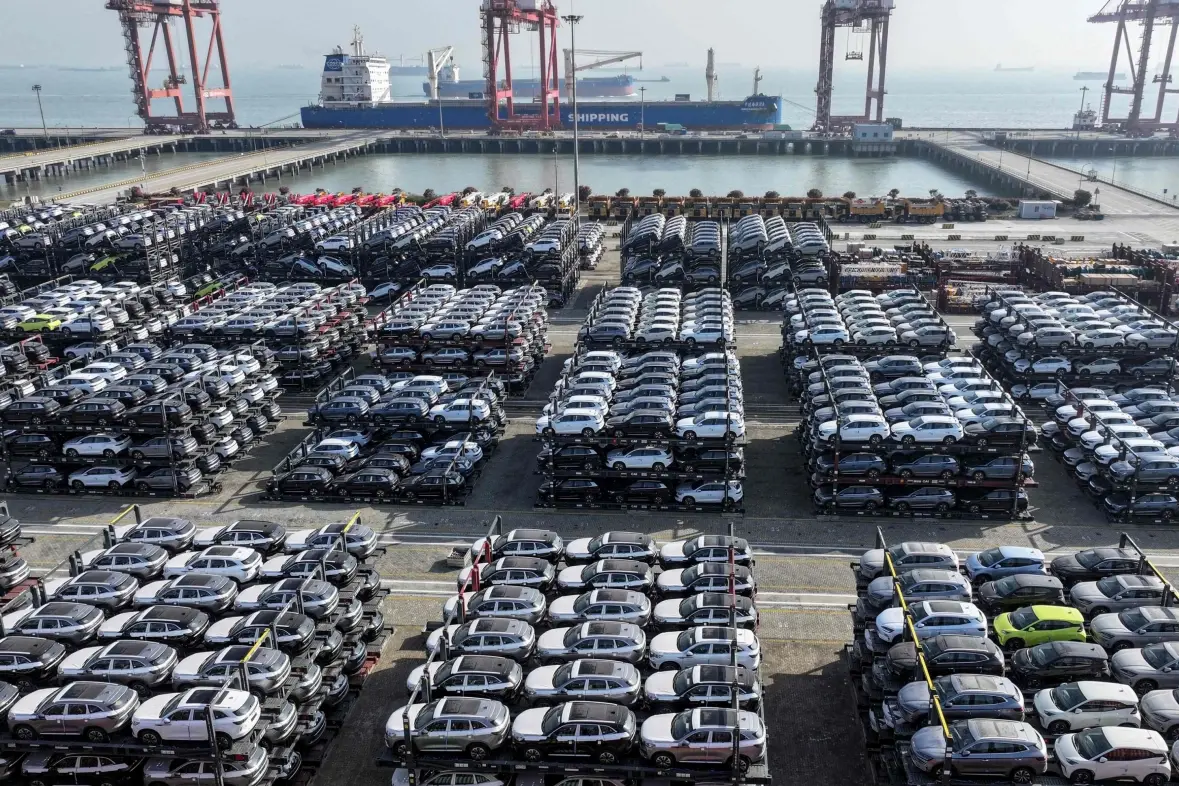
European automakers once thrived in a predictable world, producing internal combustion engine vehicles and exporting them globally. However, the landscape has dramatically shifted, with Chinese electric and hybrid vehicle manufacturers posing a significant threat. China has become a leader in global vehicle exports, and its electric vehicle revolution is altering the industry's structure.
Chinese automakers are rapidly advancing in areas such as battery production, intelligent vehicle functions, driver-assistance systems, and software architecture. Their competitive pressure stems not only from government subsidies or lower costs but also from their superior technological capabilities.
Chinese manufacturers are entering European markets with sophisticated designs, expanding dealer networks, and aggressive marketing strategies. Consequently, their cars are becoming increasingly acceptable and rational choices for European consumers. Chinese companies benefit from a vast domestic market, government support, and control over supply chains for EV batteries, critical minerals, and rare earth elements.
Furthermore, they can expand their exports in markets like Russia, which Western brands abandoned following the Russian invasion of Ukraine in 2022.
The European car industry faces challenges in maintaining its technological edge, value added, and strategic control. While market recovery is underway, car sales in the EU have been sluggish, registering only a 2% increase in 2025 and a more robust 6% growth in the first half of 2026. This recovery, however, is driven more by the share of market captured by European brands than by overall demand.
Importantly, the structure of demand is rapidly changing, with the share of petrol and diesel models decreasing and the share of electric vehicles rising. In 2025, petrol and diesel vehicles accounted for 35.5% of new cars, hybrids for 37%, fully electric vehicles for 21%, and plug-in hybrids for 10%.
European automakers, particularly those specializing in internal combustion engine production, must adapt to this changing landscape. This entails investing in new technologies and architectures, such as electric and hybrid vehicles, which may prove challenging given slowing demand and increasing competition. Additionally, EU countervailing duties on Chinese electric vehicles have not reversed the trend, as Chinese manufacturers are increasingly diversifying their production strategies to include local assembly in Europe.
One notable example is BYD, a Chinese automaker, which plans to build its first European passenger-car plant in Hungary. This move aims to establish a foothold within the European industrial system and navigate the challenges posed by tariffs, trade investigations, and political pressure. To remain competitive, European automakers must adapt to the evolving market dynamics and technological advancements, lest they risk losing their European identity and strategic control.
Written by urgent.news from The Insider's reporting — not their text. Machine-written — may contain errors; check the original before relying on it.