Solar panels could cool down farms—and farmworkers
A new model of agrivoltaic farms shows shading crops with solar panels doesn't just protect tomatoes from a warming climate. It makes outdoor labor safer, too.
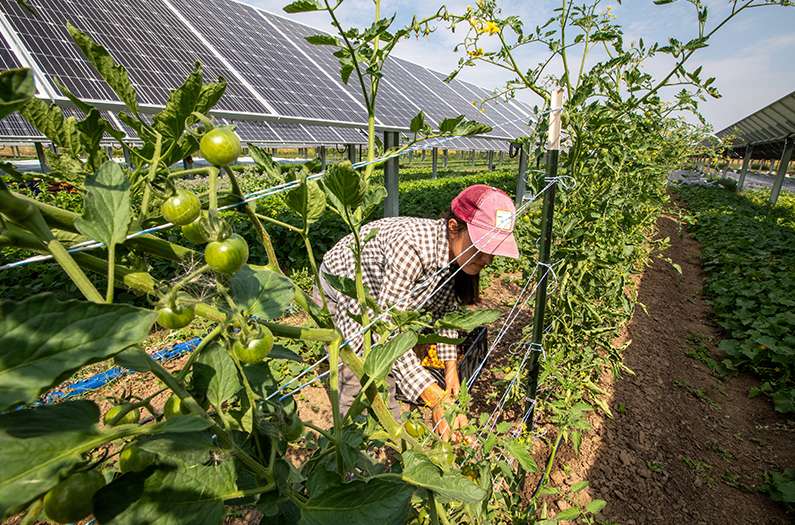
As global temperatures continue to rise, innovative solutions are needed to support agriculture and its hardworking individuals. A new study reveals that solar panels combined with farmland, a concept known as agrivoltaics, not only benefits crops but also people working on the farms. The study used a computer model to simulate the small-scale weather systems that emerge under solar panels, allowing researchers to examine the effects on crops, panels, and the people tending to them.
By using data from tomato farms to simulate a typical hot New Jersey summer's day, the researchers discovered that tomato leaves would be up to 7.56°C cooler under the shade of solar panels compared to unshaded plants during the day. This cooling effect would also reduce water loss from the leaves by up to 42.6% and from both crops and soil by 22.4% daily. As a result, air-cooling effects would also lower the temperature of solar panels by 5.6°C. This helped mitigate the overall efficiency decline of solar panels by 15%.
Interestingly, despite receiving 47% less direct sunlight, photosynthesis in the shaded tomatoes declined by only 31%, suggesting that the cooler microclimate offsets the decrease in sunlight. The researchers found that the laborers tending to and harvesting crops would experience a 4.46°C decrease in average temperatures. In the simulated scenario, installing solar panels on tomato farms reduced perceived temperatures from 39°C to around 35°C, a significant reduction in a warming world where high-heat labor poses health risks.
As agrivoltaics becomes more prevalent on farms, the researchers believe that their model could aid in designing hybrid farm-energy landscapes tailored to specific locations, benefiting both food production and worker well-being.
Written by urgent.news from Anthropocene Magazine's reporting — not their text. Machine-written — may contain errors; check the original before relying on it.