SA braces for possible food price pressure as El Niño looms
While South Africa's record maize harvest and improved water reserves provide immediate relief from food shortages, a strengthening El Niño threatens to disrupt agricultural output and raise food prices in 2027, particularly affecting low-income households.
South Africa is preparing for potential food price increases due to an impending El Niño weather pattern. While the country's recent record maize harvest and improved water reserves provide some protection against immediate food shortages, the strengthening El Niño could still reduce agricultural output and raise food prices next year.
El Niño is a climate phenomenon characterized by unusually warm surface waters in the Pacific Ocean, which can disrupt global weather patterns and lead to hotter, drier conditions in southern Africa. South Africa last experienced this phenomenon during the 2023/24 summer season, when drought and extreme heat reduced maize production.
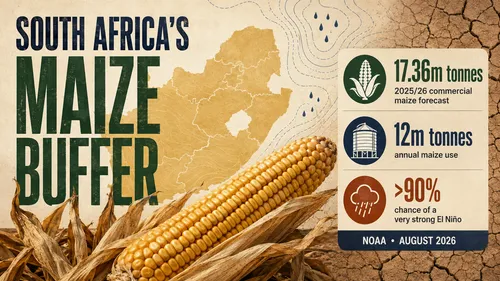
The country is entering the 2026/27 summer production season in better shape than it was after the 2015/16 drought. Soil moisture, groundwater levels, and dam reserves have all improved, providing a buffer against potential crop losses. The latest forecast predicts a record 2025/26 commercial summer grain and oilseed crop of about 21.56 million tonnes, with the maize crop alone forecast at 17.36 million tonnes.
South Africa uses approximately 12 million tonnes of maize annually, leaving about three million tonnes available for export. Regional demand for maize could rise if other southern African countries suffer from reduced harvests due to El Niño, but South Africa is unlikely to require significant maize imports during 2026 or 2027.
While the government and industry should maintain open trade and ensure access to essential resources like seed, fertiliser, finance, and markets, farmers are advised to adopt drought-resistant practices such as planting drought-tolerant seeds, practicing minimum tillage, and using efficient irrigation methods. Livestock producers may also face challenges if dry weather reduces grazing and raises feed costs, making early fodder planning crucial.
The bumper harvest is already helping to keep food inflation low, but if the next harvest falls sharply or costs increase, food prices could rise again.
Written by urgent.news from IOL's reporting — not their text. Machine-written — may contain errors; check the original before relying on it.
This story
This is one outlet's version. Read the fullest account.