Qué hace único al canto de un ave
Los oscinos y los suboscinos son dos linajes de aves evolutivamente cercanos, pero solo uno de ellos aprende a cantar. Esa diferencia les permite a los científicos rastrear las bases neuronales del aprendizaje vocal.
The learning of birdsong and its underlying neuronal bases have intrigued scientists, and two distinct groups of birds provide a unique opportunity to explore this phenomenon: oscines and suboscines. While oscines learn their songs through imitation of a tutor, suboscines sing innately without learning. Ana Amador, a professor of physics at the University of Buenos Aires, points out that comparing these two groups helps researchers understand the origins of avian song and the differences in neuronal processes.
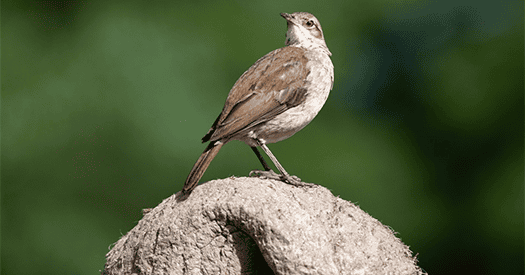
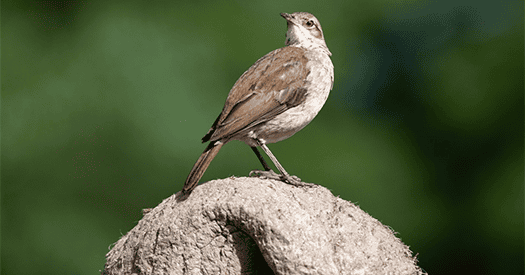
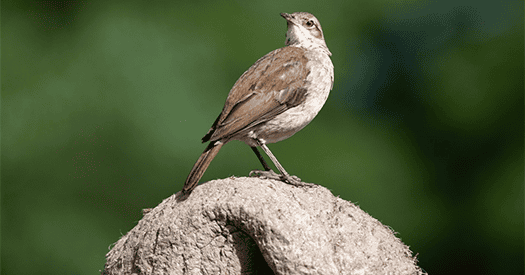
During the COVID-19 pandemic, Amador noticed an intriguing phenomenon in the horneros (Furnarius rufus), a common suboscine bird found throughout the southern cone of South America. Each hornero was singing its own unique syllables individually, a vocal signature that typically occurs in species that learn to sing. What's more, female horneros exhibit a structurally more complex song than males, opening up a line of research into sexual differences in bird song.
Field recordings outside Amador's garden confirmed that female horneros each possess a unique song. By building a bio-physical model of the motor signals reaching the vocal cords, researchers can predict the motor instructions necessary for each female hornero's individual song. However, it remains unclear whether these instructions originate in the brain or stem from physical differences in each bird's body. Amador's ongoing research aims to compare the variety of hornero songs across different populations.
One challenge to understanding these individual vocal signatures is that horneros do not survive well in captivity, making it difficult to directly verify if distinct brain instructions are responsible. In contrast, the pitangus sulphuratus, another common suboscine bird in Latin America, adapts well to captivity. When electrodes were implanted in the vocal muscles of a sleeping pitangus, researchers observed spontaneous muscle activation, mirroring the same pattern seen when the bird is awake and singing. In a way, the birds seem to dream their song.
The laboratory also conducts experiments on canaries, oscines known for their rhythmic and repetitive songs. These birds provide an ideal model for studying how the brain encodes song structure at the level of individual neurons using electro-fisiology. Amador believes that fieldwork helps generate questions, while the laboratory provides answers.
The biodiversity of the region serves as a "gold mine" for this research, as most suboscine lineages are concentrated in Latin America, making the region one of the few places globally where scientists can investigate the evolutionary border between learned and innate song.
Written by urgent.news from The Transmitter's reporting — not their text. Machine-written — may contain errors; check the original before relying on it.