Identifying what makes a bird's song unique
The oscines and suboscines, two lineages of birds that are evolutionarily close, do and do not learn to sing, respectively, helping scientists to unravel the neuronal correlates of learning and vocal variability.
The study, part of the report on neuroscience in Latin America, explores the neural correlates of learning and vocal variability in two closely related avian lineages: oscines and suboscines. While oscines learn to sing by imitating a tutor, suboscines have inborn songs. By comparing these two groups, scientists aim to understand the neural origins of vocal production.
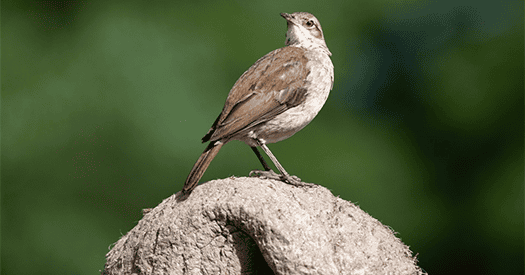
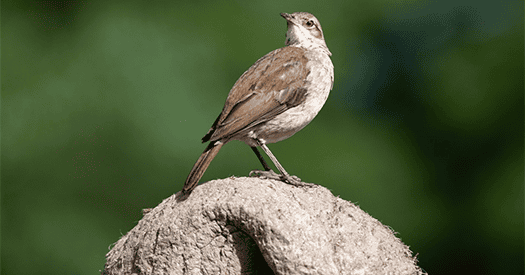
During the COVID-19 pandemic, researcher Ana Amador noticed distinct, individually identifiable syllable structures in female ovenbirds (Furnarius rufus), an unexpected finding as this type of vocal signature is typically associated with learned singers. Moreover, these suboscine females exhibit more complex female-specific syllables compared to males, offering a potential avenue for studying sex-related differences in bird song.
In the wild, each female ovenbird has unique vocal characteristics, which a bioelectric model developed by Amador can predict. However, it remains unclear whether these individual instructions originate in the brain or are due to physical differences between the birds' bodies. Amador is expanding the dataset of ovenbird songs to investigate the extent to which female songs differ across populations.
Unfortunately, these birds cannot survive in captivity, so the group cannot directly test if individual signatures reflect distinct motor instructions from the brain. The common suboscine, the house wren (Pitangus sulphuratus), tolerates captivity, and implanting electrodes in the vocal muscles of a sleeping house wren revealed that its muscles activate spontaneously in the same pattern observed when the bird is awake and singing.
This suggests the birds are dreaming their songs, Amador concludes. The lab also works with canaries, which are oscines, studying how the brain codes song structure at the level of individual neurons using electrophysiology. Amador notes that fieldwork identifies questions, while the lab seeks to answer them. The region's biodiversity is a "gold mine," she adds, as the majority of suboscine lineages are concentrated in Latin America, making the continent one of the few places to study the evolutionary boundary between learned and innate song.
Written by urgent.news from The Transmitter's reporting — not their text. Machine-written — may contain errors; check the original before relying on it.
Also reported by 1 other outlet
- Identificando o que torna o canto de uma ave único thetransmitter.org