Poland says no to US nuclear weapons: Which Nato allies host American warheads?
Poland is eager to engage in NATO's nuclear deterrence initiatives but firmly opposes the placement of American nuclear warheads on its soil. This stance is consistent with NATO's long-standing nuclear sharing practices from the Cold War era. Currently, the United States maintains nuclear arms in five other NATO countries, while Poland advocates for a stronger American military presence and…
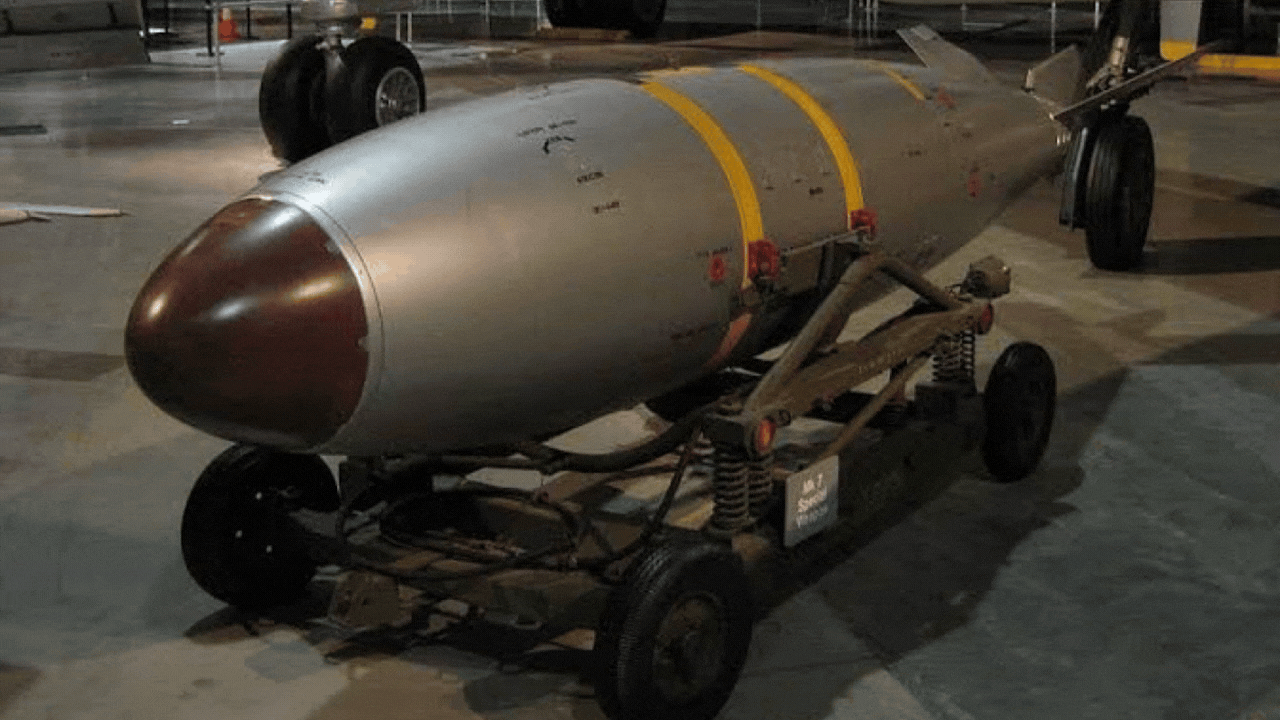
Poland has declined the notion of accommodating US nuclear weapons within its borders, expressing a desire to engage in NATO's nuclear deterrence system without the presence of American warheads on its soil. Deputy Minister of Defense Pawel Zalewski conveyed this stance during a meeting at NATO headquarters in Brussels. Zalewski emphasized that Poland seeks involvement in NATO's nuclear deterrence, without the implication of having nuclear warheads on its territory.
He also mentioned Poland's interest in bolstering a permanent US military presence in the country, as suggested by Washington's Force Posture Review. Zalewski further noted that the US might deploy additional troops to Poland, as previously suggested by President Donald Trump. The US announced a six-month review of troop deployments in Europe in June, with the objective of preparing multiple options for Defense Secretary Pete Hegseth by November 6, prior to a December deadline.
Zalewski stated that the US will continue to play a crucial role in supporting European armed forces.
The concept of NATO's nuclear-sharing arrangement permits member countries to participate in the alliance's nuclear deterrence without possessing nuclear weapons of their own. Under this arrangement, the US maintains custody and control of its nuclear weapons stationed in Europe, while allied nations provide aircraft, bases, infrastructure, and other necessary support for the nuclear mission.
This arrangement traces back to the Cold War, with the US committing nuclear weapons to NATO in 1953, with the first American tactical nuclear weapons arriving in Europe in 1954. NATO established its Nuclear Planning Group in 1966, granting member countries a formal role in discussions and planning regarding nuclear policy. The arrangement was already in place when the Nuclear Non-Proliferation Treaty negotiations commenced in the 1960s, and NATO asserts that its nuclear-sharing agreements comply with the treaty because the US retains complete custody and control of its nuclear weapons.
Poland's stance indicates that it aims for a role in NATO's broader nuclear deterrence framework, without joining the group of NATO members housing US nuclear weapons physically.
Written by urgent.news from Times of India's reporting — not their text. Machine-written — may contain errors; check the original before relying on it.