LLM Cost Optimization: Your Bill Is an Architecture Problem, Not a Prompt Problem
Cut LLM inference costs with architecture-first techniques: model routing, context optimization, prompt caching, semantic caching, batching, and observability.
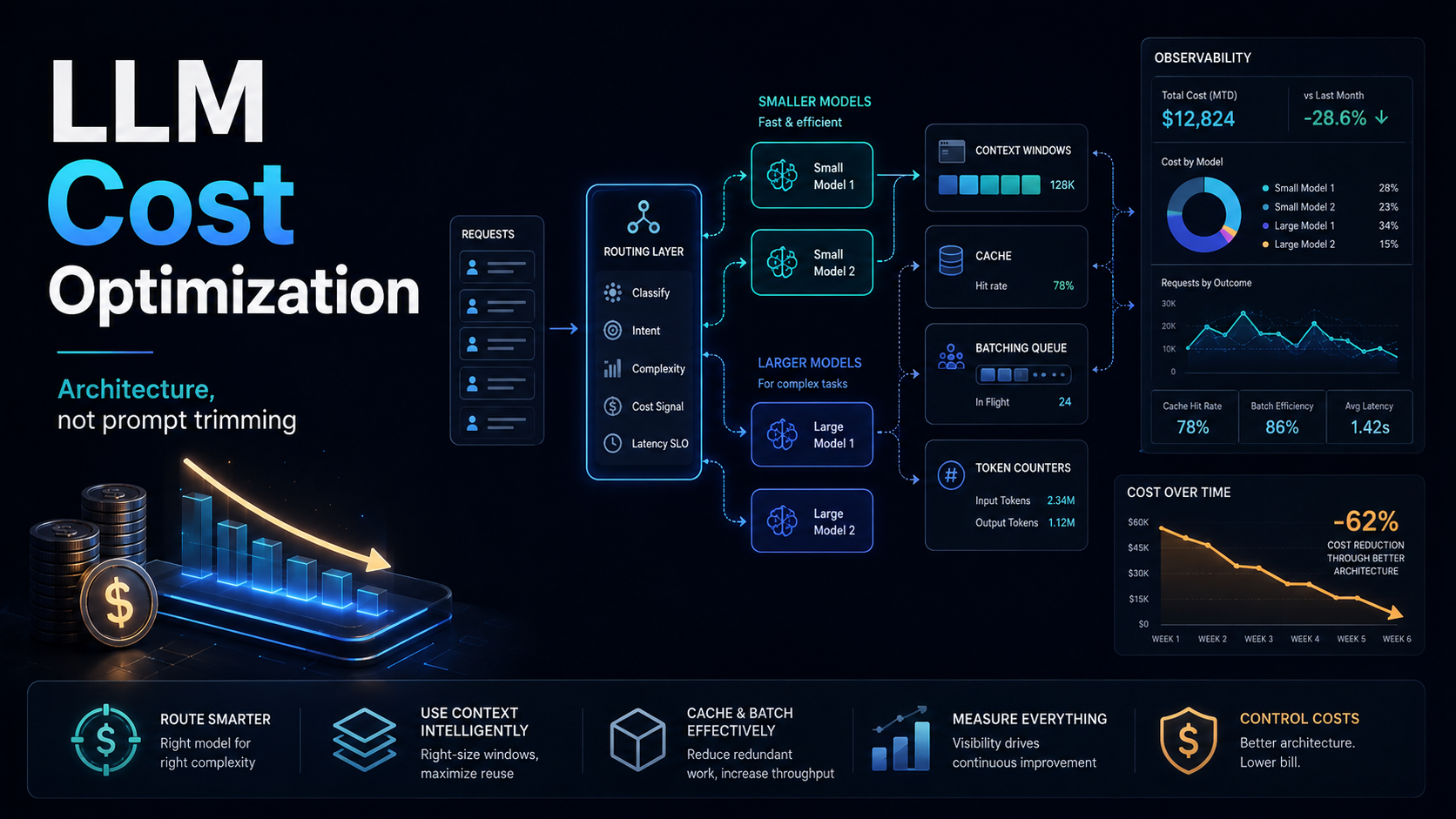
LLM cost optimization is increasingly a systems problem, not a prompt problem. Instead of focusing solely on making prompts cheaper, teams should ask why requests need certain models, amounts of context, calls, and output. This shift changes where to look for savings.
Start by writing down the actual costs of each request, including uncached input tokens, cache writes, cache reads, output tokens, tool/API charges, retries, and supporting infrastructure. Prices vary by provider, with some charging differently for cache reads and writes. Record the cost attribution to understand which features, tenants, models, retries, and background jobs contribute most to spend.
Next, route requests by difficulty rather than always using the best model. Classification and entity extraction tasks may benefit from smaller, faster models, while deep reasoning and high-risk decisions require more capable models. Build a simple router based on request type, deep reasoning needs, and risk level initially. Later, incorporate factors like historical success rates, context length, and tenant SLAs.
Finally, optimize context size. Remove unnecessary context tokens and serve more from cache. Measure which prompt versions increase average context size. The goal is efficient product economics, not just cheap tokens. Efficient routing and context management minimize cost while maintaining quality thresholds and latency SLOs.
Written by urgent.news from HackerNoon's reporting — not their text. Machine-written — may contain errors; check the original before relying on it.