‘If boys can wear shorts at home without being judged, why can’t girls do it?’
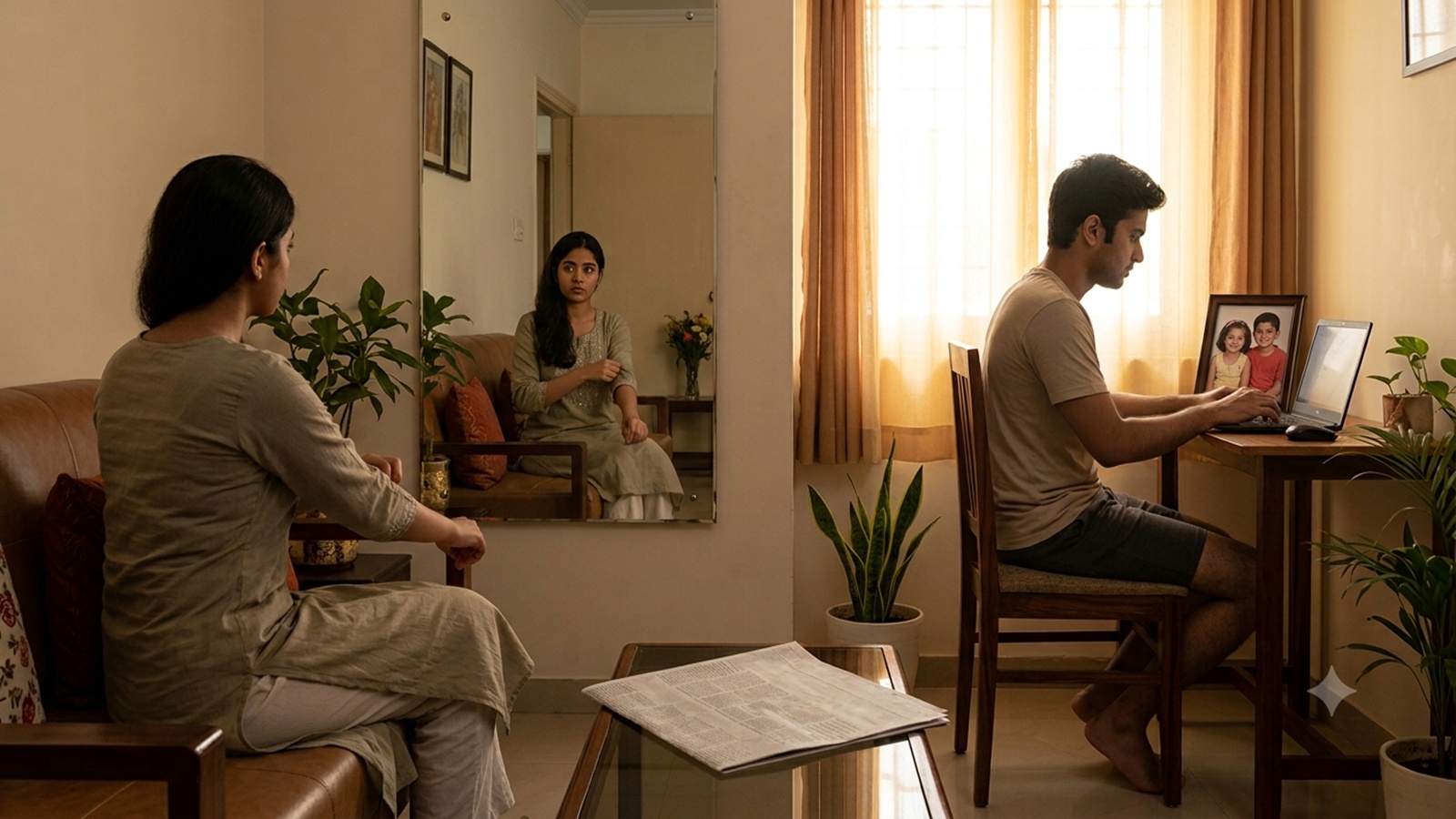
For years, teachers at this school would pull girls aside and scold them for their uniforms. It seemed boys were rarely under such close scrutiny. The girls often fidgeted with their skirts, adjusted their hair, or removed makeup just to avoid reprimands and comments. Even a decade later, the fear lingers as she writes this story.
When a jewelry brand's Rakshabandhan advertisement featuring actress Kriti Sanon sparked backlash over her choice of clothing (an ivory co-ord set with a bralette and wide-legged bottoms), BJP MP Kangana Ranaut shared her thoughts on Instagram. She questioned the appropriateness of tying one's brother a rakhi in a bikini/undergarments and criticized the advert for looking intentionally creepy. This subtext of moral policing did not sit well with many.
Manvi Maurya, a business development executive from Delhi, recounted an incident that left her feeling self-conscious about her clothing choices. A relative asked if her sleeveless dress was too revealing, and for the first time, she felt uncomfortable about her attire. She noticed a double standard at home, where her brothers or male cousins could wear similar clothes without judgment.
Sakshi Singh, a university student from Delhi, shared a similar memory of being scolded by teachers for the length of her skirt. Men, she pointed out, often flaunt their bare chests in water bodies without facing such judgment. Madhuri Nailwal, a communications specialist from Mumbai, said that wearing a short dress means being constantly conscious of one's sitting and looking posture.
Nidhi Agrawal, who grew up morbidly obese, was told she could only wear clothes of her choice after losing weight. Even after losing weight, she still faces shame for wearing clothes that challenge traditional thoughts. Dr Komal Manshani, a clinical psychologist at Max Healthcare, explained that as a woman grows older, the scrutiny follows her into the workplace and home.
Janvi, a clinical psychologist from Gurgaon, said that when parents focus on a daughter's clothing choices while giving her brother greater freedom, the message received is not just about hemlines or clothing. This can lead to self-objectification and self-surveillance, where a person begins to view and evaluate themselves from an outside observer's perspective. This can contribute to greater body shame, appearance-related anxiety, and in some cases, vulnerability to disordered eating.
These constant comments can make a person uncomfortable in their own body, leading to avoidance of certain clothes and a constant consciousness of their body, movements, and what they wear. This mindset can also affect a child's sense of bodily autonomy and agency, making it difficult to assert boundaries and trust their own judgment.
Written by urgent.news from The Indian Express - Lifestyle's reporting — not their text. Machine-written — may contain errors; check the original before relying on it.
This story
This is one outlet's version. Read the fullest account.