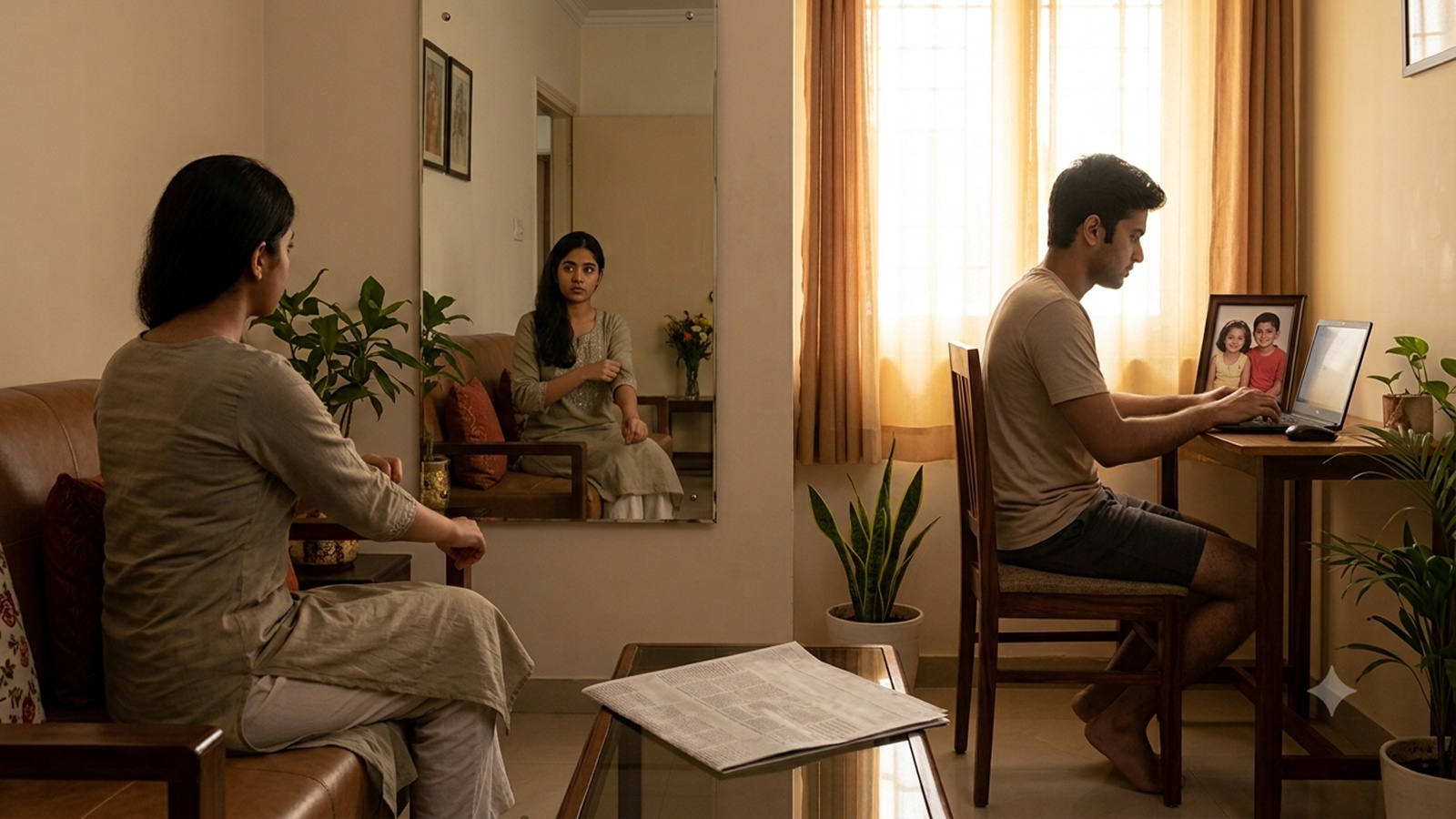
‘If boys can wear shorts at home without being judged, why can’t girls do it?’
Teachers frequently reprimanded girls at her school for the condition of their uniforms, often seen fidgeting with skirts, tucking them down to cover ankles, adjusting hair, or removing lip gloss. Boys, however, weren't as closely monitored. The tension of awaiting reprimands, punishments, and comments lingered as they stood in line.
These experiences weighed heavily on her mind decades later. When jewellery brand GIVA's Rakshabandhan advertisement featuring Kriti Sanon showcased her in an ivory co-ord set with a bralette and wide-legged bottoms, it ignited backlash over her choice of clothing. BJP MP Kangana Ranaut criticized the ad, deeming it "creepy" and questioning the lack of styling options.
Kriti Sanon's GIVA advertisement sparked widespread disapproval. Growing up, Manvi Maurya recalled an incident where a relative questioned the revealing nature of her sleeveless dress. The comments had never been directed at her brothers or male cousins, who could wear similar attire without judgment. Sakshi Singh also shared a similar memory, noting that men often flaunted their bare chests while swimming, while they faced scrutiny based on social status and salary.
Madhuri Nailwal, a Mumbai-based communications specialist, pointed out that wearing short dresses often comes with instructions on how to sit and behave. Nidhi Agrawal, morbidly obese during her youth, was told she could only wear clothes she chose after losing weight. Despite losing weight, she still faced shaming for her fashion choices.
Dr. Komal Manshani, a clinical psychologist, noted that as women age, they observe their brothers face fewer questions about their clothing choices, where they go, and how their decisions reflect on the family. Janvi, a clinical psychologist, explained that when parents focus on a daughter's clothing choices while granting her brother greater freedom, it sends a message about whose body is scrutinized and managed.
The constant monitoring can lead to self-objectification and self-surveillance, causing girls to focus on appearance rather than feelings. This psychological shift can impact bodily autonomy and agency, potentially leading to greater body shame, anxiety, and disordered eating. Nailwal emphasized that these constant comments can make someone uncomfortable in their own body, leading to avoidance of certain clothes due to fear of judgment.
The underlying message can create an unequal sense of trust between siblings, with one perceived as capable of making decisions while the other is managed by the family.
Written by urgent.news from The Indian Express's reporting — not their text. Machine-written — may contain errors; check the original before relying on it.