Healed fang wound found on 520-million-year-old apex predator
Something took a bite out of one of the biggest predators in Cambrian seas, an extraordinary fossil shows – and it could well be cannibalism
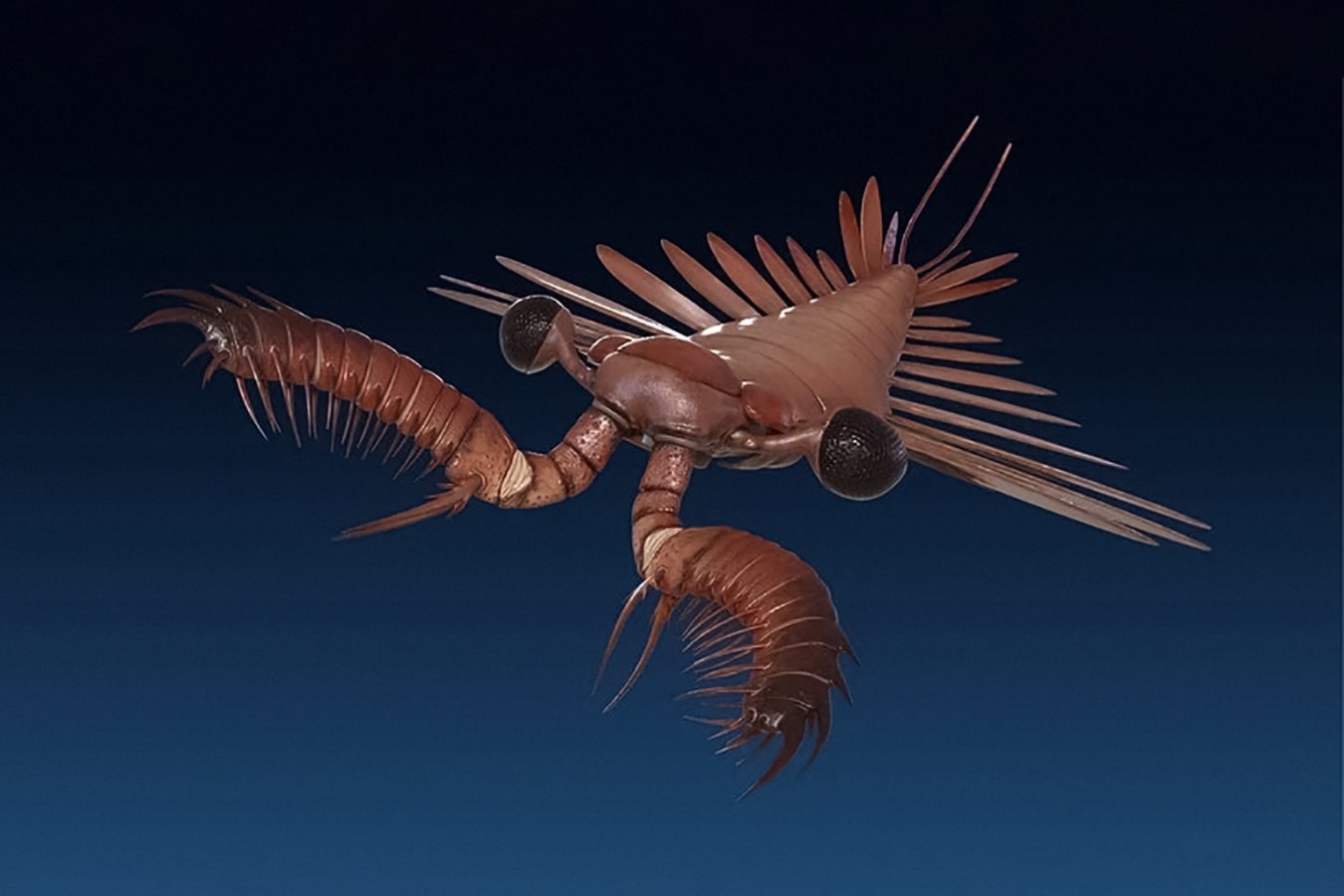
Around 520 million years ago, apex predators in Cambrian seas faced threats from other predators. A remarkable fossil reveals a healed bite wound inflicted by one predator on the side of another. The predator in question is Amplectobelua symbrachiata, a radiodont, a group of extinct arthropods resembling a cross between squid and lobsters.
Reaching nearly a meter in length, these ancient predators were formidable, with grasping appendages on their heads and swimming flaps on their sides. The swimming flaps were softer than the grasping appendages, making them less likely to fossilize. Researchers discovered a single swimming flap at a site in China, the Yu’anshan Formation, where soft tissues are exceptionally preserved.
The flap's surface displays a characteristic pattern of lines, identifying it as a radiodont flap. Notably, there is a W-shaped feature on the flap's edge, indicative of a bite wound. To rule out geological processes, researchers consulted Stephen Pates from University College London, who has studied similar injuries in trilobites.
X-ray fluorescence mapping confirms the W-shaped part's chemical composition matches the rest of the fossil, suggesting it's a preserved flap rather than a post-mortem artifact. The presence of a black band around the edges of the W-shape indicates healing, likely occurring while the animal was alive. With only a few isolated radiodont flaps found, this discovery provides valuable insight into ancient predator behavior.
While alternative explanations like moulting wounds exist, the W-shape and location of the bite mark lean towards predation, making it an extraordinary find in the fossil record.
Written by urgent.news from New Scientist's reporting — not their text. Machine-written — may contain errors; check the original before relying on it.