Art and Culture with Devdutt | Sushruta’s contribution to modern reconstructive surgery
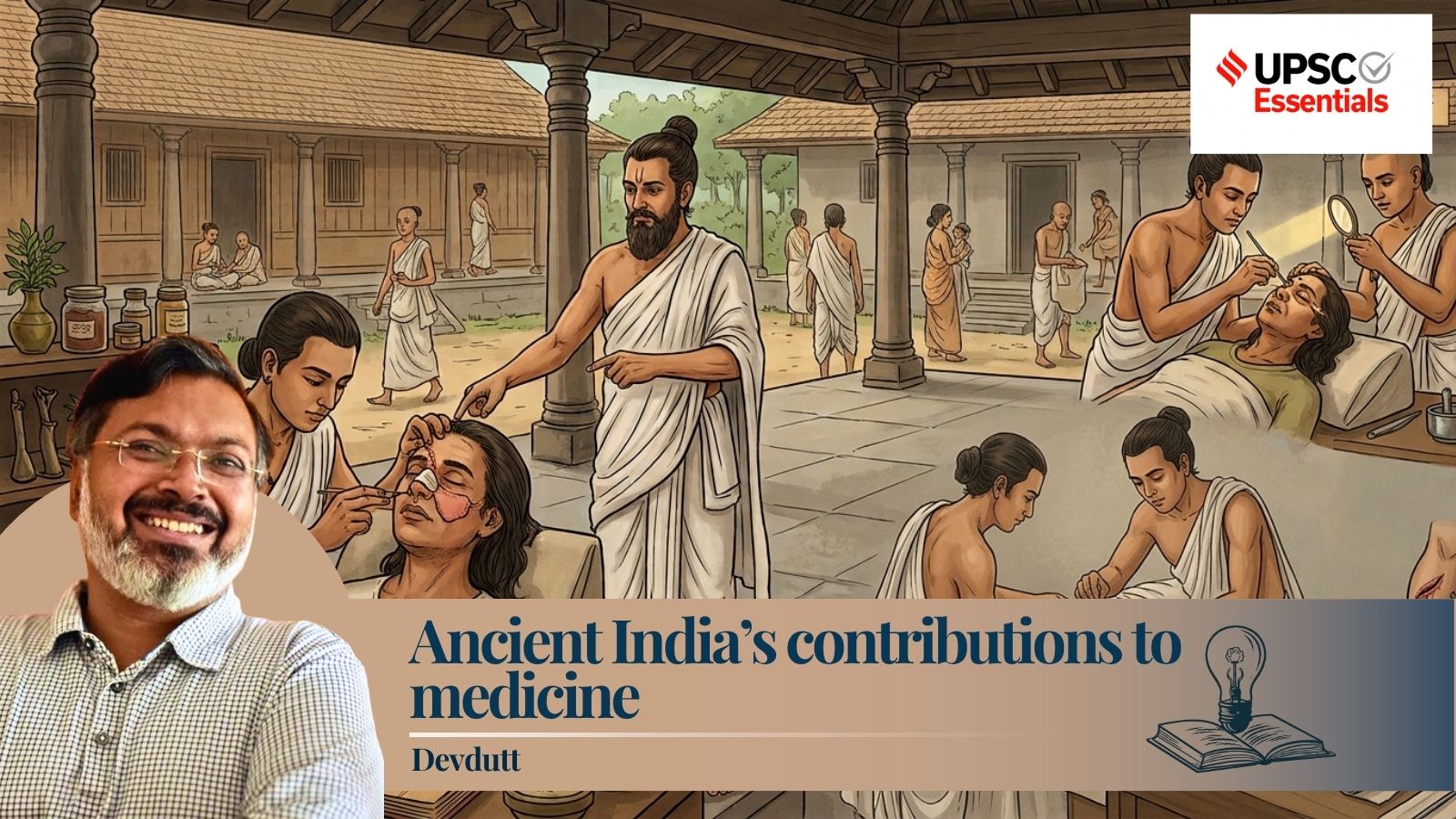
Ancient India made significant contributions to medicine, particularly in the field of surgery. The Sushruta Samhita, an ancient Indian medical text, described reconstructive surgery techniques such as nose reconstruction using a skin flap from the patient's cheek. This procedure, recognized by modern surgeons as practical and effective, was documented in 1794 in a British publication.
The Sushruta Samhita also detailed cataract surgery, bladder stone removal, and methods for extracting arrows from wounds, which were major advancements in ancient medicine.
Ancient Indian surgeons were highly skilled, requiring great precision and careful observation due to the risks involved in surgery before the advent of anesthesia and antiseptics. Sushruta emphasized direct observation of the human body during decomposition to study anatomy accurately, promoting a scientific approach to medical practice. Another text, the Caraka Samhita, proposed an early understanding of heredity, suggesting that children inherited traits from both parents, although it differed from modern genetics.
Despite these remarkable achievements, the medical tradition did not continue to grow and develop. The decline can be attributed to the societal view of physicians, who were often considered low and stigmatized in Brahminical society. Physicians were linked with the Atharvaveda, a text associated with magic and ritual, further reducing their social status.
This contradiction between the respect for medical knowledge and the low societal position of physicians led to a gradual shift in the practice of medicine to lower caste barber communities. Consequently, ancient Indian medicine never fully developed its potential in understanding complex biological systems, such as the brain, heart, and blood circulation.
The history of this medical tradition is both inspiring and tragic, showcasing remarkable surgical techniques and contributions to world medicine while highlighting the impact of social systems on scientific progress.
Written by urgent.news from The Indian Express's reporting — not their text. Machine-written — may contain errors; check the original before relying on it.