Young girls are becoming obsessed with skincare and makeup – why is this happening?
Social media, marketing and social norms around appearance are fuelling an unhealthy fixation on skincare and makeup among young girls, which can have consequences for both their skin and self-worth.
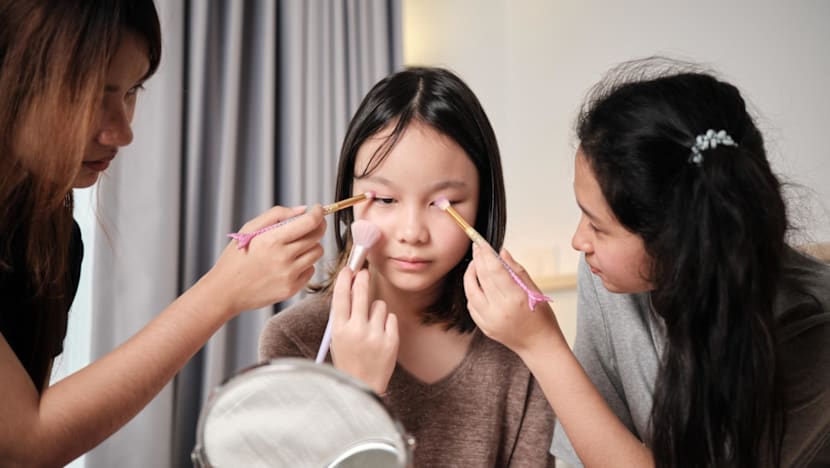
The obsession with skincare and makeup among young girls appears to be on the rise, driven by social media, marketing, and societal norms surrounding appearance. This fixation can have negative effects on both their skin health and self-esteem. Ifah, a mother, recounted how her seven-year-old daughter became fascinated with her mother's beauty products and even learned how to apply them herself.
Another eight-year-old girl in her friend's family showed her how to apply makeup and skincare, even creating "Get Ready With Me" videos. Dr. Lynn Chiam, a dermatologist, noted that this behavior falls under the term "cosmeticorexia," which refers to an unhealthy preoccupation with achieving flawless skin through excessive and inappropriate use of cosmetics and procedures.
This issue is evident in the "Sephora kids" phenomenon, where girls aged seven to fourteen spend significant time in beauty stores browsing and purchasing skincare and makeup products, despite having no apparent skin concerns. Such behavior can lead to physical and psychological consequences, including distress when a product is missed from their skincare routine and spending significant amounts of money on products to address perceived flaws.
Some young girls become so fixated on their appearance that they prioritize fixing tiny blemishes over basic necessities like food or school supplies. Associate Professor Mark Koh, a dermatologist, pointed out that young girls are often targeted with complex anti-ageing products through aggressive social media marketing. Ingredients like retinoids, exfoliating acids, Vitamin C, and heavily perfumed products, which are typically formulated for adult skin, are now being used by young girls, potentially causing harm to their skin barrier and leading to allergic reactions, rashes, and chemical irritation.
Lim Shoon Yin, executive director of AWARE, a gender equality organization, emphasized that the phenomenon reveals how young people's insecurities are being exploited by the beauty industry. She warned that the early use of retinol, a topical ingredient designed for older skin, is not vanity but an industry's way of selling insecurity earlier and earlier.
Dr. Annabelle Chow, a psychologist, observed an increase in pre-teen and teenage patients who expressed a stronger interest in skincare and makeup, driven by the need to fit in and look good, as their developing brains may not have the capacity for sensible decision-making or may be overly eager to impress their peers.
Written by urgent.news from CNA - Singapore's reporting — not their text. Machine-written — may contain errors; check the original before relying on it.