Why Cherry MX ULP Keyboard Switches Deserve a Desktop Comeback
We explore how Cherry MX ULP switches offered an incredible feel on the Corsair K100 Air, and why the mechanical keyboard industry left the tech behind.
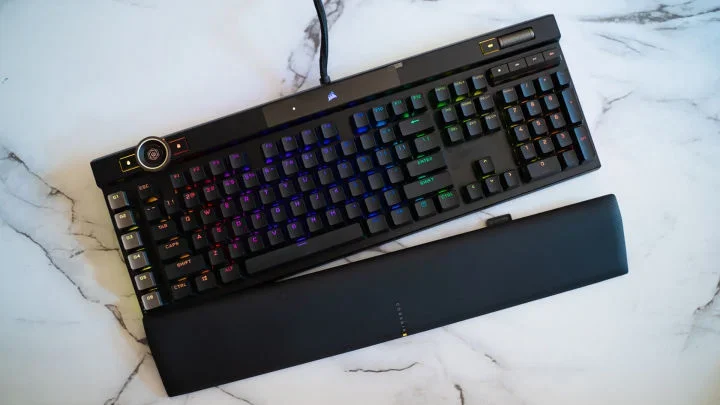
The Corsair K100 Air Wireless keyboard, released in 2022, revolutionized the mechanical keyboard market with its innovative Cherry MX Ultra Low Profile (ULP) switches. Unlike traditional low-profile switches, ULP switches utilize a unique design with metal wings that pivot onto the actuator, resulting in a significantly thinner switch height of just 3.5mm and total key travel of 1.8mm.
Although this limited travel might seem insufficient for a comfortable typing experience, Cherry's engineering genius lies in the short and sharp tactile bump of their MX ULP Tactile switches, combined with a relatively low actuation force of 65cN. This combination provides a satisfying typing feel without causing excessive fatigue, even during long typing sessions.
The K100 Air Wireless was a standout product due to its ultra-low-profile switches and aluminium top plate, which provided a sturdy foundation on the desk. Despite its lightweight design, the keyboard still offered a respectable battery life of around 50 hours. At the time, the mechanical keyboard industry was facing a crossroads, with many manufacturers pursuing different strategies.
Some focused on blending traditional gaming features with enthusiast-level options, while others remained loyal to classic mechanical designs. A few brands even started experimenting with optical or Hall effect switches, aiming for faster actuation and more precise control. However, Corsair chose a different path by introducing an entirely new product category with the K100 Air Wireless, which has since remained one of the only mainstream keyboards to feature Cherry's MX ULP switches.
Other notable manufacturers, such as Cherry, Mistel, and boutique brands, have also embraced ultra-low-profile switches, but seldom with the same breadth of features and options as the K100 Air Wireless. In retrospect, the primary battle during the K100 Air Wireless' release was not thinness, but rather the balance between performance, user experience, and design.
Written by urgent.news from IGN's reporting — not their text. Machine-written — may contain errors; check the original before relying on it.