What happens to Singapore's unwanted clothes?
CNA traces what happens after items are put into textile recycling bins, and looks at what is driving the growing demand for secondhand fashion in Singapore.
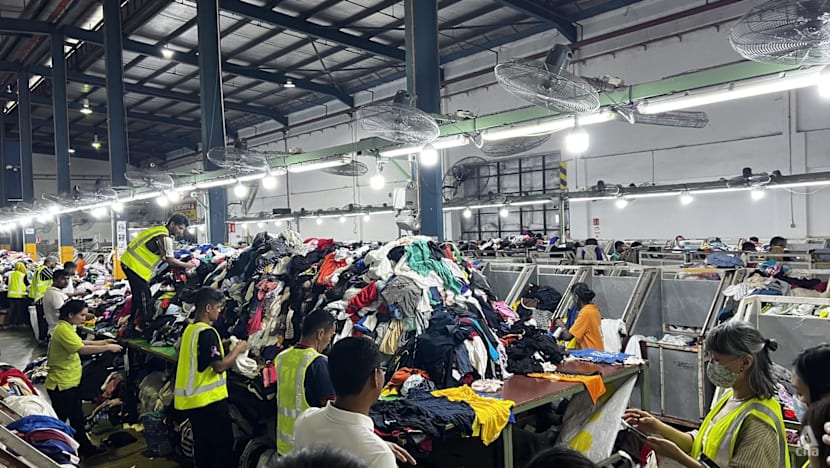
In Singapore, unwanted clothing is collected through the Cloop social enterprise's yellow recycling bins, which have expanded to 450 locations across the island. Around 60 tonnes of clothing are sent weekly to Life Line Clothing in Port Klang, Malaysia, where it undergoes sorting for resale, reuse or recycling. About half of the processed clothing can be resold, while 15-20% becomes industrial wiping cloths, 20% is turned into products like rugs, 2% is recycled into new textile materials, and 8% is burned to generate electricity.
However, half of the material is processed for little or no commercial return due to rising costs and falling secondhand clothing values. Despite the growth in the recycling system, most items are not resold due to factors such as quality, condition, and the popularity of fast fashion. Singapore's secondhand fashion market is also expanding, with retailers like Refash experiencing significant revenue growth.
The demand for secondhand fashion is driven by younger consumers seeking unique and affordable options, as well as price-sensitive shoppers.
Written by urgent.news from CNA - Singapore's reporting — not their text. Machine-written — may contain errors; check the original before relying on it.
This story
This is one outlet's version. Read the fullest account.
- What happens to Singapore's unwanted clothes? channelnewsasia.com