What China can do to secure trade routes in its coming high-seas struggle with US
China should forge a national consensus on “regaining mastery of the oceans” and direct overseas investment returns into defence spending to brace for sea-power competition with the US, according to a prominent Chinese academic. Di Dongsheng, associate dean of Renmin University’s school of international studies in Beijing, warned on Tuesday that as economic ties between the United States, the…
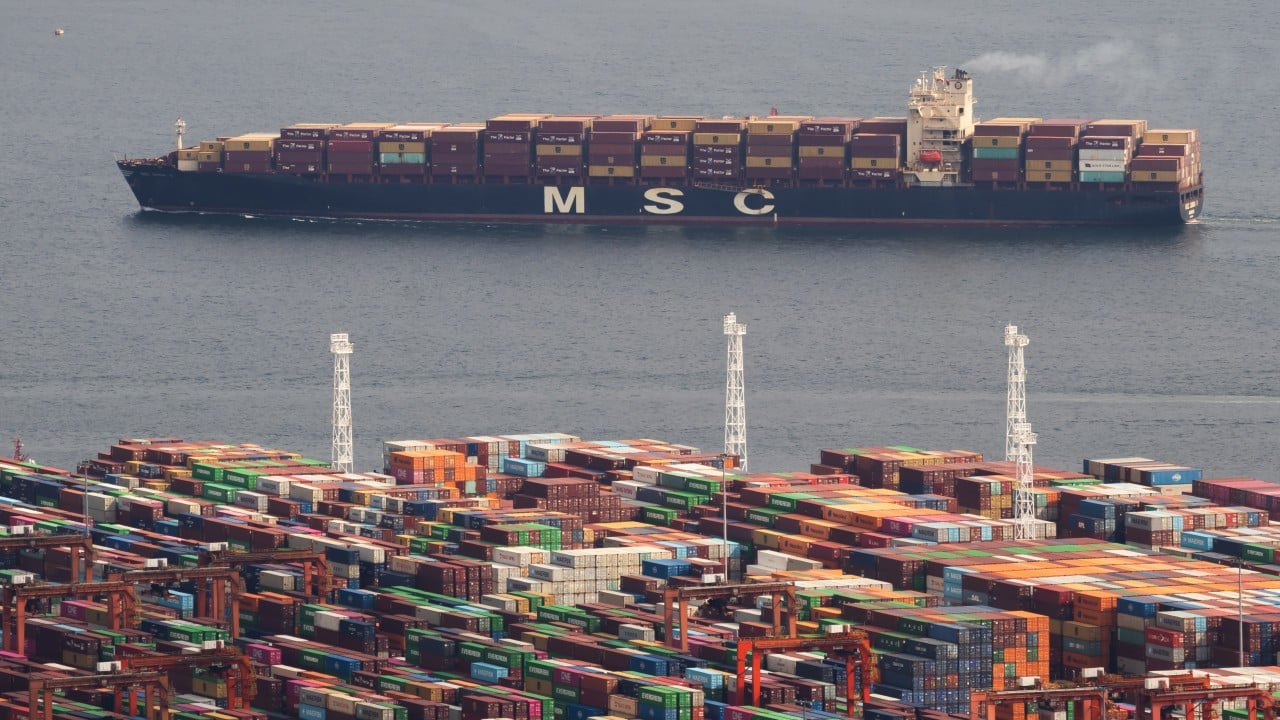
China must adopt a national perspective to regain control over the oceans, directing overseas investment proceeds into defense spending to prepare for the forthcoming sea-power conflict with the US, according to a renowned Chinese academic. Di Dongsheng, from Renmin University's international studies faculty in Beijing, cautioned that as trade ties between the US, the leading maritime force, and China, which heavily depends on sea-based trade, transition to competition, the age of open oceans may be nearing its end.
In a post on his social media platform, Di asserted that China needs to prepare for a struggle over sea power and the safety of shipping routes. He estimated that securing dominance over and access to ports, straits, canals, and shipping lanes worldwide could take approximately three decades, with the possibility of certain maritime trade being threatened or disrupted in the interim.
Di pointed out that Beijing had gained the upper hand in the recent tariff and sanctions wars, compelling the US President Donald Trump to make a temporary agreement. However, he suggested that the White House remained skeptical and some viewed Washington as targeting China's vulnerabilities, awaiting the opportune moment to act.
Di highlighted the maritime routes as a key vulnerability, including the Panama Canal, Greenland, the Strait of Hormuz, natural deepwater ports like Ream Naval Base in Cambodia, the Port of Chancay in Peru, Kyaukphyu in Myanmar, and Gwadar in Pakistan, which could become future "geopolitical struggle focal points." His warning stems from the increasing controversy surrounding the US-Israel war on Iran and the Hormuz crisis, potentially altering the strategic rivalry between the world's two largest economies.
Some analysts attribute Trump's calls for control over Greenland, the diplomatic clash between Beijing and Washington over the Panama Canal, and the January abduction of Venezuelan President Nicolas Maduro to Washington's strategic efforts to restrict China's strategic space and global footprint by controlling key international trade and energy hubs.
While the US may not fully block Chinese shipping, Di warned that it would tighten control over critical nodes and generate a measured tension, "like holding a knife and repeatedly waving it back and forth around sensitive areas such as your throat, leaving you worried and anxious." Di rejected the notion that China wouldn't need to compete with the US at sea, suggesting that overland routes connecting Asia, Europe, and Africa would not sufficiently address the foreign trade channel issue.
He stated that annual freight by weight on the China-Europe Railway Express corresponds to roughly two days' throughput at Ningbo, the world's busiest port by cargo volume, and the entire service could be halted if a single country along the rail line obstructs it, while maritime trade could switch to alternate routes in emergencies.
Di emphasized that China must enhance both the quality and quantity of its naval capability as the bedrock of maritime power while establishing supply bases globally through long-term diplomatic and military initiatives. Although China's navy has surpassed the US in the number of ships, its total tonnage has not yet overtaken Washington's.
The US alliance network and approximately 800 overseas bases must also be considered, Di noted. Although China's naval hardware is "pulling ahead of the US" technically, there remains a "gap in experience and capability," he added. "We need to create a series of new national consensuses," Di wrote. "The future of the Chinese nation does not solely lie in East Asia.
Peace and respect cannot be secured through retreat and conservatism. Only by embracing, taming, and regaining mastery of the oceans does the Chinese nation have a future."
Written by urgent.news from Reuters Business via SCMP's reporting — not their text. Machine-written — may contain errors; check the original before relying on it.
This story
This is one outlet's version. Read the fullest account.