What China can do to secure trade routes in its coming high-seas struggle with US
China should forge a national consensus on “regaining mastery of the oceans” and direct overseas investment returns into defence spending to brace for sea-power competition with the US, according to a prominent Chinese academic. Di Dongsheng, associate dean of Renmin University’s school of international studies in Beijing, warned on Tuesday that as economic ties between the United States, the…
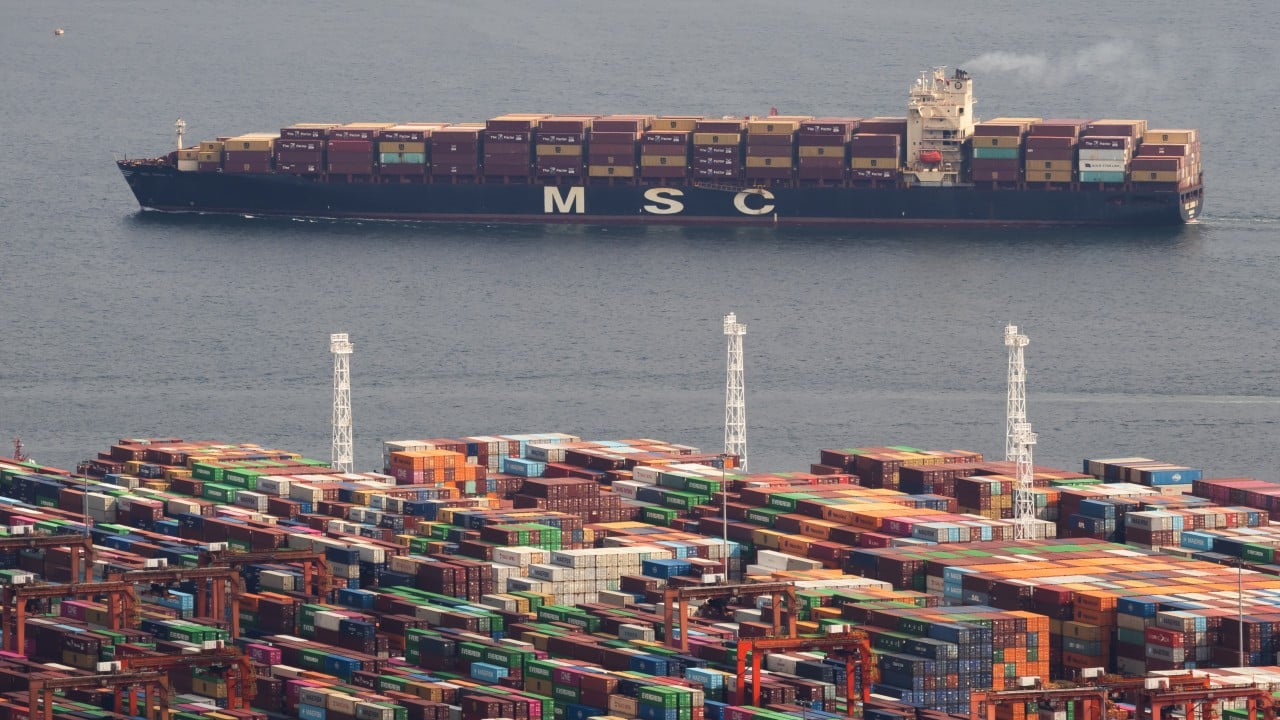
To safeguard its maritime trade routes and potential future clashes with the United States, China must establish a unified stance on "regaining control over the oceans," according to a respected Chinese scholar. Di Dongsheng, an associate dean at Renmin University's school of international studies in Beijing, cautioned that as economic relations between the United States—dominant in maritime affairs—and China, heavily reliant on sea-based trade, shift towards competition, the notion of unrestricted oceans may be nearing an end.
In a recent social media post, Di emphasized the necessity of preparing for future conflict over maritime power and the security of shipping channels. He projected that it could require around three decades for China to achieve dominance over and access to ports, straits, canals, and shipping lanes worldwide through incremental steps.
"In the interim, the risk of China's import and export trade via maritime transport facing threats or partial disruptions still necessitates close scrutiny," Di stated. While Beijing has gained the upper hand in the recent tariff and sanctions disputes, forcing U.S. President Donald Trump into a temporary concession, Di's research suggests the White House remains unconvinced and may be actively targeting China's vulnerabilities, waiting for an opportune moment to act.
He highlighted maritime routes as a significant vulnerability, noting that geopolitical developments since mid-2025 involving the Panama Canal, Greenland, and the Strait of Hormuz signal a potential decline in open seas. Notable natural deepwater ports, including Ream Naval Base in Cambodia, the Port of Chancay in Peru, Kyaukphyu in Myanmar, and Gwadar in Pakistan, could emerge as "future geopolitical flashpoints."
Di's warning comes amidst ongoing discussions about the implications of the current U.S.-Israel war against Iran and the Hormuz crisis on the strategic rivalry between the world’s two largest economies. Some analysts see Trump's persistent calls for control over Greenland, the diplomatic standoff between China and the U.S. over the Panama Canal, and the January abduction of Venezuelan leader Nicolas Maduro as U.S. strategies to limit China's strategic reach and global influence by controlling crucial international trade and energy hubs.
Contrary to the notion that China does not require direct competition with the U.S. at sea, Di argued that such an approach would likely prove inadequate for addressing foreign trade channel vulnerabilities. He pointed out that the China-Europe Railway Express, transporting cargo annually weighing the same as a single day's throughput at the world's busiest port, Ningbo, could be entirely halted if a single country along the rail line obstructed the route, whereas maritime trade could reroute during emergencies.
Di advocated for upgrading both the quality and quantity of China's naval capabilities as a foundation for maritime power, alongside establishing supply bases globally through long-term diplomatic and military engagements. Although China's navy has surpassed the U.S. in the number of ships, its total tonnage has yet to surpass Washington's.
The U.S. alliance system and approximately 800 overseas bases must also be considered, according to Di. Although China's naval equipment is "outpacing the U.S." in terms of technology, a gap in experience and capability remains. Di concluded, "The destiny of the Chinese nation does not solely lie in East Asia. Peace and respect cannot be secured through retreat and conservatism.
By embracing, mastering, and regaining control of the oceans, the Chinese nation can secure its future."
Written by urgent.news from South China Morning Post's reporting — not their text. Machine-written — may contain errors; check the original before relying on it.