South Africa’s new gold rush: Big money, high stakes in emerging spekboom restoration sector
This is the first article in Mongabay’s three-part investigation of spekboom-led ecosystem restoration in South Africa. It is part of an award-winning collaboration between independent science writer Leonie Joubert, the Stellenbosch University School for Climate Studies, and the Henry Nxumalo Foundation which supports investigative journalism in Africa. GQEBERHA, South Africa — The spekboom is to…
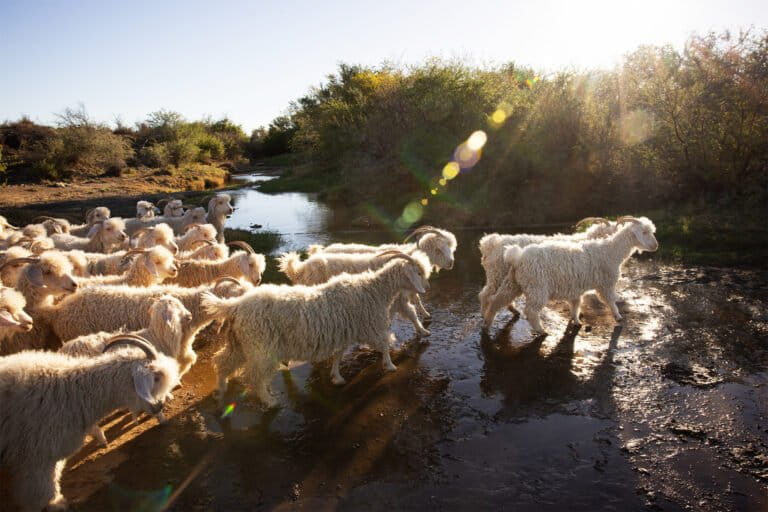
GQEBERHA, South Africa — The spekboom, a plant prized by goats akin to ice cream for toddlers, has been largely overharvested across South Africa's Eastern Cape province, reducing the Albany thicket plant biome to a mere 10%. Once a lush ecosystem, many farmlands now resemble arid deserts. In this environment of ecological desolation, a dense stand of spekboom (Portulacaria afra) stands out, a testament to half a century of restoration efforts.
Dubbed "the old ones" by Nick Hamp-Adams, the general manager of Return to Thicket, a restoration initiative, these bushes are as tall as a person and boast lush, leafy foliage that creates an impenetrable hedge. Their roots extend into the ground, enabling the plant to spread and further fortify the soil. This particular plot was originally planted in 1976 by a farmer who sought to mitigate the flooding of his barn.
Written by urgent.news from Mongabay's reporting — not their text. Machine-written — may contain errors; check the original before relying on it.
This story
This is one outlet's version. Read the fullest account.
- Malian music star Salif Keïta cancels South Africa tour over reported xenophobic violence adomonline.com
- R600m meth lab bust heightens concern over possible Mexican cartel links in South Africa iol.co.za
- South Africa intercepts Thai men with 468 parrot eggs in separate cases thethaiger.com
- A taste of South Africa comes to the UK mg.co.za
- Trumpelmann, Frylinck set up Namibia's win against South Africa cricinfo.com