Religious freedom panel urges sanctions against India's RSS during chief's US visit
A United States panel on religious freedom has expressed concern about a visit to the country by the chief of the Hindu nationalist group that is the ideological parent of India’s ruling Bharatiya Janata Party (BJP), and urged sanctions on the group’s members. Mohan Bhagwat, chief of the Rashtriya Swayamsevak Sangh (RSS), is on a US visit and is scheduled to speak at a Saturday event in New York…
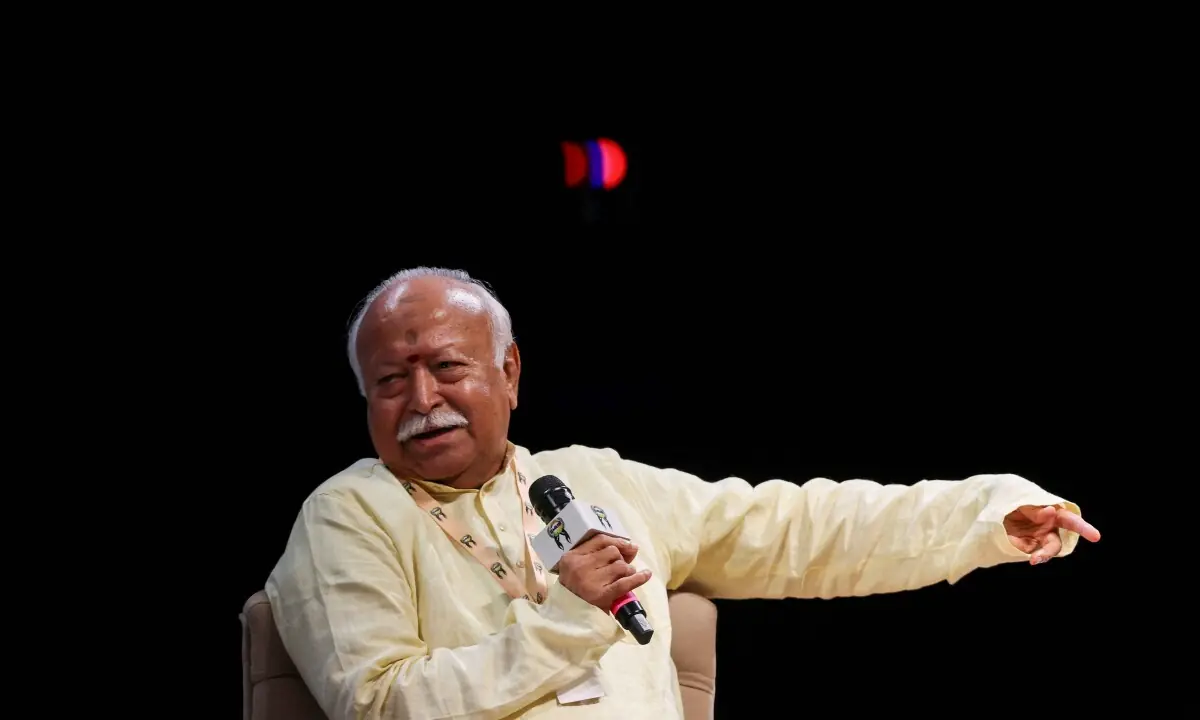
A United States panel tasked with overseeing religious freedom has expressed apprehension regarding a visit by Mohan Bhagwat, the chief of the Hindu nationalist organization known as the Rashtriya Swayamsevak Sangh (RSS), while he is in the United States. Bhagwat is slated to deliver a speech during an event in New York City this Saturday.
The RSS, a prominent Hindu group which played a pivotal role in shaping Prime Minister Narendra Modi's Bharatiya Janata Party (BJP), announced in May its intention to conduct foreign visits to challenge the notion that it is a paramilitary organization responsible for attacks against minorities. In a statement released on Wednesday, Asif Mahmood, the chair of the US Commission on International Religious Freedom (USCIRF), called on the US government to consider imposing targeted sanctions on the RSS members and Indian officials implicated in violations of religious freedom, including the revocation of Bhagwat's visa.
The USCIRF, a bipartisan arm of the US government, is responsible for monitoring religious freedom globally and advocating for policies, although these recommendations are not legally binding. Despite recent recommendations from this commission, Washington has not yet implemented sanctions. The Indian foreign ministry has rejected the USCIRF's allegations, branding the commission as biased against India.
Various human rights groups argue that the RSS advocates a majoritarian ideology that fosters intolerance towards minority groups. However, the RSS denies these accusations, asserting that it is a "Hindu-centric civilizational, cultural movement" aimed at elevating India to its highest potential, including uniting Hindus. Both the United Nations and various human rights organizations have reported an increase in the persecution of minority groups in India in recent years.
They highlight growing instances of hate speech, the implementation of a religion-based citizenship law, the demolition of properties owned by Muslims, the withdrawal of autonomy from occupied Kashmir, and an anti-conversion legislation that undermines freedom of belief. The BJP-led Indian government denies any discriminatory actions and claims that its policies, such as food subsidy programs and electrification drives, benefit all communities.
Written by urgent.news from Dawn's reporting — not their text. Machine-written — may contain errors; check the original before relying on it.
This story
This is one outlet's version. Read the fullest account.