Red mangroves brought to Hawaii now threaten wetlands and endangered birds
In Hawaii, environmental teams are embarking on an ambitious project to eradicate invasive red mangroves, targeting nearly two miles of waterways in Kailua. This initiative is vital for preserving endangered native waterbirds while simultaneously addressing environmental degradation. The involvement of community volunteers and organizations is essential for this extensive, multi-year effort,…
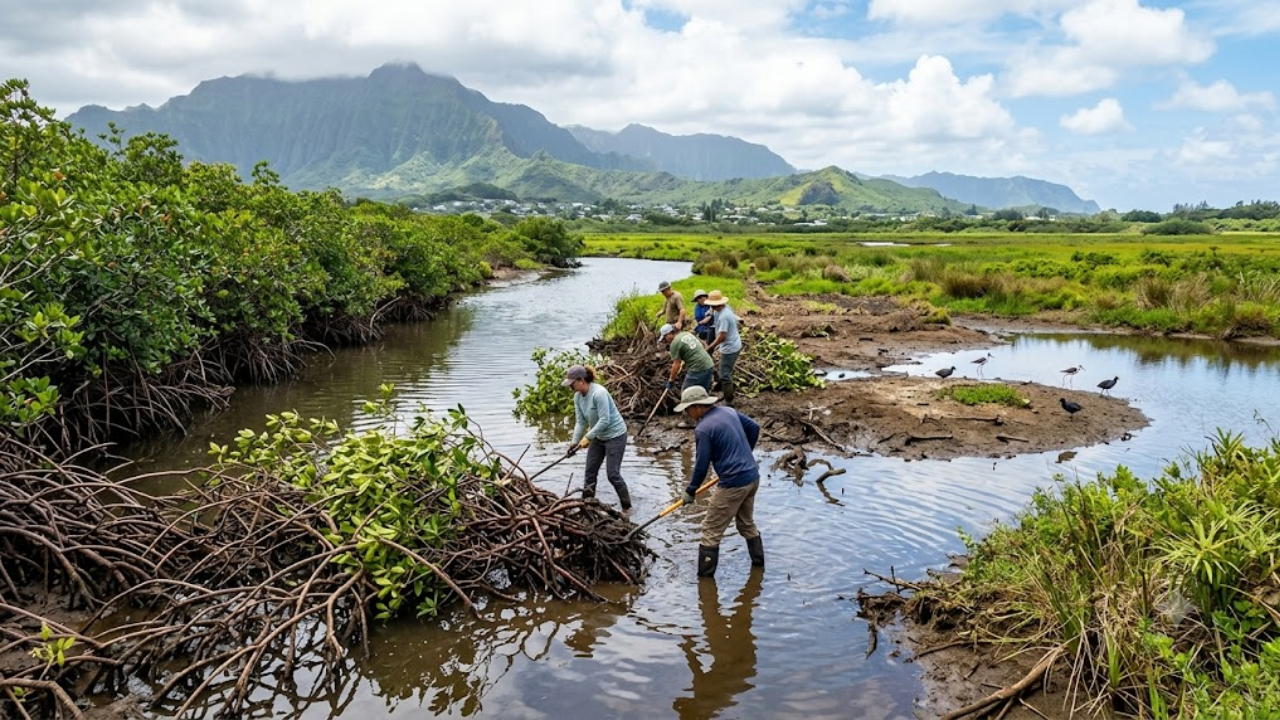
Environmental teams in Hawaii have embarked on a major initiative to remove invasive red mangroves from nearly two miles of waterways in Kailua. This multi-year project, announced on August 25, 2026, aims to restore wetlands and protect endangered native waterbirds. Funded by grants from the National Fish and Wildlife Foundation and the National Oceanic and Atmospheric Administration, the effort involves the Hawaii Department of Land and Natural Resources, the University of Hawaii, and local non-profit Hui o Koolaupoko.
Community involvement is crucial to the project's success. Organizers are seeking volunteers, schools, and private landowners to help remove young mangrove plants and seed pods from affected waterways. The initial removal work is scheduled to commence on September 26, 2026, with crews initially focusing on Kawainui Stream.
Red mangroves, not native to Hawaii, were first introduced from Florida in 1902 to control coastal erosion. Over time, these invasive trees have significantly altered wetland ecosystems. Their dense root systems trap sediment, raise stream beds, and slow water flow, leading to reduced water quality and the loss of open mudflats crucial for endangered Hawaiian waterbirds.
The project aims to re-establish native wetland species and restore natural water flow, benefiting the broader ecosystem. By removing invasive mangroves and replanting native vegetation, the initiative seeks to enhance habitat resilience against climate change while supporting Hawaii's unique native species.
Written by urgent.news from Times of India's reporting — not their text. Machine-written — may contain errors; check the original before relying on it.