New documentary chronicles the late Brazilian artist Amélia Toledo’s boundary-pushing work
From works made of crystals, shells and stones, to hard-edged abstraction and photography, Toledo bridged many movements and media across her six-decade career, as director Hélio Goldsztejn’s new film shows
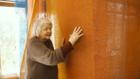
A recently released documentary delves into the life and work of the Brazilian artist Amélia Toledo, who made significant contributions to the realms of Brazilian Modernism and Neoconcretism. The film, titled Amelia Toledo: Lembrar de Não Esquecer (Don’t Forget to Remember), explores Toledo's five-decade career through testimonials from her peers and relatives, as well as archival footage and photographs from exhibitions, workshops, and interviews.
Born in São Paulo in 1926 and passing away in Cotia in 2017, Toledo was a sculptor, painter, draughtswoman, and educator whose experimental practice merged geometric abstraction with the natural world. She was particularly drawn to the energetic properties of organic materials, creating works with crystals, shells, and stones displayed on pedestals or arranged in mosaic-like compositions.
Toledo's paintings, characterized by their hard edges, evoked natural forms akin to microscopic specimens. She began her artistic journey under the guidance of artists such as Anita Malfatti, Yoshiya Takaoka, and Waldemar da Costa, and later studied in London under William Turnbull at the Central School of Arts and Crafts. During her time in London, Toledo experimented with collage, a precursor to her later innovative techniques.
After returning to Brazil, she continued to teach at various institutions, including the University of Brasília, which faced scrutiny during the military dictatorship in 1964, prompting Toledo and her family to move to Portugal. They returned to Brazil two years later. Toledo maintained close ties with prominent figures of Brazil's post-war avant-garde, including Hélio Oiticica, Lygia Pape, and Waldemar da Costa.
Her work has garnered renewed interest in recent years, featured in exhibitions such as the Museu Brasileiro da Escultura e Ecologia (Mube) and the Hammer Museum's Radical Women: Latin American Art, 1960-1985. Despite the film's fascinating exploration of Toledo's life and work, its editing leaves something to be desired, moving erratically between themes.
Some sections feature footage captured nearly a decade ago for a project that never materialized, including Toledo herself speaking about her work firsthand. While the documentary offers a compelling glimpse into Toledo's practice and process, its editing detracts from the overall impact.
Written by urgent.news from The Art Newspaper's reporting — not their text. Machine-written — may contain errors; check the original before relying on it.