Nepal-Tibet flood catastrophe seen from space: ‘No human settlement left, everything is flat’
More than 1,400 people are missing, including foreign tourists, one Israeli and pilgrims; survivors described a sudden wall of water ‘like a bomb,’ while mud buried the border crossing and debris surged at about 50 meters per second
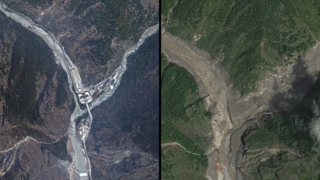
New satellite images from the Nepal-Tibet border region revealed the devastating scale of the flood disaster. The once bustling border crossing, featured in viral footage, was now completely submerged in mud after being washed away. Entire towns that stood just a day prior were now largely obliterated, with powerful and well-built structures reduced to mere toothpicks.
U.S. President Donald Trump expressed his condolences, offering any assistance Nepal may require. Rescue efforts, however, were fraught with challenges as the torrent had destroyed over forty kilometers of roads, making ground access nearly impossible. Helicopters, the primary means of reaching the affected area, struggled to locate suitable landing sites.
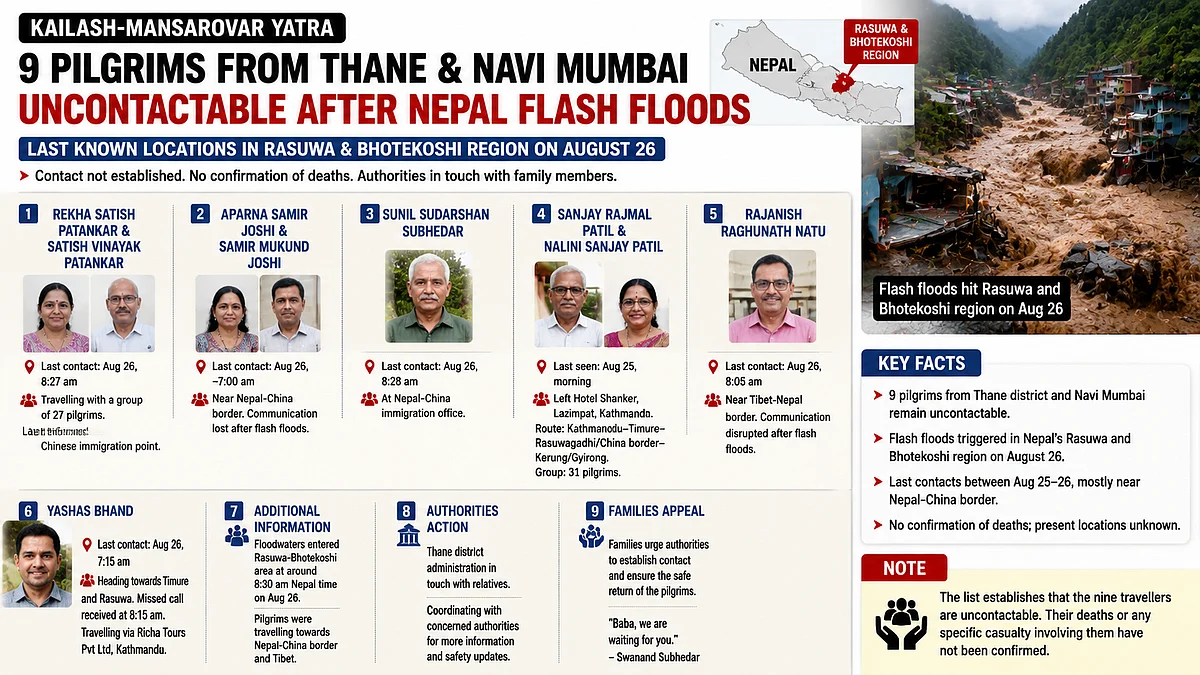
The flooding had also disrupted electricity and communication infrastructure, leaving vast sections of the disaster zone without power or internet access. According to official reports, over 390 people had lost their lives, with more than 1,400 others missing, including numerous foreign tourists and pilgrims. Among the missing were 517 foreign nationals from various countries, such as India, the United States, Ukraine, Britain, South Africa, and Japan, along with one Israeli individual.
In Tibet's Gyirong County, 558 people were reported missing, including 260 foreigners. A tourist from Kathmandu anxiously awaited news of her brother, who was transporting pilgrims to the sacred Mount Kailash site. A Himalayan tourism executive, who had flown over the area, stated that "no human-made things, no human settlement left.
Everything is just flat." Another witness, whose sister was part of a pilgrimage group from Malaysia, lost contact with her, pleading for her safe return. The disaster's effects were felt beyond Nepal, with Nepali communities worldwide anxiously following updates. In New York, a local restaurant owner expressed his hope for the survival of his family members in the region, while another in Ottawa recounted losing touch with relatives who were born there.
One survivor, who experienced the flood at a pilgrimage site, described the event as sudden and catastrophic, likening the rushing water to an explosive force. The disaster unfolded on Wednesday morning when a massive ice, rock, and mudslide collapsed into the Lende Khola River, triggering a catastrophic flood on both sides of the border.
The collapse produced a torrent of water that raced downhill, obliterating bridges, homes, and vehicles. A video captured by a security camera on the Tibetan side of the border crossing displayed people attempting to escape as the water surged between buildings and roads, burying or carrying away everything in its path. Rescue teams were yet to reach the border-crossing area in Gyirong County, working to clear the main access road.
The crossing, a key hub in China's Belt and Road Initiative, was entirely destroyed, with the main border gate and all structures reduced to a thick layer of mud. Although some seismologists initially speculated that the earthquake might have triggered the disaster, later analysis by the U.S. Geological Survey determined that the initial seismic energy was generated by the landslide itself.
Written by urgent.news from Ynetnews's reporting — not their text. Machine-written — may contain errors; check the original before relying on it.