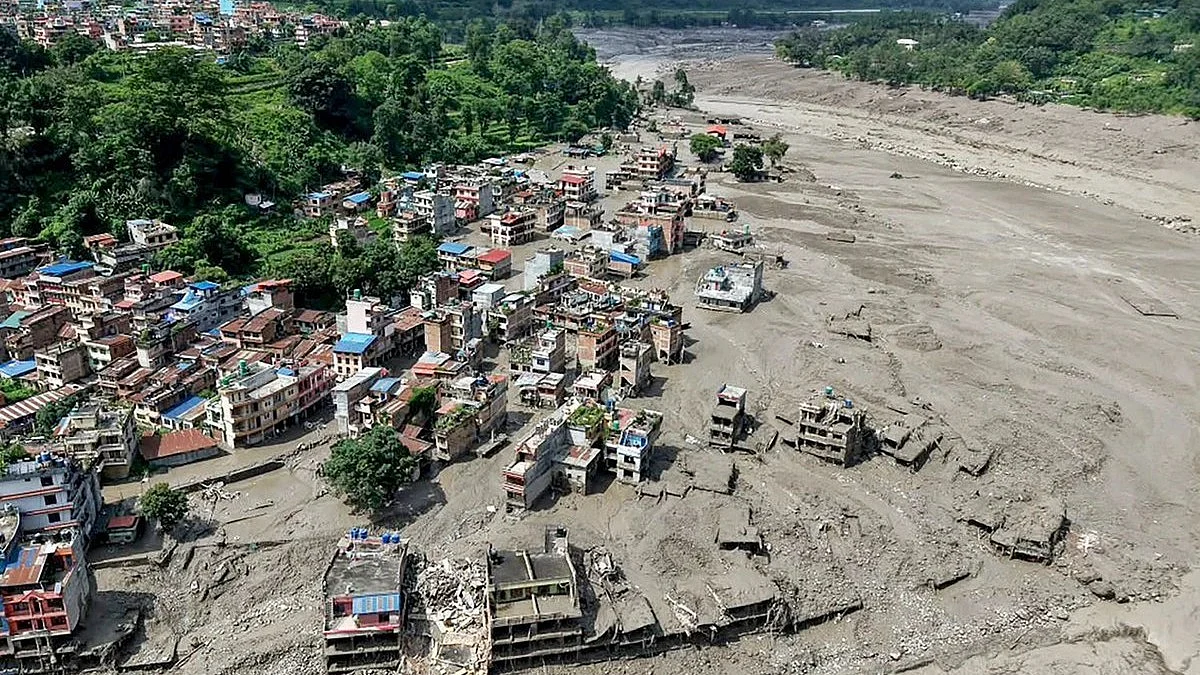
Nepal floods highlight growing glacier risks in warming Himalayas
BENGALURU, India (AP) — The deadly flash flood in Nepal on Wednesday was likely caused by a huge chunk of a glacier that broke off and temporarily dammed a river, according to preliminary investigations by scientists. That may…
A devastating flash flood struck Nepal on Wednesday, killing at least 273 people and leaving over 1,300 missing, including foreigners and pilgrims. Preliminary investigations suggest that a massive chunk of a glacier breaking off and temporarily damming a river may have caused the catastrophic flood, leading to the surge of backed-up water downstream with immense force hours later.
The U.S. Geological Survey reported a magnitude 5.2 glacier collapse, which sent debris flowing downstream with catastrophic impact on nearby communities. Geoscientist Jakob Steiner explained that the loss of a significant portion of glacial ice could have felt like an explosion, resulting in the chaos that ensued. While scientists caution against drawing a direct link between the disaster and global warming, they acknowledge that rising temperatures due to human activities increase the risk of such disasters, particularly in the Himalayan mountains, which are warming considerably faster than many other regions.
Saswat Sanyal, a disaster risk reduction specialist, noted that rising temperatures are transforming the Hindu Kush Himalaya region and melting glaciers. The flood has caused widespread damage to critical infrastructure, including hydropower dams, roads, buildings, and bridges across the Himalayan region.
Written by urgent.news from Associated Press's reporting — not their text. Machine-written — may contain errors; check the original before relying on it.
This story
This is one outlet's version. Read the fullest account.
- Nepal floods highlight growing glacier risks in warming Himalayas koreatimes.co.kr
- Glacier collapse triggered deadly Nepal flash floods dailytimes.com.pk
- Nepal floods highlight growing glacier risks in warming Himalayas news.mongabay.com
- Nepal floods highlight growing glacier risks in warming Himalayas phys.org
- Nepal flash flood wipes out villages after glacier collapse earthsky.org
- Glacier collapse and ice avalanche likely fueled deadly Nepal flash flood japantimes.co.jp
- A glacier collapse is most likely cause of the Nepal disaster newscientist.com
- What IMD said about Nepal flash floods: Glacier lake outburst, alert for Gandak river hindustantimes.com