Nepal flash floods: 30 tourists from Keralam stranded; State govt. coordinating rescue efforts
The number of stranded tourists expected to rise given the tourist flow during vacation season; those seeking assistance can contact the NoRKA Global Contact Centre at 1800 425 3939 (toll-free) or +91 88020 12345 (missed call from abroad)
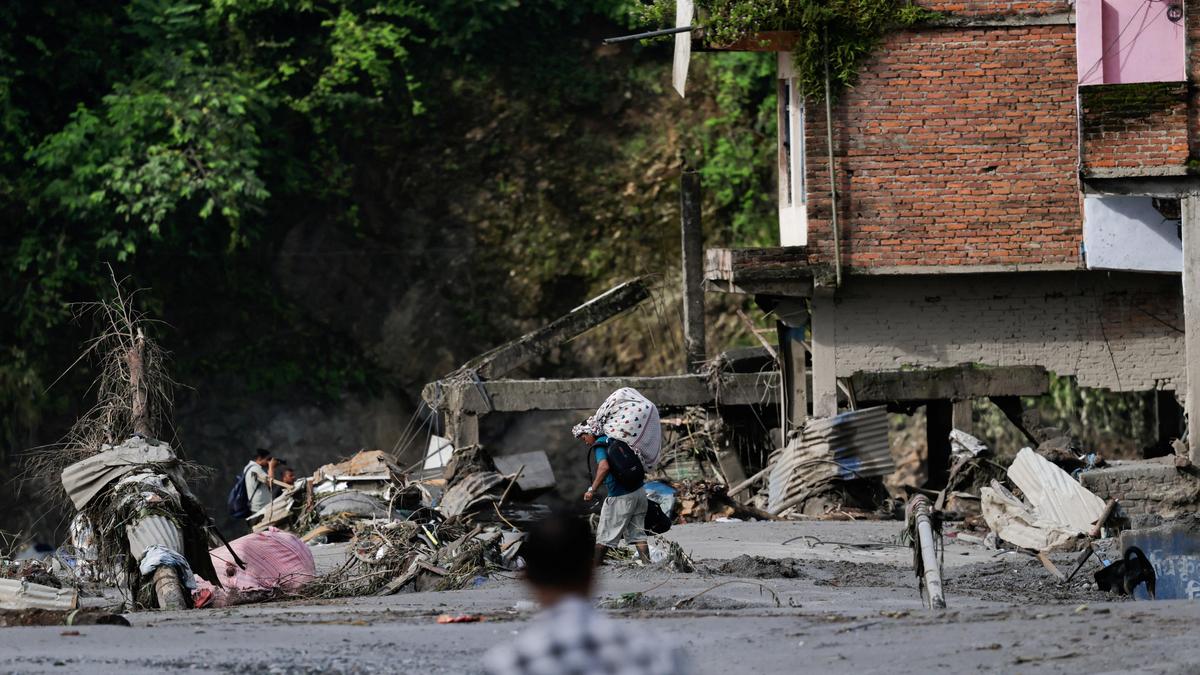
On the day following severe flash floods that struck Nepal, resulting in over 160 deaths and leaving hundreds missing, the government of Kerala has acknowledged receiving approximately 17 distress calls from families of Keralites impacted by the catastrophe. Utilizing data gathered through various helplines, the Kerala government is working to establish communication with the 53 stranded Keralites and ensure their safety.
According to Rajesh Madhavan, CEO of NoRKA-Roots, the designated agency for non-resident Keralites under the Kerala government, the 53 individuals were determined by merging data from the Chief Minister's Office helpline, the Chief Secretary's Office, the Kerala State Disaster Management Authority helpline, and NoRKA-Roots helpline.
The group comprises adults, children, and families, with some arriving in Nepal for family visits, holidays, pilgrimages, or trekking expeditions, according to Mr. Madhavan. Presently, it is believed that all 53 are safe; however, direct contact is challenging due to network disruptions in Nepal and disrupted travel across the country.
The Chief Secretary's Office is functioning as the primary coordination hub, directly communicating with the Union Ministry of External Affairs. The Delhi NRK Development Office of NoRKA-Roots and the Kerala House Resident Commissioner's Office are also collaborating with the Ministry to maintain regular interaction with relatives for updated information and assistance.
Additionally, 36 individuals from Kanhangad and another group of 16 from Kottayam have reported their safety and have not been considered among the 53 people currently being traced. The Kerala government has set up a help desk under NoRKA-Roots to offer emergency assistance, services, and information to stranded Keralites as per the Chief Minister's Office directives.
Written by urgent.news from The Hindu's reporting — not their text. Machine-written — may contain errors; check the original before relying on it.
This story
This is one outlet's version. Read the fullest account.
- 160 dead, 403 missing as flood, landslides hit Nepal dailypost.ng
- More than 90 killed, hundreds missing after Nepal flash flood thechronicle.com.gh
- Nearly 1,500 missing in Nepal and China after devastating Himalaya flood brecorder.com
- What experts know about Nepal’s deadly floods punchng.com
- Nepal flash floods: 300 Indians among thousands missing, Centre rushes more relief supplies livemint.com
- Gift of the Givers mobilises to locate missing South African couple in Nepal floods iol.co.za
- NSW couple confirmed missing in deadly Nepal floods abc.net.au
- Hundreds dead and thousands unaccounted in Nepal flash floods theage.com.au