MIT engineers create a system for building shape-changing smart devices
Dubbed “bifur-circuits,” these interactive building blocks could be used to develop reconfigurable robotic grippers or customized assistive devices.
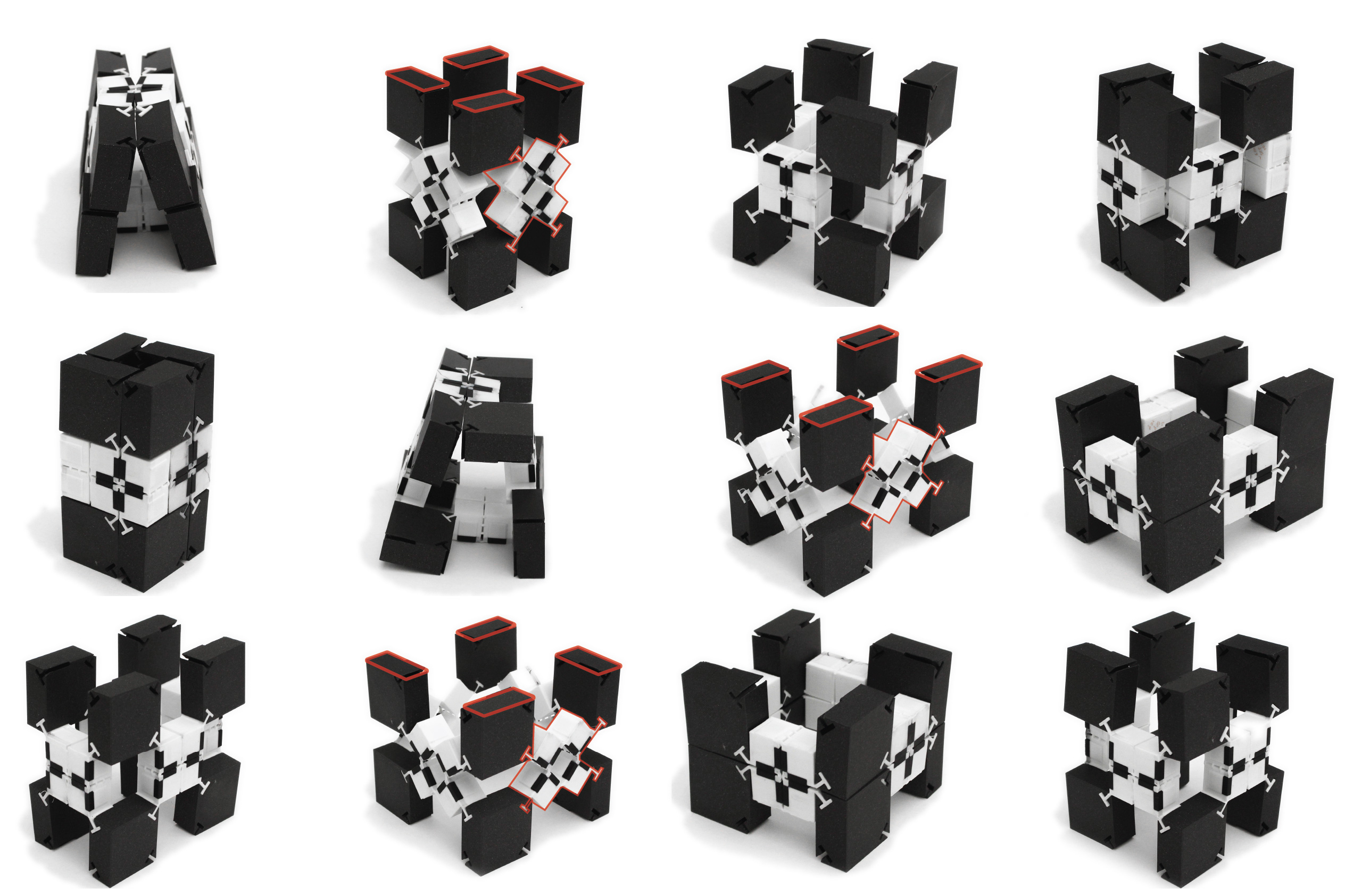
MIT engineers have developed a system using modular components that enable the creation of shape-changing smart devices with uninterrupted electrical connections, regardless of the structure's form. This electrical modularity allows engineers to design interactive devices capable of sensing their shape, without requiring external wires.
The researchers, including Marwa AlAlawi, Ticha Sethapakdi, and Stefanie Mueller, call these modular components "bifur-circuits," which are 3D-printed structures known as mechanical metamaterials. These metamaterials can be combined in various ways to create a multitude of possible configurations, surpassing traditional metamaterial structures.
The researchers demonstrated several interactive objects, such as a chair that transforms into a storage table and then flattens for storage. These metamaterials could also be used to design adaptable antennas that adjust their frequency to changing environmental conditions, without heavy mechanical parts. The key to this innovation lies in the mechanical bifurcation property, which allows connected blocks to form stable configurations when rotated around a pivot point, exponentially increasing the number of potential configurations.
The researchers overcame the challenge of incorporating conductive material that is both flexible and efficient in electricity flow. They created bifur-circuits using this conductive material, enabling electrical connections to remain intact during shape transformations. The team has also developed a user-friendly construction and simulation tool to simplify the bifur-circuit design process, which generates instructions for a multimaterial 3D printer to fabricate the reconfigurable objects.
Potential applications for bifur-circuits include interactive rehabilitation tools, shape-changing grippers for modular soft robots, and reconfigurable shelters.
Written by urgent.news from MIT News Research's reporting — not their text. Machine-written — may contain errors; check the original before relying on it.