Konflikt USA-Iran: Sechs Monate Iran-Krieg: Eskalation oder Frieden?
Bombardierungen, Sanktionen, Verhandlungen: Ein halbes Jahr nach Kriegsbeginn zeichnet sich zwischen den USA und dem Iran kein Frieden ab. Wo der Konflikt heute steht - und wie es weitergehen könnte.
After six months of conflict between the United States and Iran, neither side has achieved their primary war objectives. The framework agreement signed in mid-June was hailed as a diplomatic breakthrough, but hostilities quickly resumed. Currently, there is no significant fighting between the US and Iran, yet the US military remains present in the region.
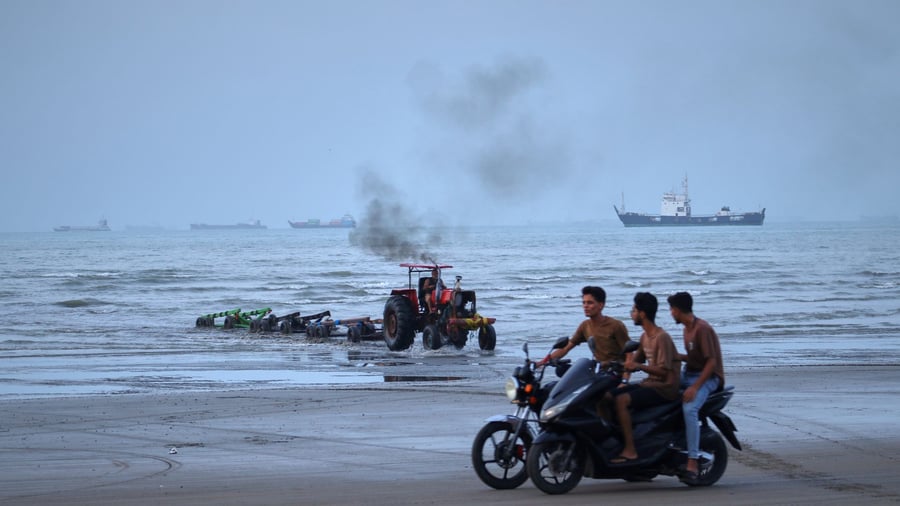
The US Navy continues to enforce the blockade of Iranian ports to cut Tehran off from vital revenue sources and assists US tankers in passing through the Strait of Hormuz. Without a lasting ceasefire, the conflict remains at risk of reigniting, as seen recently in mid-July. Meanwhile, Iranian politicians skeptical of negotiations and seeking renewed military escalation have gained influence.
Meanwhile, Iran's leadership continues to use the Hormuz Strait as a pressure point. The tense situation at the oil market raises the cost of fuel in Germany and the US, potentially impacting President Trump's political prospects. With congressional elections just two months away, Trump may need to achieve his war goals before the vote.
US President Donald Trump aims to economically strangle Iran with a "economic war." His administration has announced new sanctions, and Iran is already heavily burdened with far-reaching penalties and mostly cut off from the international financial system. The war and high inflation primarily affect ordinary Iranians. Trump has repeatedly called for various war goals since the beginning of the year, particularly the unconditional capitulation and "regime change," with Israel's security heavily dependent on preventing Iran from possessing nuclear weapons.
None of these objectives have been achieved thus far. The US Air Force has not participated in subsequent attacks since April, except for a brief retaliatory strike in June. Militarily, Iran has been weakened, but its missile program remains largely intact. The stalemate at the Persian Gulf is attributed to the lack of a clear strategy by the Trump administration.
Diplomatic progress on any major issue has eluded the US since the start of the war. Trump's Republican party may face losses in the upcoming midterm elections on November 3rd, losing both chambers of Congress and potentially losing the ability to pass significant legislation. Trump had promised to avoid wars during his campaign, but his decision to initiate the Iran war and his inability to end it has left him with an open flank heading into the election campaign.
The war has been unpopular from the start among US Americans. With the war's beginning in February, numerous influential generals and political figures were targeted and killed, including Iran's supreme leader Ayatollah Ali Chamenei in the first week. This did not lead to a "regime change" as promised by Trump, but rather solidified the power of radical forces and the influential military apparatus in Iran.
Iran's leaders distrust the US and accuse Washington of lacking interest in complying with the June agreement. The military apparatus, therefore, increasingly pressures the population to demand further concessions from Washington. There is a possibility that Iran's armed forces may attempt a military escalation a few weeks before the US elections to pressure Washington for additional concessions.
Iranian foreign ministry spokesman Ismail Baghai stated on Monday, commenting on the situation: "Iranians were once skilled chess players; they are now also excellent poker players." Diplomatic progress remains unclear, as the economic pressure from new US sanctions and the existing blockade continues to rise in the coming weeks.
Iran's currency, the rial, reached a record low at the beginning of the week. Residents of major cities report massive price increases in everyday life, leading many to reduce consumption and buy only necessities. The severe economic crisis is also putting pressure on the government to handle new protests, fearing them. The Pakistani government, which mediates in the conflict between Tehran and Washington, announced on Tuesday after a visit to Tehran that "very positive and productive talks" had taken place.
The delegation, led by Army Chief Asim Munir, met with Mohsen Resai, the newly appointed chief of the National Security Council, Parliament Speaker Mohammed Bagher Ghalibaf, and Foreign Minister Abbas Araghchi.
Written by urgent.news from Handelsblatt's reporting — not their text. Machine-written — may contain errors; check the original before relying on it.