India vs China: How their nuclear-capable missile arsenals compare
China and India possess comparable strategic missile arsenals, though differences exist. India's Agni missiles deter nuclear attacks, while China's Dongfeng series targets US bases. Both nations are developing intercontinental ballistic missiles with advanced capabilities. China leads in payload flexibility and overall missile inventory size. India aims for a survivable, multi-domain nuclear…
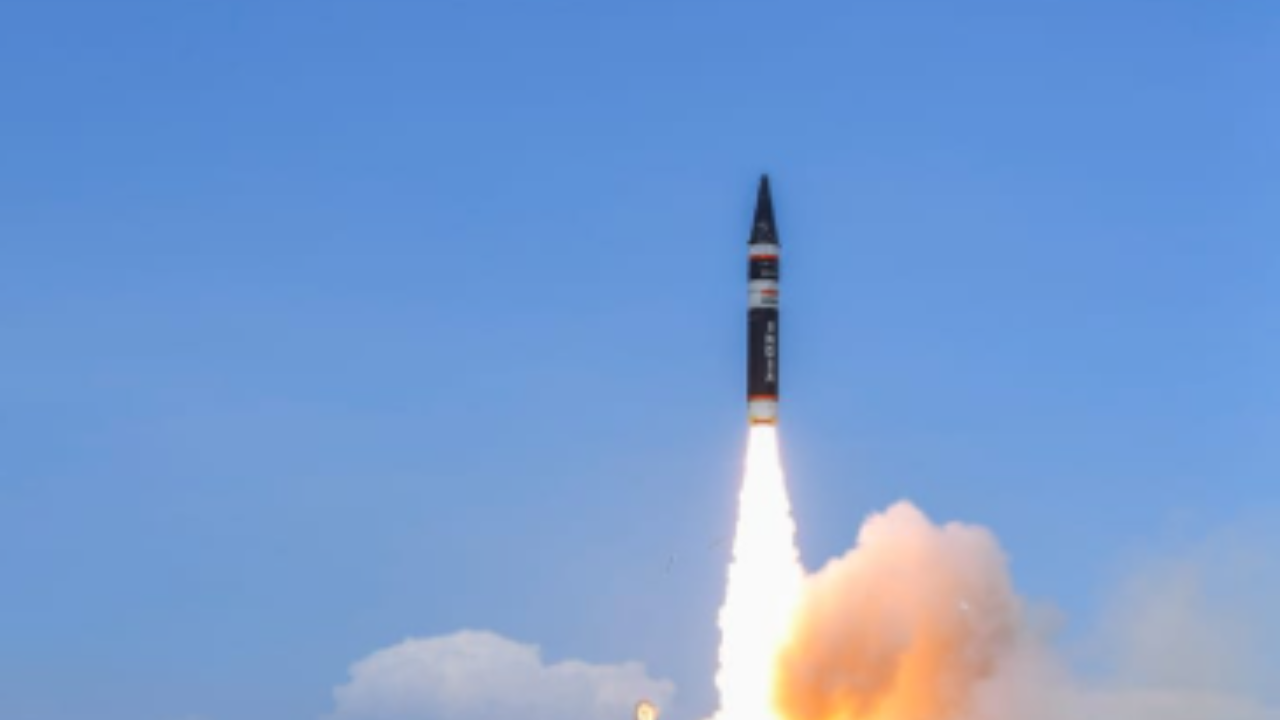
India and China have been constructing ballistic missile arsenals for decades, acting as strategic deterrents under the concept of Mutually Assured Destruction (MAD). This principle posits that two nuclear-armed powers will not engage in hostilities, as the retaliatory strike would be too costly. While India and China's strategic missile arsenals appear similar, there are differences in their capabilities and philosophies.
India's strategic arsenal is primarily built around the Agni family of missiles. The Agni-I boasts a range of 700-900 kilometers, comparable to China's road-mobile DF-16 system. The Agni-II, with a range of 2,000-3,500 kilometers, is central to India's deterrence posture against China. The intermediate-range segment shows China's DF-26, capable of striking targets over 5,000 kilometers, including American bases in Guam.
India's Agni-III shares a similar class, with a declared range of 3,000-5,000 kilometers and high accuracy, allowing for smaller-yield warheads.
At the intercontinental level, China's DF-31A solid-fuel ICBM boasts a range over 11,000 kilometers, while India's Agni-V offers a declared range of 7,000-8,000 kilometers, potentially extending up to 8,000 kilometers with payload adjustments. Both missiles share a canisterised, road-mobile design for improved survivability and reduced launch preparation time.
Finally, China's DF-41, with a range of 12,000-15,000 kilometers, carries ten to twelve MIRV warheads, making it one of the world's longest-range missiles. India's Agni-VI, expected to match Agni-V's range of 10,000 kilometers, may eventually carry MIRV warheads and even have a submarine-launched variant. In summary, India has largely kept pace with China across most range categories, despite China's lead in payload flexibility, warhead multiplicity, and overall missile inventory.
Written by urgent.news from Times of India's reporting — not their text. Machine-written — may contain errors; check the original before relying on it.