In 1962, NASA blew up a water tank 65 miles above Earth to study the atmosphere
NASA explored biological life-support systems for extended space travel decades ago. Researchers examined recycling resources and using living organisms to sustain astronauts. Plants and microorganisms could process waste and provide essential resources for missions. This early work laid the groundwork for future lunar and Martian settlements. Sustainable living beyond Earth remains a significant…
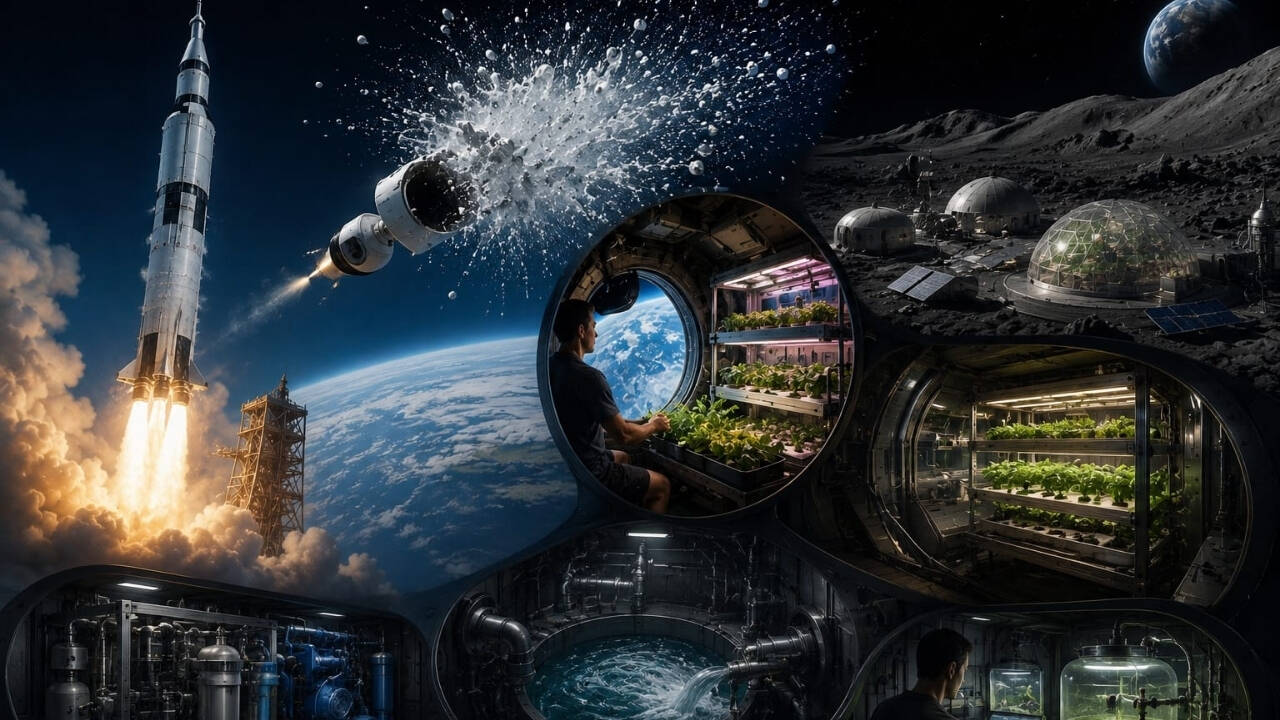
In 1962, NASA carried out an experimental mission known as Project Highwater to investigate the effects of water vapor on Earth's upper atmosphere. To achieve this, the agency launched a Saturn I test rocket carrying 22,900 gallons of water in its upper stage. The rocket was then deliberately detonated at an altitude of approximately 65 miles above Earth.
This experiment, conducted decades before renewed interest in lunar bases and Mars missions, allowed scientists to study the sudden release of a large volume of water and its impact on the upper atmosphere.
Furthermore, NASA researchers were also exploring the possibility of creating closed environments and biological systems to support humans during long-duration space missions. They examined the challenges of maintaining controlled environments for human life in space, including resource recycling, waste management, and the role of living organisms in providing oxygen, food, and waste processing.
In particular, they investigated the potential of plants to serve multiple purposes, such as producing oxygen through photosynthesis and providing food for astronauts, making them valuable components of future long-duration missions.
While these early experiments laid the groundwork for understanding the complexities of maintaining life-support systems in space, the challenges remain significant. Modern spacecraft now incorporate advanced systems for water recycling and air quality control, and ongoing research continues to explore the use of biological processes in future life-support systems.
However, creating a completely self-sustaining habitat for humans in an isolated environment with limited resources remains an enormous scientific and engineering challenge.
Written by urgent.news from Times of India's reporting — not their text. Machine-written — may contain errors; check the original before relying on it.
This story
This is one outlet's version. Read the fullest account.
- Space Math at NASA: Problems Related to CMEs and Flares science.nasa.gov
- NASA administrator suggests putting data centers in space thehill.com
- Spy to space: The science behind NASA’s Roman Space Telescope siliconrepublic.com
- NASA Has Started the Count Down to the Launch of the Nancy Grace Roman Space Telescope nautil.us
- After failure of private rescue mission, NASA's Swift space telescope will crash back to Earth. But when and where? space.com
- NASA chief outlines plans to build moon base in space race with China cbsnews.com
- NASA’s Roman Space Telescope will rewrite how we study the universe scientificamerican.com
- NASA is gearing up to launch its next flagship space telescope – combining spy technology with sophisticated infrared detectors theconversation.com