Hubble Solves a Mystery About the Milky Way's Early Years
New data from NASA’s Hubble Space Telescope shows definitive evidence of a dwarf galaxy merging with the young Milky Way galaxy in the earliest phases of its evolution. This finding extends our knowledge of our galaxy’s history 1.8 billion years farther back in time than before.
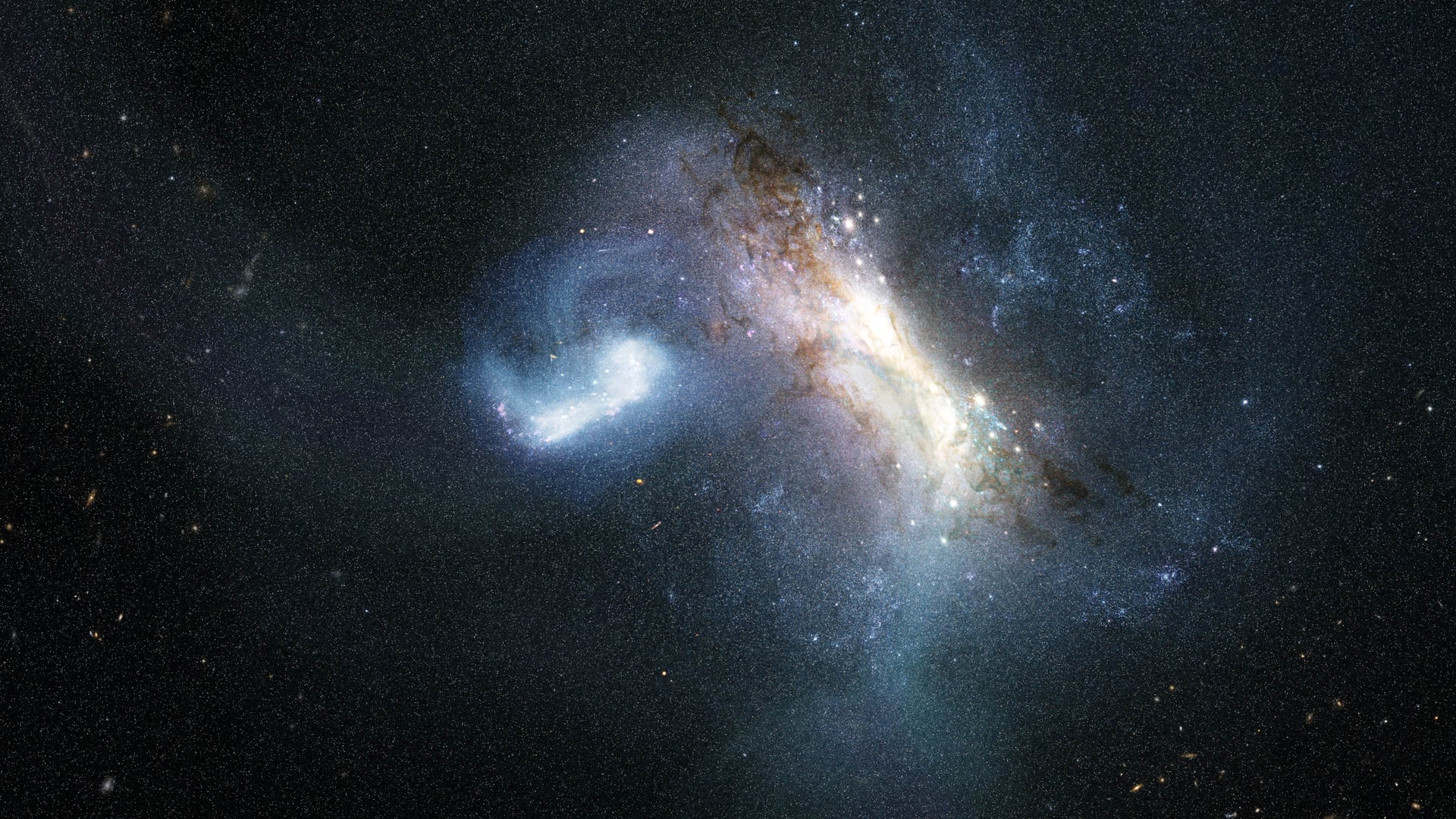
Recent observations from NASA's Hubble Space Telescope have provided conclusive evidence of a dwarf galaxy merging with the Milky Way during its earliest stages of development. The research, led by astronomers from multiple institutions, was published in the journal Nature Astronomy. The Milky Way, which measures approximately 200,000 light-years in diameter and houses around 200 billion stars, has grown through both the formation of new stars from gas and dust clouds and the merger of smaller galaxies.
Detecting these mergers has historically been challenging, especially for those that occurred in the galaxy's distant past. However, Hubble's high-resolution imaging has enabled scientists to examine the galaxy's globular clusters, which are home to some of the oldest stars in our galaxy. These ancient stars may contain evidence of mergers, as the Milky Way collected stars from both dwarf and larger galaxies over time.
In this study, the team identified a dwarf galaxy named Low-energy-Kraken-Heracles (LKH) as the source of the earliest significant batch of bricks in our galaxy's history. By analyzing Hubble data from 39 globular clusters located 20,000 light-years from the Milky Way's center, the researchers determined each cluster's age and heavy-element abundance (metallicity).
They discovered a distinct population of globular clusters in the inner regions of the Milky Way that are older than the group from the Gaia-Sausage-Enceladus merger but younger than the oldest clusters. These clusters can be traced back to the merger of a dwarf galaxy with a mass of 500 solar masses.
The findings suggest that the Milky Way consumed LKH approximately 11.8 billion years ago, just 2 billion years after the Big Bang. This early merger played a significant role in shaping the structure of the Milky Way's stellar disk. The team hopes to continue studying globular clusters within the Milky Way to characterize all the massive mergers our galaxy has experienced throughout its history.
Written by urgent.news from Universe Today's reporting — not their text. Machine-written — may contain errors; check the original before relying on it.