How the Strategic Petroleum Reserve Works
The US Strategic Petroleum Reserve (SPR) is the largest crude oil storage facility in the world.
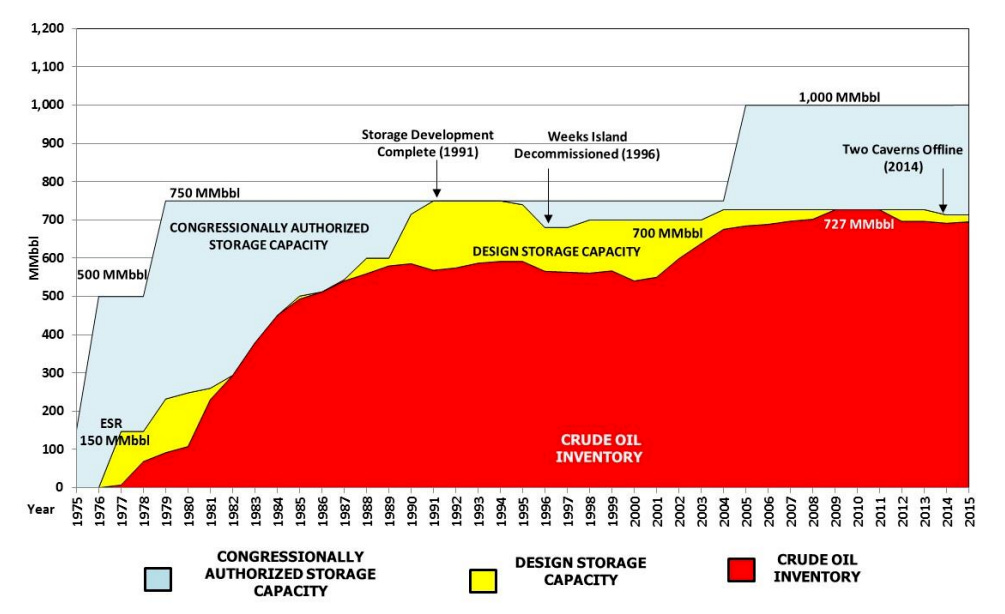
The Strategic Petroleum Reserve (SPR) is the world's largest crude oil storage facility, capable of holding 714 million barrels of oil, which is roughly 10% of the US's annual oil consumption. Established in response to the 1973 OAPEC oil embargo, the SPR serves as a safeguard against oil supply disruptions, allowing the US to make up for shortages and avert sudden price surges if oil imports are halted.
Over the years, the SPR has been one of the most commonly employed energy policy instruments in the US's repertoire. Recent discussions have focused on its utilization, with the Trump administration regularly drawing on the reserve, releasing around 120 million barrels of oil as of writing, in response to Iran's closure of the Strait of Hormuz.
This has led to increased interest in the technical aspects of the reserve and its operational limits. The SPR's construction is rooted in the need to address potential oil supply shocks. The concept of a strategic petroleum reserve originated shortly after oil was identified as a critical resource for the US. The first strategic stockpiles were established as military reserves, with the Naval Petroleum Reserve (NPR) created in 1912, followed by four such sites across the country in the 1920s.
During World War II, Secretary of the Interior Harold Ickes proposed stockpiling petroleum for both military and civilian purposes, and President Eisenhower advocated for one after the Suez Crisis. However, it wasn't until the 1973 OAPEC oil embargo that the idea of a comprehensive petroleum reserve gained traction. The embargo had a swift economic impact on the US, leading to a 40% increase in gas prices and significant gasoline shortages.
In response to these challenges, the Nixon administration commissioned a study by the National Petroleum Council, which recommended a large-scale petroleum reserve to cushion against import disruptions. This foresight led to the passage of the Energy Policy and Conservation Act in 1975, mandating the establishment of a reserve capable of holding up to 1 billion barrels of oil to reduce the nation's vulnerability to severe energy supply interruptions.
The construction of the SPR commenced in 1977, with the decision to store oil in underground salt caverns emerging as the optimal solution. Salt domes, enormous underground salt formations that can be several miles deep and across, were found to provide an efficient and cost-effective means of storing vast quantities of petroleum due to their impermeability to oil or gas. This decision culminated in the SPR's completion, becoming a cornerstone of US energy security.
Written by urgent.news from Construction Physics's reporting — not their text. Machine-written — may contain errors; check the original before relying on it.