Himalayan glacier collapse hits crucial China-Nepal trade route as casualties mount
The catastrophic flash floods and mudslide that devastated the Gyirong Port crossing along the China-Nepal border on Wednesday have dealt a heavy blow to China-Nepal trade and imperilled Kathmandu’s push to cut reliance on Indian transit routes. However, if Beijing and Kathmandu are to proceed with ambitious infrastructure projects, they are expected to take environmental factors into…
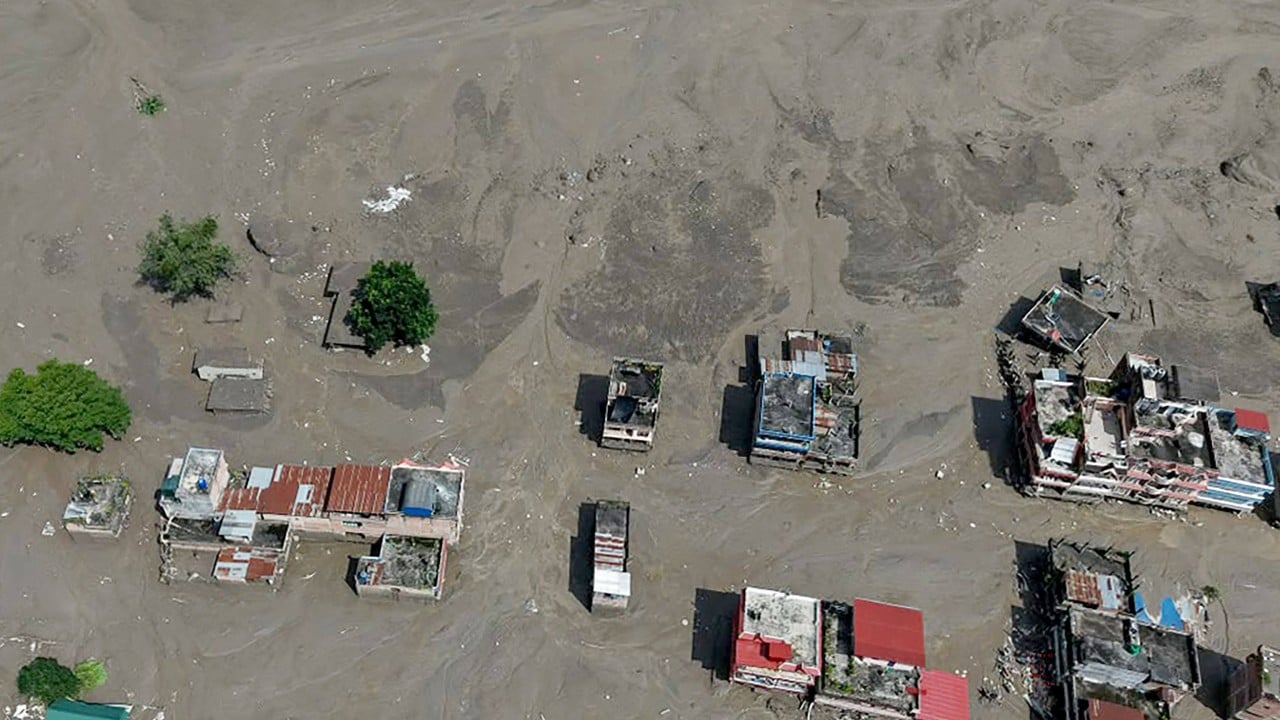
A severe flash flood and mudslide along the China-Nepal border has caused significant damage to the Gyirong Port crossing, severely impacting China-Nepal trade and Nepal's efforts to reduce reliance on Indian transit routes. The disaster resulted in at least three confirmed deaths and over 500 people missing, with Nepal reporting more than 900 fatalities, including 517 foreigners.
Chinese officials confirmed three deaths, with hundreds more still unaccounted for. The Gyirong Port, a critical gateway connecting China and Nepal, handles nearly 30% of trade between the two nations and serves as a primary entry point for Indian pilgrims traveling to Tibet.
The disaster was triggered by a high-altitude glacier collapse in Nepal, which rapidly transformed into a high-velocity debris flow, sweeping through the channel at high speed and hitting the Gyirong Port. This event has disrupted the China-Nepal railway's preliminary geological survey work and the cross-border movement of materials and personnel.
While the disaster may cause short-term disruptions, it is expected to prompt both countries to adopt more refined approaches in railway route selection, disaster monitoring, and early warning systems. The project faces formidable geological challenges, as the route requires extensive tunneling.
Despite the challenges, both nations are keen on advancing infrastructure projects to boost trade and reduce economic dependence. The Nepalese government plans to construct the Tokha-Chhahare Tunnel, which could cut transportation costs by up to 50%, and is working on a 220kV power transmission line to enable two-way electricity trading. However, these initiatives are met with scrutiny from India, Nepal's largest trading partner, who fears the railway could strengthen Chinese influence in the region.
Written by urgent.news from Reuters Business via SCMP's reporting — not their text. Machine-written — may contain errors; check the original before relying on it.
This story
This is one outlet's version. Read the fullest account.