Cyborg cockroaches may soon deliver life-saving drugs to disaster victims
Just what you want crawling through the rubble to rescue you: A swarm of remote-controlled cockroaches with syringe-shooting guns strapped to their backs
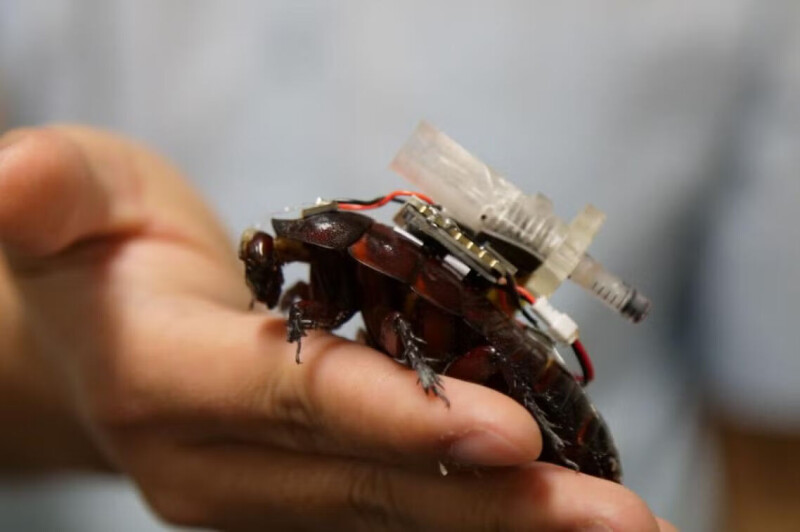
Imagine a harrowing situation: you've just experienced a terrifying ordeal, trapped beneath collapsed structures with injuries, dwindling air, and no sign of rescue. In this dire scenario, a swarm of tiny, remote-controlled cyborg cockroaches could offer a glimmer of hope. Far from being science fiction, this concept is rooted in real research conducted by biotech experts at Australia's University of Queensland.
The innovative project involves equipping giant burrowing cockroaches, the world's heaviest species known to be docile and clean, with electronics allowing them to be guided remotely. These modified roaches, dubbed "paraborgs," can be directed to crawl through rubble, deliver life-saving drugs, and even provide reassurance to trapped individuals. Lead researcher Hai Nhan Le emphasizes that while the sight of a giant cockroach might be unnerving, it could be the difference between life and death in emergency situations.
The choice of giant burrowing cockroaches was strategic, as their size enables the integration of small, essential devices for real-world applications. Each paraborg is equipped with electrodes to enable precise control over direction, speed, and even immobility, enabling researchers to administer drugs without the roach moving. The team also developed specialized modules, including search roaches and those capable of launching drug syringes.
The experiments demonstrated remarkable success, with the paraborgs achieving a 100% rate in reaching their intended targets and a 90% success rate in drug injections. However, maintaining stillness for precise injections posed a challenge, with only 72% of attempts being successful. Despite this hurdle, the researchers remain optimistic, predicting that within the next five to ten years, swarms of these specialized insects could be deployed to disaster zones to provide medical aid and other critical assistance.
Written by urgent.news from The Register Science's reporting — not their text. Machine-written — may contain errors; check the original before relying on it.
This story
This is one outlet's version. Read the fullest account.