China’s robots are leaving the exhibition floor. Now comes the hard part
From factories to homes, Chinese companies are pushing robots into the real world. But turning increasingly capable machines into viable businesses remains a major test for the industry.
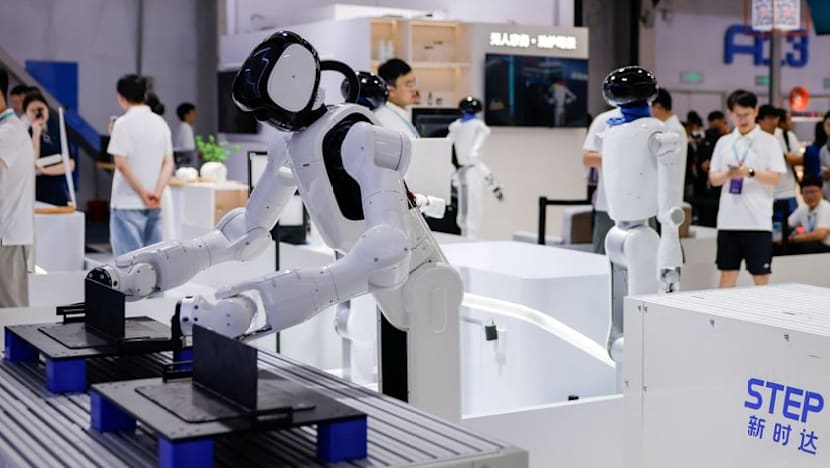
From factories to homes, Chinese companies are increasingly placing robots in the real world. However, transforming these advanced machines into viable businesses remains a significant challenge for the industry. At the World Robot Conference in Beijing, there appeared to be a robot for nearly every purpose. One arranged flowers, adapting to the environment, while another dog-like machine was designed for tasks such as industrial inspections and emergency rescue.
Even a group of robots played instruments together, showcasing the rapid development of China's robotics industry. Yet, the challenge remains in bringing these robots from the exhibition floor to practical applications. Tasks that humans find simple, such as opening a bag of chips or taking out the trash, require considerably more time for robots to accomplish.
In unpredictable environments like factories and people's homes, a robot's ability to respond flexibly to unexpected tasks is crucial. Companies like X Square Robot in Shenzhen are working to develop robots that can successfully perform tasks in such environments, even when they encounter unforeseen challenges. Another Shenzhen firm, Lumos Robotics, has deployed robots for quality inspection and material handling, with these machines currently working at roughly the same pace as human workers.
However, increasing their efficiency and scalability will take time. Unlike artificial intelligence chatbots, which can be trained using vast amounts of textual and online information, robots require data from interactions with the physical world to learn how to move, handle objects, and respond to their surroundings. This includes data collection tools to speed up training and iteration, ultimately producing usable robot skills.
For component suppliers in the industry, such as Kinco Automation, the shift towards commercial applications is altering what customers demand. While humanoid robots were once focused on performance and dancing, now companies seek scenarios where the technology can be economically deployed. Suppliers are focusing on mass-production consistency, delivery times, and quality control to better serve robot manufacturers.
Despite the progress, industry leaders acknowledge that robots have yet to reach the same level of success as AI technologies like ChatGPT. Some experts predict that such a breakthrough could still be two to three years away. However, investors remain optimistic, as seen in the significant increase in Unitree Robotics' stock price following its debut on the Shanghai market.
Nevertheless, the rapid growth and high valuations of humanoid robot companies may lead to a shakeout in the future. Achieving commercial success will require not only factories and investors but also convincing ordinary consumers that robots can be useful in their daily lives. At the World Humanoid Robot Games in Beijing, teams showcased impressive displays of robots racing, fighting, playing sports, and performing routines.
However, the games also highlighted the challenges and limitations of the technology, with plenty of crashes and falls. Nevertheless, errors can provide valuable real-world data to improve robot performance. Spectators expressed their hopes for robots to assist with tasks around the home and provide companionship, particularly as they age and abilities decline.
Morgan Stanley estimates that China's humanoid robot market will grow from around US$2 billion in 2026 to US$15 billion, indicating strong potential for the industry.
Written by urgent.news from Channel News Asia's reporting — not their text. Machine-written — may contain errors; check the original before relying on it.