Building BRICS for the world
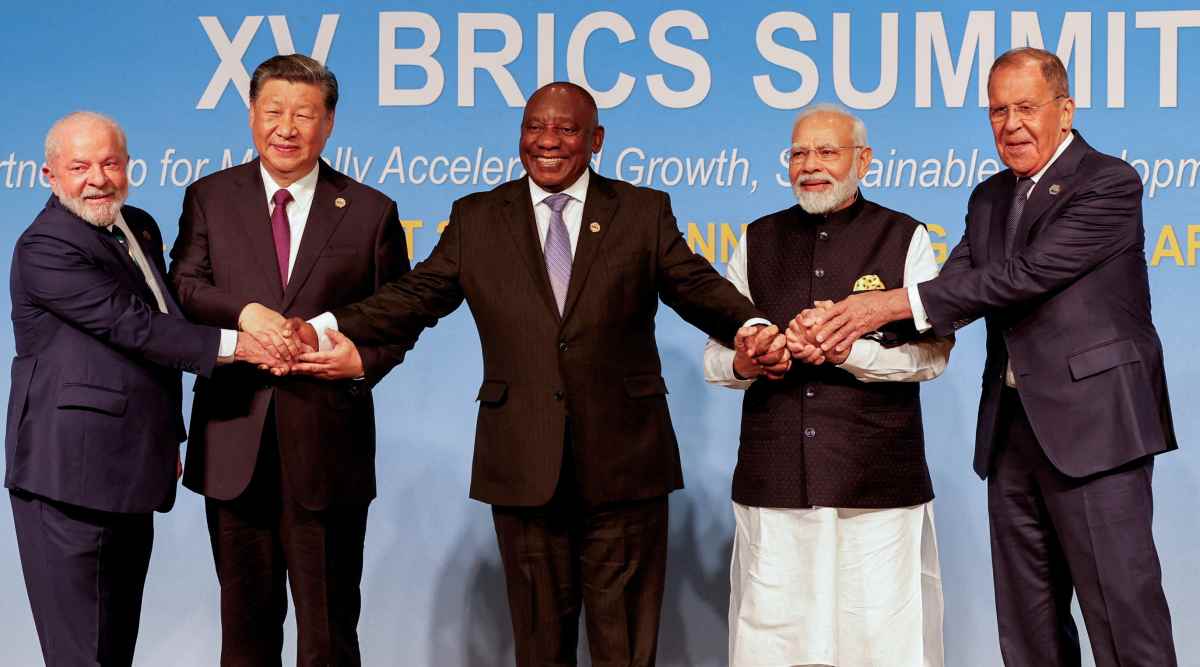
The concept of "BRIC" was originally introduced by former Goldman Sachs chief economist Jim O’Neill in 2001. This four-nation group held its maiden ministerial meeting in 2006 and inaugurated its first summit in 2009. South Africa joined the group officially in December 2010, marking the formation of BRICS. The term "BRICS" in Chinese is known as "jinzhuan," which underscores its importance.
Currently, BRICS+ has expanded to encompass 11 member countries and 10 partner nations, representing approximately 45% of the global population and 55% of the global GDP (by purchasing power parity). As these countries emerge as the world's most dynamic economic alliance, their collective influence cannot be overlooked. According to the International Monetary Fund (IMF), BRICS+ is poised to grow nearly three times faster than the G7 nations by 2028.
These countries, which have been ancient civilizations leading the world for centuries, are experiencing a resurgence and striving to reclaim their position at the global center of gravity. Other countries like Argentina, Algeria, and Türkiye have shown interest in joining BRICS formally. This demonstrates that BRICS serves as a unique platform for dialogue and cooperation among emerging markets and developing economies, rather than being exclusive in nature.
In just a month, the 2026 BRICS Summit will take place in New Delhi. As a crucial platform for cooperation among emerging markets and developing economies, BRICS+ must broaden its agenda to adapt to evolving global realities while maintaining its focus on economic growth and people-centric development. The four priorities outlined in India's 2026 agenda are resilience, innovation, cooperation, and sustainability, which will progress through three pillars: political and security cooperation, economic and financial partnership, and cultural and people-to-people exchanges.
China has pledged its unwavering support for India's role in the summit. Given the vast size of China and India in terms of population, economy, and market, cooperation appears to be the optimal choice for both nations and their peoples. For example, both countries boast the largest economies in Purchasing Power Parity (PPP) terms, with their combined population accounting for about 35% of the world's total.
As significant neighbors, they are currently at a critical juncture of national development and rejuvenation. Cooperation leads to shared prosperity, whereas confrontation and antagonism may result in a lose-lose scenario.
Recently, direct flights between China and India have resumed, and exchanges and cooperation between sister cities, universities, and businesses have been on the rise. Naturally, China-India solidarity benefits not only the two countries but also the region and the world. In the near future, China and India will persist as powerful engines of global economic growth.
Their combined GDP is projected to increase from its current 28.4% (using PPP terms) and roughly 20% in nominal terms, of the world's total. Under the strategic guidance of our leaders, China and India have the potential to forge greater synergy and mutual success. In the long run, more young people from both countries can become bridges and links between China and India.
The author is the Consul General of the People's Republic of China in Mumbai.
Written by urgent.news from The Indian Express's reporting — not their text. Machine-written — may contain errors; check the original before relying on it.