9 Things to Know About NASA’s Nancy Grace Roman Space Telescope
NASA’s Nancy Grace Roman Space Telescope is set to launch at 7:26 a.m. EDT on Sunday, Aug. 30. While you wait to watch the launch, brush up on some key facts about this wide-view mission. To learn more about the Roman mission, visit: https://www.nasa.gov/roman Media contact: Claire AndreoliNASA’s Goddard Space Flight Center, Greenbelt, Md.claire.andreoli@nasa.gov301-286-1940
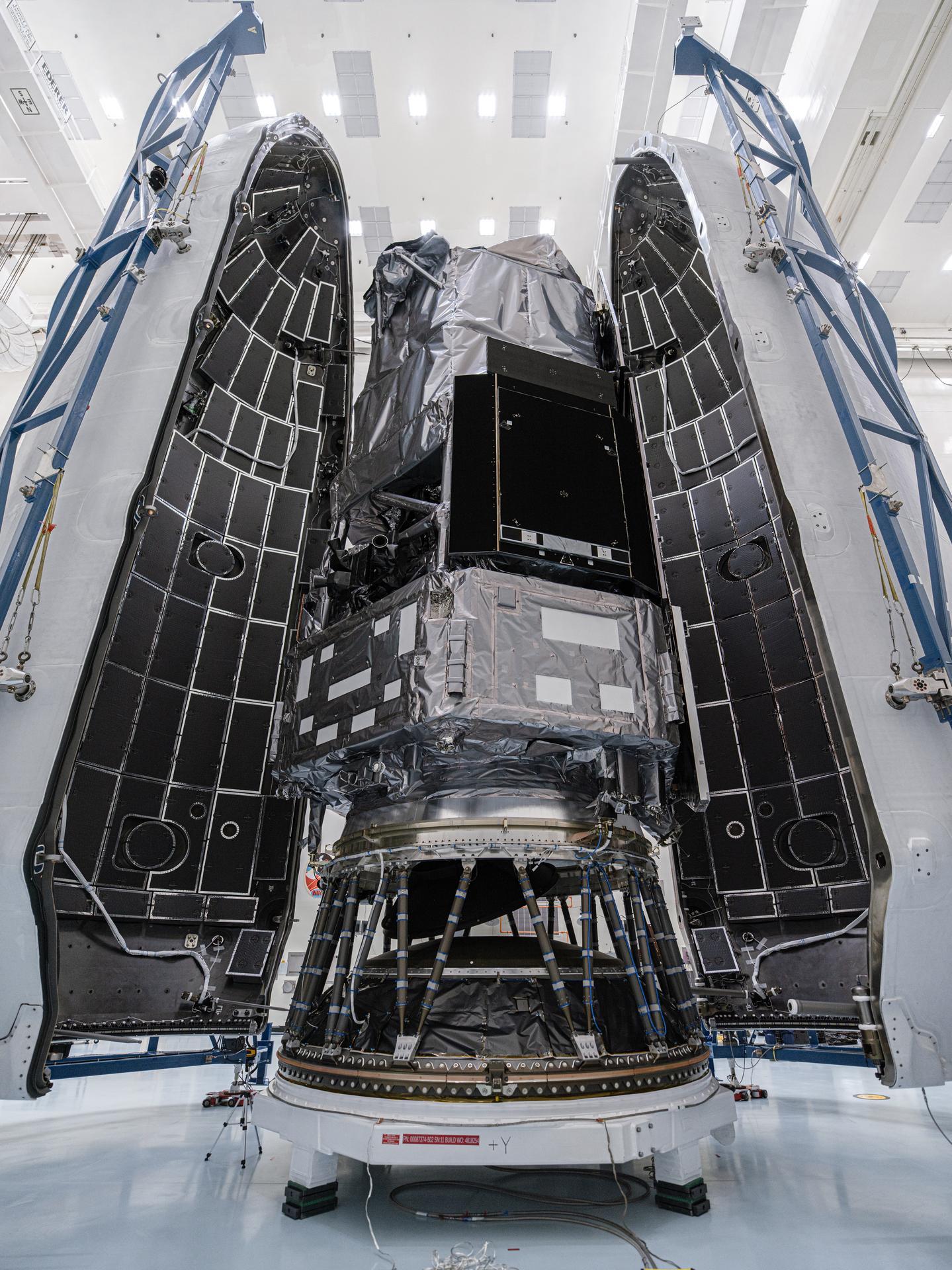
1. NASA’s Nancy Grace Roman Space Telescope is scheduled to launch on August 30, 2026 at 7:26 a.m. EDT. It will be carried into orbit by a SpaceX Falcon Heavy rocket and placed at the second Sun-Earth Lagrange point (L2), which is about 1 million miles from Earth.
2. Named after NASA’s first chief astronomer, Dr. Nancy Grace Roman (1925–2018), the mission is inspired by her pioneering work in advocating for space-based observatories to study the universe above Earth’s atmosphere. Her efforts laid the groundwork for numerous subsequent telescopes like Hubble, Chandra, and Spitzer.
3. The telescope will observe the universe in infrared light, scanning vast areas of the sky to gain insights into dark matter, dark energy, and exoplanets. By sampling a large volume of the cosmos, Roman will provide astronomers with ample data for a wide range of scientific investigations.
4. This mission will gather more than 1.3 million names submitted by the public and carry them aboard a memory card attached to a plaque on the spacecraft. The names will journey through space with Roman until it reaches its destination at L2.
5. During its primary five-year mission, Roman is expected to subsequently have an additional five-year extended mission. Fuel is anticipated to be the primary factor limiting the mission’s lifetime. Although there are no plans for servicing missions at L2, Roman is designed to be refuelable.
6. The Wide Field Instrument aboard Roman is a 300-megapixel infrared camera that is sharper than Hubble but with a field of view up to 100 times larger. This instrument will allow Roman to capture images of sky patches roughly 1.5 times larger than the apparent size of a full Moon. The Coronagraph Instrument, another component of the telescope, aims to directly image planets orbiting other stars by blocking out the starlight and revealing the faint reflected light from the planets.
7. Roman will collaborate with other NASA-led and international telescopes, including the James Webb Space Telescope and Euclid. Together, they will create a comprehensive view of the universe, allowing scientists to study various celestial objects and phenomena in greater detail.
Written by urgent.news from NASA's reporting — not their text. Machine-written — may contain errors; check the original before relying on it.
This story
This is one outlet's version. Read the fullest account.