Worst drought in 700 years turns wetland into graveyard for fish
The summer drought has dried up the Zeezuiper, a wetland reserve in Noord-Brabant, for the first time in 700 years,...
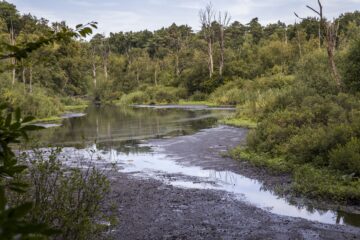
A severe drought spanning over seven centuries has transformed the Zeezuiper wetland reserve in Noord-Brabant into a desolate graveyard for fish. Forest ranger Erik de Jonge expressed his shock upon returning from holiday to find the area, usually bustling with wildlife, reduced to a barren landscape with only a few remaining puddles.
De Jonge noted that this drought is unprecedented, as it has not been observed since 1300. As he walked over piles of dead and decaying fish, he explained that the fish had retreated to deeper waters, but perished due to the absence of water. The early leaf fall and suffering of woodland trees like birch, beech, and maple further emphasize the impact of heat stress caused by the drought.
The heathland surrounding the wetland has seen 60% to 80% of its area drying up, while berry production is scarce and shriveled. De Jonge warned that this will adversely affect migrating birds that stop by during autumn, as they will lack essential nutrients. Wetlands play a crucial role in absorbing CO2 from the surroundings, and the loss of the Zeezuiper wetland will have negative consequences for the climate.
Water levels in the wetland have been declining since the 1970s, but the rate has accelerated recently. De Jonge implores authorities such as the water board to take action and preserve as much water as possible when the rain returns.
Written by urgent.news from DutchNews's reporting — not their text. Machine-written — may contain errors; check the original before relying on it.