World Bank warns Ghana’s recovery remains structurally incomplete
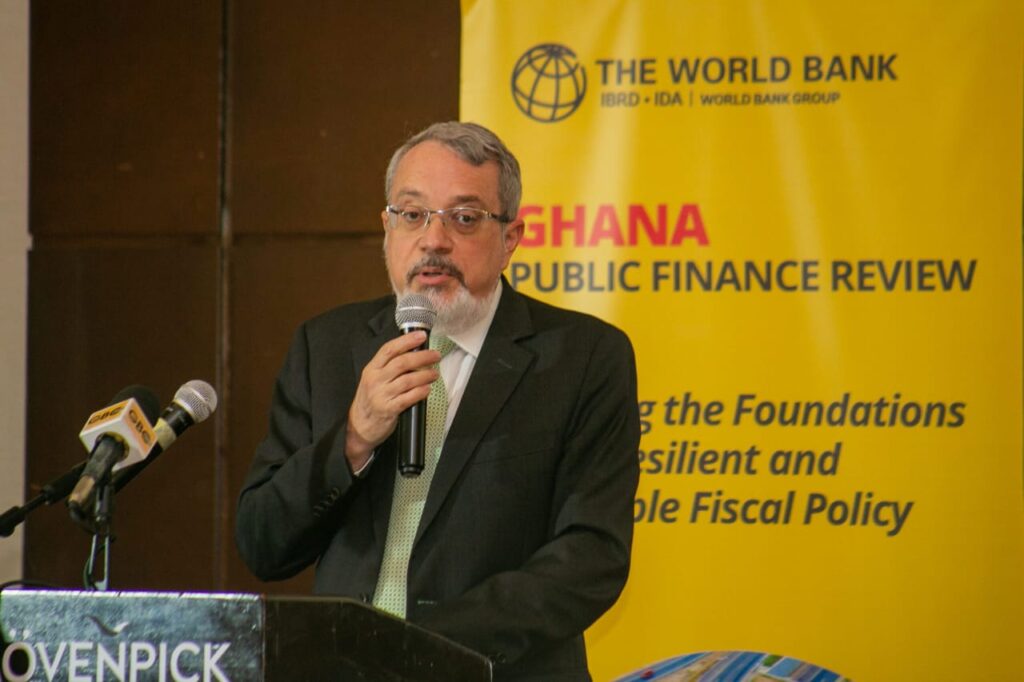
Speaking at the launch of the World Bank’s *Tenth Ghana Economic Update* in Accra on Wednesday, August 26, 2026, Mr Taliercio said the economy grew by 6% in 2025, the fastest pace since 2019, before accelerating further to 6.4% in the first quarter of 2026.
Ghana's economic recovery has been robust but incomplete, according to the World Bank. The country's economy expanded by 6% in 2025, the fastest pace since 2019, and further accelerated to 6.4% in the first quarter of 2026. The World Bank has noted significant progress in macroeconomic stability, with inflation falling from 23.2% in February 2025 to 3.2% in March 2026, although it has since risen to 4.6%.
Ghana's successful completion of its International Monetary Fund Extended Credit Facility program was a significant milestone, showcasing restored economic credibility. The country achieved a primary fiscal surplus of 2.5% of GDP in 2025, surpassing the 1.5% target, while public debt declined from 70.3% of GDP in 2024 to 49% at the end of 2025.
However, the World Bank warns that the recovery remains structurally incomplete. The fiscal surplus was largely achieved through expenditure compression, with capital spending 38% below budget. This approach is unsustainable for long-term growth. The World Bank's Robert R. Taliercio emphasized the need for Ghana to strengthen domestic revenue mobilization to support sustained fiscal consolidation, while addressing poverty and inequality.
He highlighted that 56.4% of Ghanaians remain in poverty, with spatial disparities widening, creating a gap between economic growth and improvements in living standards. The World Bank projects economic growth at 4.8% in 2026, with a medium-term convergence to around 5%, provided fiscal discipline is maintained and external debt restructuring is completed.
However, the recovery remains vulnerable to both domestic and external risks, such as a prolonged conflict in the Middle East, which could disrupt global trade, increase energy and production costs, and create inflationary pressures. Ghana's heavy dependence on gold and cocoa exports leaves the economy exposed to adverse movements in commodity prices.
Domestically, financial pressures in the energy and agricultural sectors are major concerns. The transport infrastructure is another major obstacle to economic transformation, making it the focus of this year's Ghana Economic Update. Only 27% of the 94,200-kilometre road network is paved, and more than half is in fair-to-poor condition, with feeder roads particularly affected.
The rail network has declined from 947 kilometers in 1960 to just 160 kilometers in 2020, with road safety incidents costing the country about 2.1% of GDP annually. The World Bank is supporting the government's efforts through the Ghana Market Access and Connectivity Project, investing $500 million to rehabilitate approximately 1,050 kilometers of feeder roads under performance-based maintenance contracts.
The investment aims to address areas where poor connectivity constrains agricultural productivity and rural livelihoods, while supporting the operationalization of the Road Maintenance Trust Fund.
Written by urgent.news from MyJoyOnline Ghana's reporting — not their text. Machine-written — may contain errors; check the original before relying on it.