Ukraine-Krieg: „Es gibt kein einziges intaktes Wärmekraftwerk mehr“: Wie sich Odessa für den Winter rüstet
Russland attackiert Großkraftwerke, um die Strom- und Wärmeversorgung der Bevölkerung zu schwächen. Besonders im Winter sind die Folgen verheerend. Nun baut die Ukraine ihr Energiesystem um.
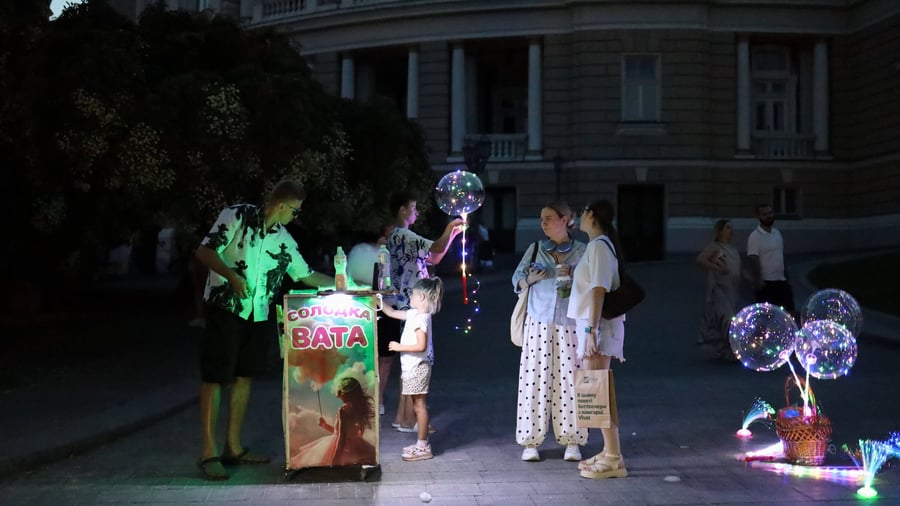
In Odessa, the manager of the communal energy provider, Viktor Chuta, has installed a brand new blockheating power plant beside the rusting Soviet-era power plant. The purpose of this small-scale plant is to serve as an alternative energy source for the power plant in case of power outages during the coming winter. Chuta is responsible for two large heating power plants and 140 kilometers of pipelines in the Ukrainian port city, ensuring that the 250,000 people it supplies stay warm during the cold season.
President Volodymyr Selenskyj recently warned that Ukraine is facing a difficult winter with no intact heating power plants left in the country. Each city in Ukraine follows a "resilience plan" to prepare for the winter, including the construction of large container-sized block heating plants to provide local power for their operations, independent of the central power grid.
The Odessa blockheating power plant, built by the Austrian company Jenbacher and purchased by the UNDP for Ukraine, can generate up to 3.3 megawatts (MW) of electricity per hour, enough to keep the large 350-MW gas power plant running and inject excess power into the city's grid.
The blockheating power plants are part of Ukraine's strategy to fundamentally transform its energy system, replacing decades-old Soviet-style gas power plants with more efficient Western technology and local solar and wind installations. Senior UNDP official Auke Lootsma explains that the central Soviet-era power plants are easy targets and if a large 500-MW power plant is damaged, an entire quarter could be plunged into darkness.
Therefore, Ukraine aims to decentralize its energy supply by building several smaller 54-MW power plants and distributing them across various locations.
Sixty percent of Ukraine's energy currently comes from the four functioning nuclear power plants, which have not been attacked by Russia so far. However, if the power grid substations are damaged, electricity may still not reach households. Authorities and energy companies are working to add redundancy to the system, allowing power to reach homes through multiple routes.
The ongoing attacks have significantly weakened Ukraine's energy infrastructure, causing a significant power deficit of six gigawatts. Auke Lootsma estimates that the country is currently experiencing a power deficit and foresees many blackouts during the winter.
To quickly repair any damage, authorities have set up "hot depots" filled with spare parts near major cities. Highly mobile technical units can transport the heavy parts to the site of destruction using heavy transporters. This is also part of the resilience plan. Igor Sklyanitschenko, chief of the communal energy provider in Odessa, states that the city is well-prepared for the winter, with the blockheating power plants set to be connected to the grid in time for the heating season.
They have also stockpiled spare parts, but he warns that the military situation is unpredictable and it is impossible to say whether the city is better prepared than last year. The biggest threat during the winter remains the unpredictable military developments.
Written by urgent.news from Handelsblatt's reporting — not their text. Machine-written — may contain errors; check the original before relying on it.