The question dominating Indian politics: Is it worse when women swear?
Rahul Gandhi's comments renew the debate over gender disparity in reactions to insults hurled at PM Narendra Modi.
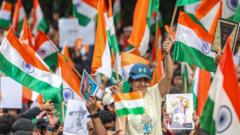
A recent protest in India has prompted an unexpected discussion: are expletives worse when they are spoken by women? The debate gained momentum after opposition MP Rahul Gandhi condemned Prime Minister Narendra Modi's description of witnessing young women swearing as a "culture shock." Gandhi argued that while boys swearing is accepted, female swearing is viewed with disapproval.
The protesters were upset with the government, and some of their harsh language targeted Prime Minister Modi, leading to backlash from his supporters. Despite the protests concluding a month ago, Gandhi's comments have reignited the conversation about how female activism, especially when using strong language, is perceived in the country.
The protest began in late May with young women using profanity against Prime Minister Modi during the Cockroach Janta Party (CJP) protests in Delhi and other cities, advocating for educational reforms. Modi addressed the issue in a video, expressing that seeing young women using expletives was a "culture shock," but claimed he forgave them. He did not, however, comment on the violent police response or offer support to women who claimed they faced online harassment and rape threats after attending the protests.
Rahul Gandhi, the leader of the opposition in India's lower house of parliament, criticized Modi's "culture shock" comment during a student gathering in Pune. He questioned why Modi only focused on the women's use of profanity, given that both male and female protesters had used foul language during the debate over leaked exam papers.
The criticism came weeks after images of female protesters insulting Modi went viral on social media. A 15-year-old girl was caught in the controversy, receiving abusive messages and threats on social media after she put out a video apologizing for her language and seeking forgiveness. Her mother, a single parent, said the controversy forced them to move homes multiple times.
Modi's reaction to the protests was more measured in a later Instagram video, where he referred to the protesters' language as "extremely abusive" and expressed understanding of his supporters' anger. He acknowledged that mistakes made in childhood are opportunities for improvement. The debate over female activism and the use of profanity has been reignited, with some arguing that there are double standards in how women's and men's swearing are perceived.
Journalist Namita Bhandare noted that in many parts of northern India, women participating in traditional wedding rituals use expletives, which are not considered offensive. Bhandare accused politicians, including Prime Minister Modi, of using sexist language when it suited them.
Written by urgent.news from BBC World's reporting — not their text. Machine-written — may contain errors; check the original before relying on it.