Scientists Team Up With “Unconventional Collaborators” of the Cetacean Kind to Study Greenland’s Warming Oceans
Scientists come in all shapes and sizes. Sometimes, that shape is a blubbery 1,000-kilogram whale with a 2-meter tusk.
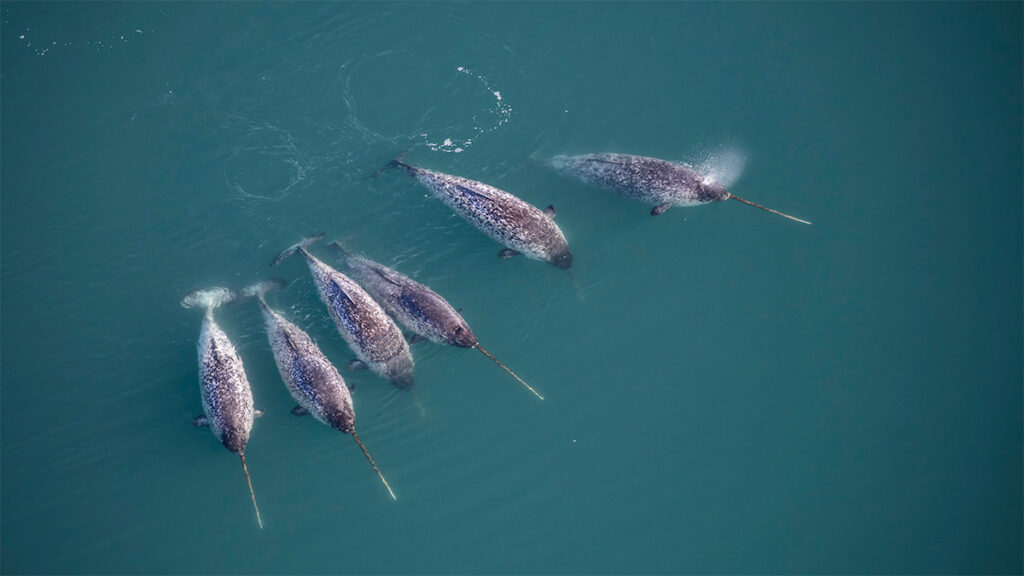
A team of scientists from the University of Copenhagen has partnered with narwhals to study the warming waters of Greenland's Scorseby Sound. Narwhals, known for their distinctive tusk, are being outfitted with satellite transmitters to monitor temperature, salinity, and dive depth. The six animals tracked data from 2,060 dives between August 2017 and July 2020.
This collaboration offers a unique approach to gathering data from hard-to-reach areas, as narwhals can access regions that are difficult and costly for traditional research methods. The study found that warm, salty Atlantic waters are invading deep areas of the fjord system, contributing to glacier melting in areas previously less affected by this phenomenon.
The use of narwhals as "unconventional collaborators" has provided valuable data on this process, highlighting the potential for innovative methods in oceanographic research.
Written by urgent.news from Eos's reporting — not their text. Machine-written — may contain errors; check the original before relying on it.