Polarized America united around one issue: the data centers powering the stock market and the biggest tech boom in decades
“I don’t think that enough people understand that this is going to create really good jobs,” said Heather McKenzie, a labor expert based in Nebraska.
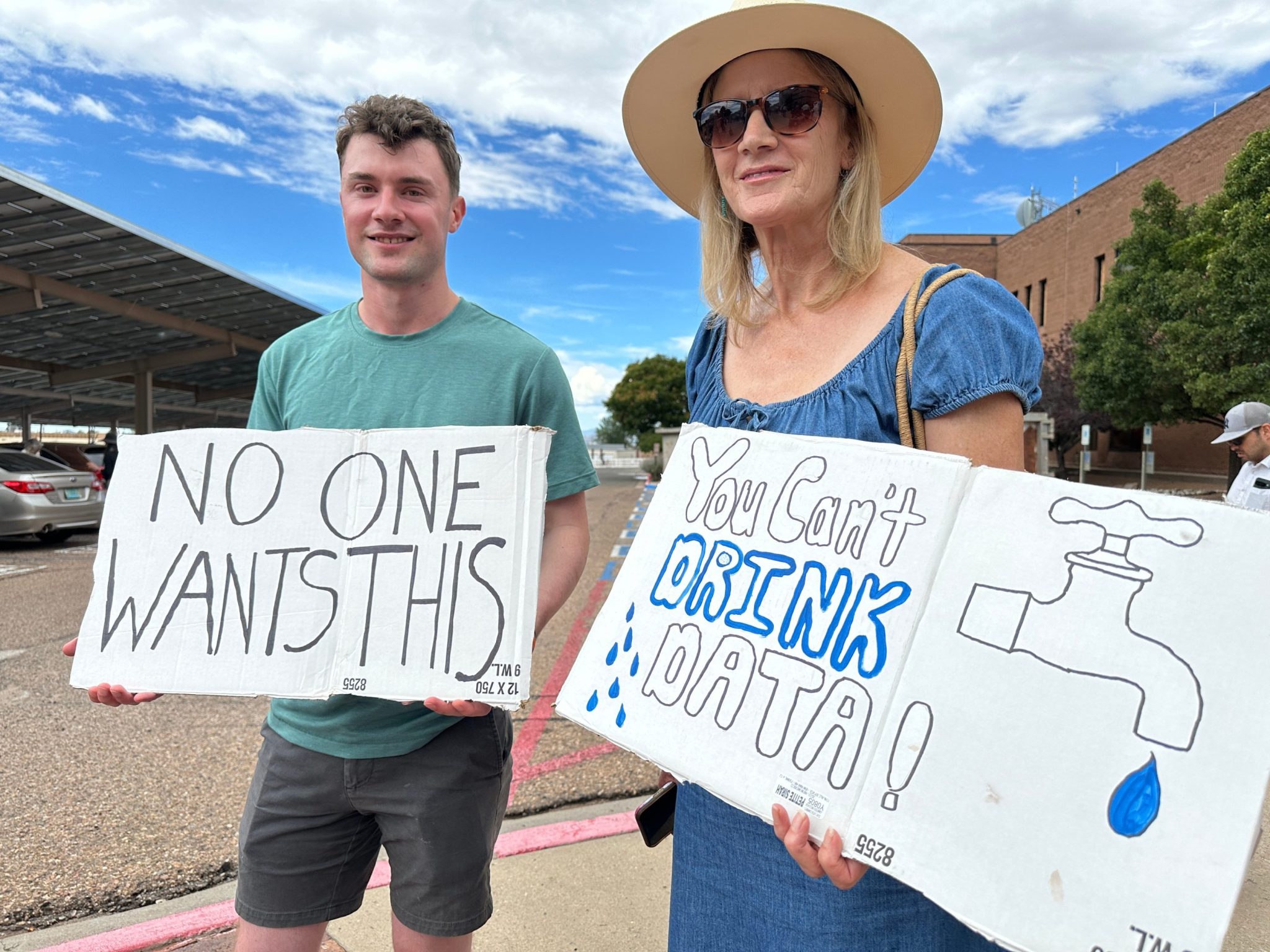
In rural eastern Nebraska, a new technology revolution could arise from farmlands of corn and soybeans, fueled by the construction of data centers that power the artificial intelligence boom. However, opposition has emerged in a political landscape that transcends conventional party lines. Conservative farmers and the state Sierra Club chapter have joined forces with labor leaders to voice concerns about data center development moving at a rapid pace.
This unusual coalition is worried about the depletion of farmland, dwindling water supplies, and soaring electricity bills, as well as the potential for large corporations to alter the fabric of small-town America. The debate surrounding data center projects cuts across party lines, demographics, and geography, spanning from Republican-dominated Nebraska, Texas, and Wyoming to swing-state Pennsylvania to Democratic-leaning New Mexico.
Supporters of data centers, including Republican President Donald Trump and certain union leaders who typically align with Democrats, tout the potential for job creation and economic growth, as well as the U.S.'s ability to compete with China in the race for technological supremacy. Yet, hostility toward these developments has escalated ahead of November's midterm elections, prompting local, state, and national elected officials to adapt to a changing political environment.
Judy Stroy, a fifth-generation Nebraska farmer, fears that the "amount of ground that's getting gobbled up every year, our food source is in trouble." Stroy's family owns property just outside Murdock, a town named after a railroad official who first established the tracks in the 1890s. Her fields are surrounded by a school, a post office, a bar, and the Corn Grower's State Bank branch, which allows farmers to sell their produce and purchase supplies such as feed and fertilizer.
Murdock's Cass County recently approved a 12-month moratorium on allowing data center development, which could potentially halt Tenaska's plans to develop 1,300-plus acres of land along Highway 75, south of nearby villages of Murray and Beaver Lake. Tenaska officials are exploring the feasibility of developing power generation to serve large loads, including data centers, by partnering with public power, communities, and other stakeholders.
Meanwhile, data center operator CyrusOne has secured nearly 400 acres outside another Cass County community, Plattsmouth, along Highway 75, but no development has commenced. The location may be particularly advantageous due to the highway's recent expansion, which provides easy access to Omaha to the northeast and the college town of Lincoln to the southwest. The Missouri River also offers a close water source.
Some landowners have accepted substantial sums to sell their property, with local land typically priced at $10,000 per acre, while developers often offer four times or even more. The prospect of such lucrative offers is particularly tempting as farming becomes increasingly expensive due to rising diesel prices and declining soybean exports amid Trump's trade dispute with China.
Nebraska Sierra Club attorney Ken Winston acknowledges that tech giants have contributed to municipal programs in Lincoln to help alleviate the impact of data centers. "We need to be aware of the fact that they're going to happen somewhere," Winston stated. "But communities need to be able to protect themselves and if they don't want them, they should be able to say no."
In neighboring New Mexico, no development moratorium currently exists to prevent Project Jupiter, a $165 billion data center complex planned near the Mexican border. However, concerns over diminishing water supplies are mounting. Samantha Barncastle Salopek, a Republican candidate for the Doña Ana County Commission, emphasizes that this issue transcends political divisions, noting that it is about communities coming together to express their concerns about the local impact of the project.
Barncastle Salopek's family grows pecans, and she frequently receives worried calls from farmers, ranchers, and local business owners across the political spectrum in various states. "When we have to fight over the last piece of the pie, those big companies are going to win," she asserts, highlighting the potential disappearance of New Mexico's farms, schools, hospitals, and supporting businesses, as well as the associated income decline.
Oracle, the company behind Project Jupiter, has pledged to invest $50 million in the region while offering funding for youth programs.
Written by urgent.news from Fortune's reporting — not their text. Machine-written — may contain errors; check the original before relying on it.
This story
This is one outlet's version. Read the fullest account.
- Why is Bank of America stock rallying today? investing.com