New KNUST-Led consortium aims to put climate health research into policy
For years, climate change in Africa has largely been framed as a story about the environment — rising temperatures, disappearing forests, floods, droughts, and changing rainfall patterns. But that conversation is changing. Increasingly, the question is no longer simply how hot will it get? It is becoming: What will that heat do to our bodies, our food, our diseases, our health systems and the…
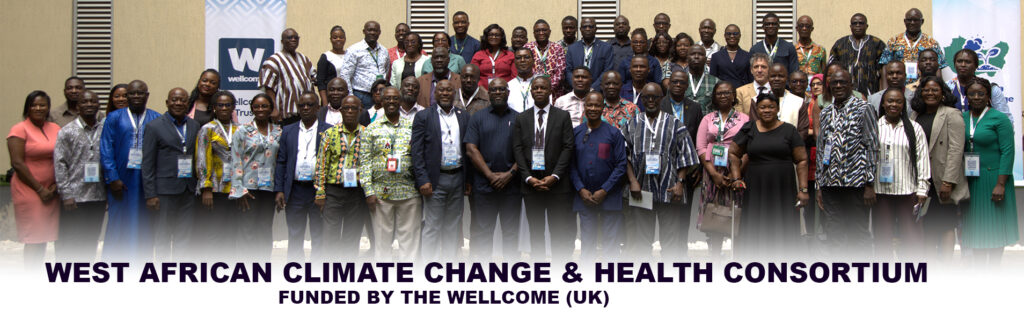
The West Africa Climate and Health Science and Policy Consortium (WACH) has been established by the Kwame Nkrumah University of Science and Technology (KNUST) to link climate science, health research, and public policy in Ghana and Senegal. This initiative aims to transform the way climate change is perceived and discussed, shifting the focus from purely environmental concerns to the direct impact on human health, livelihoods, and food security.
Led by KNUST, the consortium includes research and policy-making institutions in Ghana, Senegal, and the United Kingdom, with the backing of the Wellcome Trust.
The consortium's ultimate goal is to make scientific evidence useful for the communities that most need it. Climate change is already affecting health through heatwaves, droughts, floods, and altered rainfall patterns, which disrupt agriculture, food security, and vector-borne disease transmission. Vulnerable groups, such as women, children, older persons, people with disabilities, and low-income households, are disproportionately affected by these changes.
Professor Philip Antwi-Agyei, the Consortium Director, emphasizes the need to integrate climate and health discussions, noting that the consortium will investigate how temperature and rainfall patterns affect diseases such as malaria and dengue fever, respiratory illnesses, non-communicable diseases, and mycotoxin contamination. The consortium also intends to explore the role of indigenous knowledge in addressing climate-related challenges.
One of the consortium's most distinctive features is its commitment to making research actionable. Rather than waiting for new evidence to emerge, the consortium will harness existing research and work with policy-makers to translate findings into action. This approach addresses the issue of fragmented knowledge and ensures that research findings translate into policy changes that protect vulnerable communities.
The consortium also challenges traditional measures of research success by prioritizing the impact of research on policy and people. Instead of focusing on the number of publications, the consortium seeks to answer questions such as how its research can influence policymakers, where health facilities should be built or strengthened, and how climate projections can inform agricultural policies.
Moreover, the initiative champions African leadership in climate and health research. Professor Roger Tine, the Country Lead for Senegal, stresses the need for Africa to take the lead in addressing global health challenges such as climate change. By increasing Africa's leadership in research, the consortium aims to design solutions tailored to the continent's unique challenges.
As an example, the consortium plans to investigate the relationship between climate change and malaria transmission, ultimately determining how these changes affect different populations and how governments can respond.
Written by urgent.news from MyJoyOnline Ghana's reporting — not their text. Machine-written — may contain errors; check the original before relying on it.