NASA Johnson Pilots Chase Moon’s Shadow for Eclipse Science
During the Aug. 12 total solar eclipse over Europe, scientists aimed to study a long-standing mystery: why the Sun’s outer atmosphere, the corona, is far hotter than its visible surface. Capturing the data they needed meant being in exactly the right place at exactly the right time. Pilots from NASA’s Johnson Space Center flew the WB-57F high altitude research aircraft from Ellington Field in…
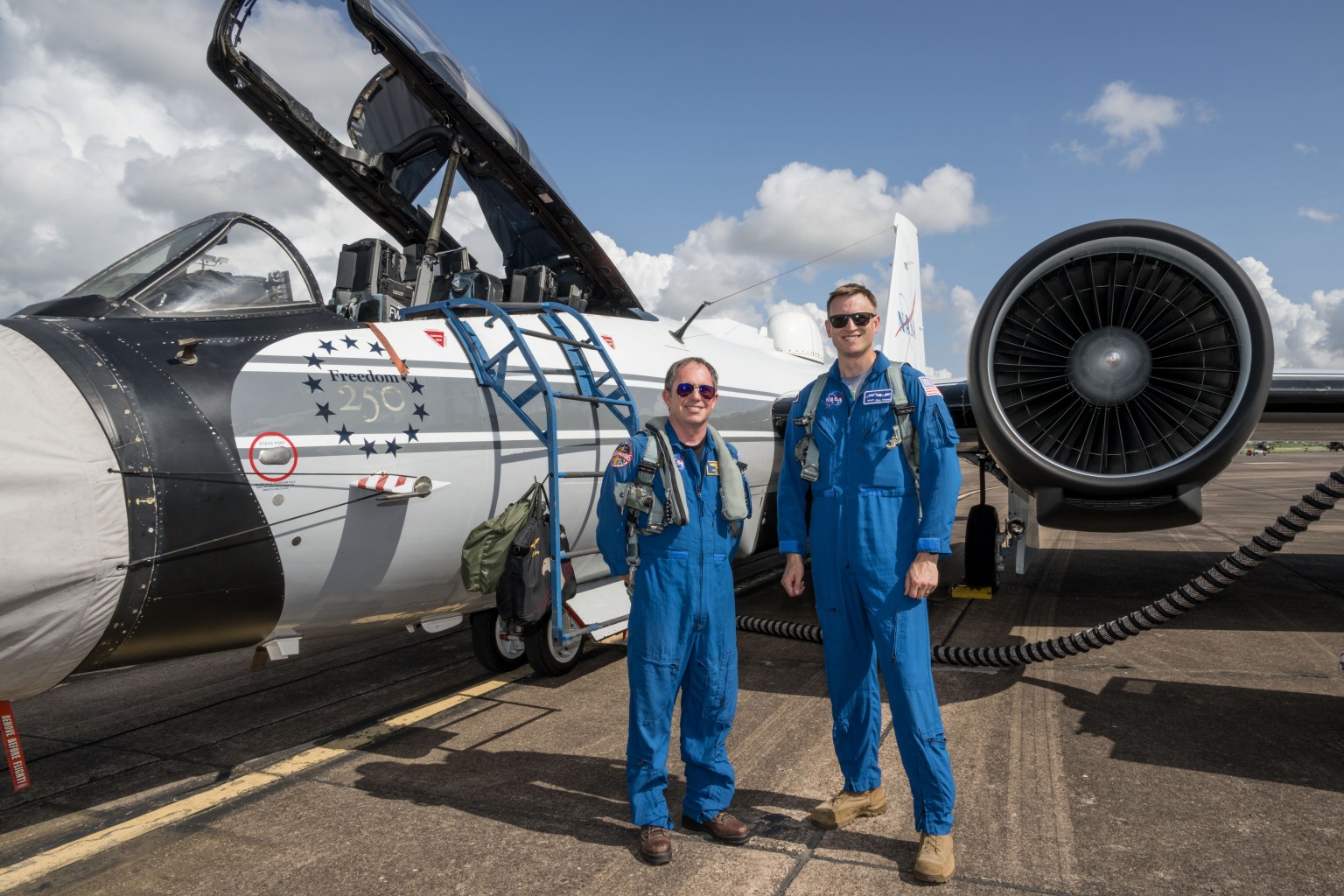
NASA’s WB-57F aircraft prepares for a mission to study the moon’s shadow during the upcoming total solar eclipse on August 12, 2026. The primary objective is to gain a better understanding of why the Sun’s outer atmosphere, known as the corona, is hotter than its visible surface. To achieve this, scientists need to observe the corona in the moments leading up to and following totality, when the Moon temporarily blocks the Sun’s bright surface, revealing the fainter outer atmosphere.
To capture the necessary data, the WB-57F high altitude research aircraft, operated by NASA’s Johnson Space Center, will take off from Ellington Field in Houston and fly to Iceland. The aircraft’s altitude of 50,000 feet allows it to avoid most clouds, dust, and water vapor that could interfere with ground-based observations. This height also enables the science instruments to collect infrared data that is largely absorbed by Earth’s atmosphere at lower altitudes.
The mission requires precise coordination between the science team and the flight crew. NASA WB-57F pilot John Gustine and sensor equipment operator Cary Klemm worked together to calculate the exact position the aircraft needed to maintain during the eclipse’s path of totality. Their goal was to maximize the time spent within the Moon’s shadow, thereby giving scientists the best opportunity to collect valuable data.
Before departing for Iceland, the teams meticulously planned the flight path to ensure optimal positioning for observation. As the eclipse approaches, the science team briefs the pilots and crew extensively, allowing them to practice the necessary maneuvers and calibrate the instruments. On the day of the eclipse, the WB-57F pilot, John Gustine, will guide the aircraft along the eclipse path, while Cary Klemm will monitor the camera systems, adjusting focus and exposure to capture the corona in detail.
Written by urgent.news from NASA's reporting — not their text. Machine-written — may contain errors; check the original before relying on it.