Dolly Parton: Science Icon
The singer/songwriter leaves a scientific legacy more should aspire to The post Dolly Parton: Science Icon appeared first on Nautilus .
Dolly Parton, the beloved singer-songwriter, has left behind a remarkable scientific legacy that goes beyond the mere joke of her namesake, Dolly the cloned sheep. At the University of Edinburgh, geneticists successfully cloned the first mammal in 1996, naming it after the now departed Parton due to her impressive pair of mammary glands.
Parton responded with her characteristic Southern charm and class, expressing condolences and her desire to leave Earth when the time came. Tragically, Parton passed away at the age of 80 from cancer.
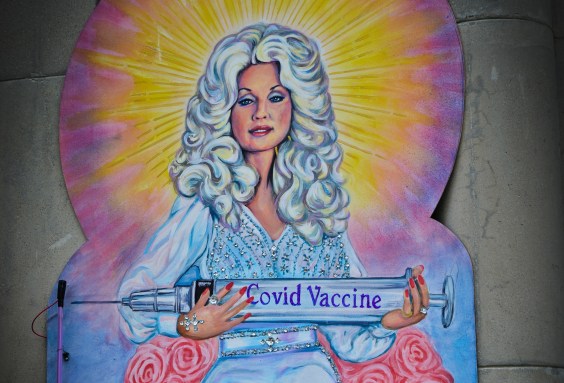
Throughout her life, Parton demonstrated a deep love for humanity, giving heart, and unwavering optimism. A recent study revealed that her song lyrics were characterized by positivity for over half a century, a rarity in the pop music industry at the time. Parton's contributions to science and society are numerous. In 2020, she donated $1 million to Vanderbilt University to research treatments and vaccines for the novel coronavirus, directly supporting the development of Moderna's vaccine. She also established the Dolly Parton COVID-19 Research Fund.
Parton's philanthropic efforts extend to various causes. In 1994, she donated her song "You Gotta Be My Baby" to a charity album for HIV/AIDS research. In 2017, she gave $1 million to the Pediatric Cancer Program at Tennessee's Monroe Carell Jr. Children's Hospital, and in 2022, another $1 million for infectious disease studies. Her Dollywood theme park houses the largest non-releasable bald eagle sanctuary in the world.
Perhaps Parton's most significant contribution is her Imagination Library program, which she launched in 1995 to provide free books to children from birth until age five. Since its inception, the program has expanded to five countries and has mailed over 330 million free books. Beyond promoting childhood literacy, the initiative has provided researchers with a natural experiment to study the effects of early reading.
Children in the program read more often and for longer periods, and were better prepared for kindergarten. Parton's family has requested donations be made to the Imagination Library in lieu of flowers. Her father, who couldn't read, may have been prouder of the Imagination Library than her entire career.
Written by urgent.news from Nautilus's reporting — not their text. Machine-written — may contain errors; check the original before relying on it.