M5 vs. M6 Chip Buyer's Guide: How Much Better Really Is M6?
Apple yesterday announced the M6, its first chip built using a 2nm process and the first Apple silicon design to use three different CPU core types, but how does it compare to the M5? Compared to the M5 chip that Apple launched in October 2025, the M6 delivers: Up to 1.2x faster multithreaded CPU performance. Nearly 30% higher peak GPU compute for AI. Up to 2x peak Neural Engine compute. 50%…
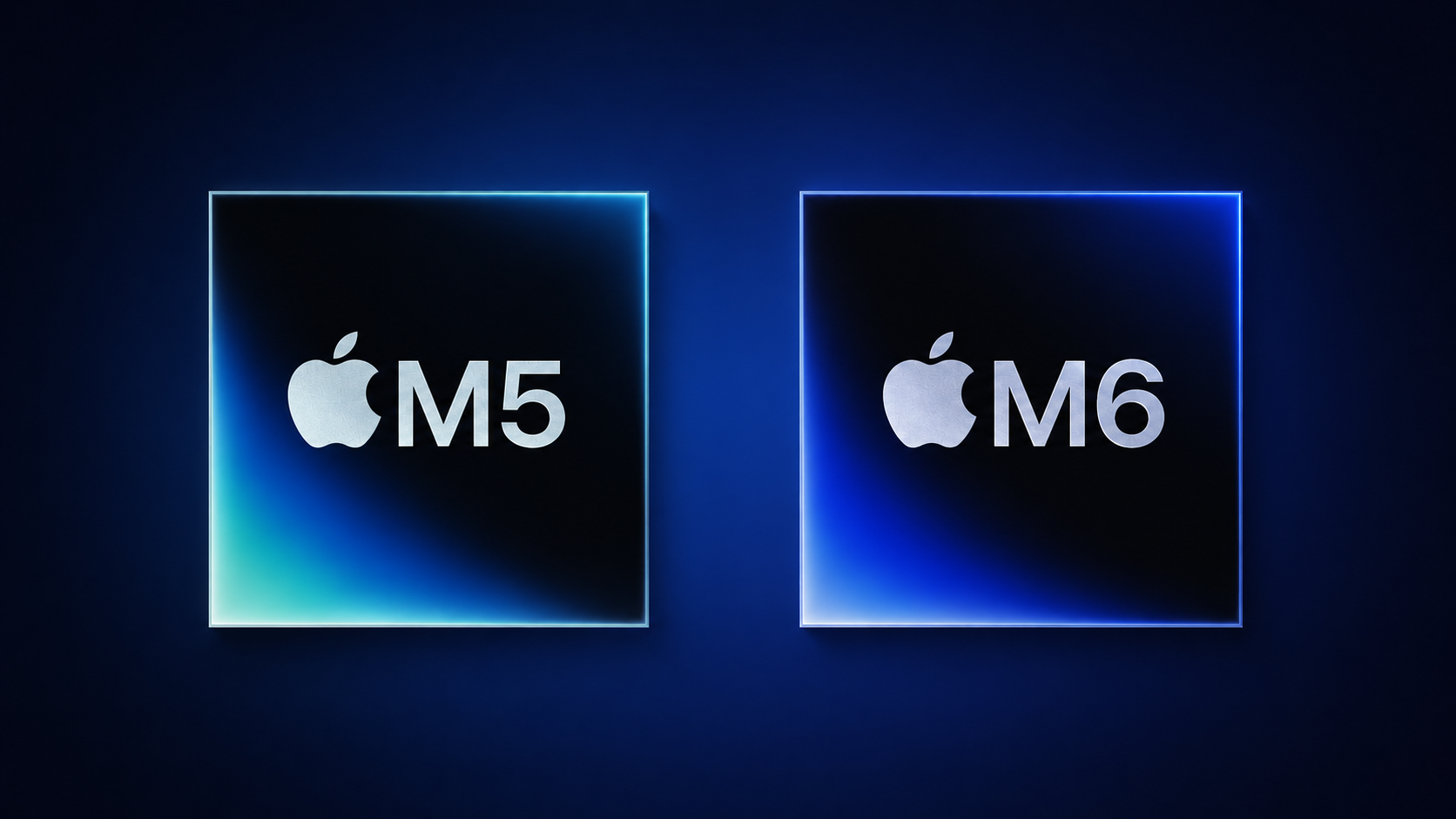
Apple's latest Mac mini, introduced in September 2026, is powered by the new M6 chip, which represents a significant upgrade over its predecessor, the M5. The M6 chip is built using TSMC's first-generation 2nm process called N2, a move from Apple's previous 3nm process (N3P) in the M5. This technological leap is expected to offer improvements in speed and power efficiency.
The M6 chip features a 12-core CPU with an innovative architecture: it includes two super cores dedicated to single-threaded workloads, four performance cores for multithreaded tasks, and six efficiency cores for handling background processes. In contrast, the M5 utilizes a more traditional design with ten cores split between performance and efficiency groups.
The M6 also boasts a substantial enhancement in the Neural Engine, which has been doubled in size compared to the M5. This allows for simultaneous use of both Neural Engines, enabling faster model execution without requiring any modifications from app developers. The GPU also sees an upgrade, with a 12-core design and a Neural Accelerator in every core, providing up to 1.2x faster multithreaded CPU performance, nearly 30% higher peak GPU compute for AI tasks, and up to 2x peak Neural Engine compute.
Unified memory bandwidth increases from 153 GB/s in the M5 to 170 GB/s in the M6, marking a 10% improvement. These enhancements are designed to improve complex graphics rendering and overall system responsiveness. However, Apple has refrained from providing direct benchmark comparisons between the M6 and M5, instead using the Mac mini's performance metrics as a reference point.
For general use and everyday tasks, the differences between the M5 and M6 may not be immediately noticeable, as the M5 already offers ample performance. However, the M6 is particularly beneficial for AI-intensive applications due to its advanced Neural Engine and superior unified memory bandwidth. While the M6 is currently only available in the Mac mini, Apple has hinted at future products like the MacBook Pro and iMac that will feature this new chip.
The M6 marks Apple's entry into the AI-optimized chip market, with further developments expected in the M7 generation.
Written by urgent.news from MacRumors's reporting — not their text. Machine-written — may contain errors; check the original before relying on it.