Koeberg Unit 1 back at 70 percent after unusual marine buildup disrupts cooling system
Eskom has announced a power output increase to 70% at Koeberg Nuclear Power Station’s Unit 1, following a temporary reduction due to marine material buildup.
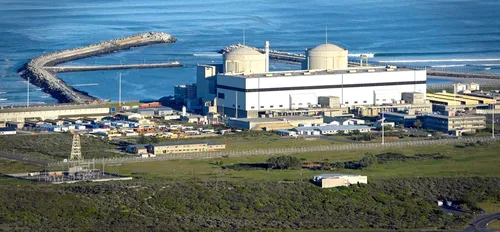
Eskom, the power utility, has reported that Koeberg Nuclear Power Station's Unit 1 has returned to generating electricity at 70% capacity. This increase occurred after the power output was initially reduced to 50% as a precautionary measure following an incident with a cooling pump. The pump ceased operation due to a buildup of marine material in the seawater intake area.
The utility explained that the rise to 70% was a deliberate and controlled adjustment, ensuring safety at the nuclear power station. This decision came after the cooling pump was automatically shut down due to the marine buildup. Despite this temporary dip, Eskom emphasized that the safety of both the nuclear and operational systems was never compromised.
Previously, there had been reports of a significant number of sardines washing up along the Western and Southwestern Cape coast. This phenomenon was attributed to the presence of the pilchard herpesvirus (PHV) in the deceased fish. The Department of Forestry, Fisheries, and the Environment (DFFE) is currently investigating whether PHV played a role in the mass mortality of the sardines, though its exact impact remains under scrutiny.
Written by urgent.news from IOL's reporting — not their text. Machine-written — may contain errors; check the original before relying on it.