Japan’s hotter summers trigger heavier rainfall, too
The torrential rain experienced by Chiba Prefecture earlier this month was one example of extreme precipitation events caused by warming.
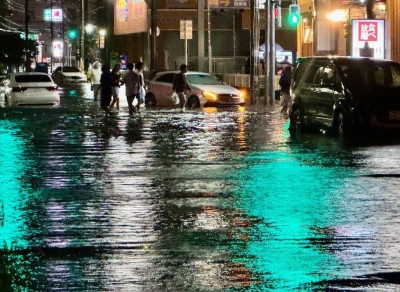
Japan's summer temperatures are soaring due to climate change, but the rising heat is linked to heavier rainfall, causing sudden, intense downpours that can lead to severe flooding. A prime example occurred in Chiba Prefecture this month, where Chuo Ward recorded an astonishing 367 millimeters of rain in just 12 hours, nearly tripling the city's typical August rainfall.
Researchers from Kyoto University and the Japan Meteorological Corp. have found that a 1-degree Celsius temperature increase results in a 7% boost in precipitation. This is because warmer air holds more moisture, leading to more rainfall. Japan's average temperature has risen by 1.44 degrees Celsius over the past century, with the trend accelerating since the 1990s.
This summer alone, Japan has seen 34 days with temperatures exceeding 40 degrees Celsius, surpassing the record set in 2025's 30 such days. The country's coastal location and frequent typhoons make it especially vulnerable to greater precipitation. The most alarming aspect of the increased rainfall is its sudden, intense nature, which leaves residents little time to seek shelter.
Earlier this month, Chiba experienced 107.5 millimeters of rain in an hour, equivalent to 100 kilograms of rain per square meter, a level that can cause flash floods and deadly conditions for drivers trapped in underpasses. Such torrential rains have doubled in frequency over the past 45 years, according to a report from the Meteorological Research Institute.
Experts believe Japan is better equipped than many other nations to handle such extreme precipitation events, thanks to advanced drainage systems like the underwater tunnel in Saitama Prefecture, which can store up to 670,000 cubic meters of water. However, more needs to be done to ensure that these systems are properly maintained and enforced to prevent catastrophic damage from future extreme weather events.
Written by urgent.news from Japan Times's reporting — not their text. Machine-written — may contain errors; check the original before relying on it.